The different types of voluntary benefits give employees more choice beyond a company’s core insurance plan. These options may include accident coverage, critical illness insurance, dental and vision plans, disability coverage, life insurance, legal support, financial wellness services, pet insurance, and family care programs.
Employers can use voluntary benefits to fill gaps in existing coverage and give workers access to plans that match their personal needs. This guide explains the main categories, how each option works, and what employers should review before adding them to a benefits package.
Key Takeaways
- Voluntary benefits give employees access to optional coverage and services beyond a company’s core medical and retirement plans.
- Common options include accident, critical illness, hospital indemnity, dental, vision, disability, life, legal, identity theft, financial wellness, and pet insurance benefits.
- Employees often pay part or all of the cost through payroll deductions, though employer contributions and tax treatment vary by plan.
- The best benefit mix should reflect workforce needs, current coverage gaps, employee feedback, provider terms, and HR capacity.
- Clear communication helps employees compare options, understand costs, review coverage limits, and make informed enrollment decisions.
What Are Voluntary Benefits?
Voluntary benefits are optional insurance products, services, or workplace programs offered through an employer. Employees choose whether to enroll based on their personal needs and may pay part or all of the cost through payroll deductions. An employer may contribute to certain options, depending on the plan and benefits strategy. These benefits supplement core offerings such as medical insurance and retirement plans rather than replace them.
Common names include employee-paid benefits, supplemental benefits, worksite benefits, and voluntary insurance. Access through the workplace may give employees group pricing, simpler enrollment, and coverage options that may be harder to obtain on an individual basis. Eligibility, tax treatment, coverage limits, and payment arrangements vary by benefit and provider.
What Are the Main Types of Voluntary Benefits?
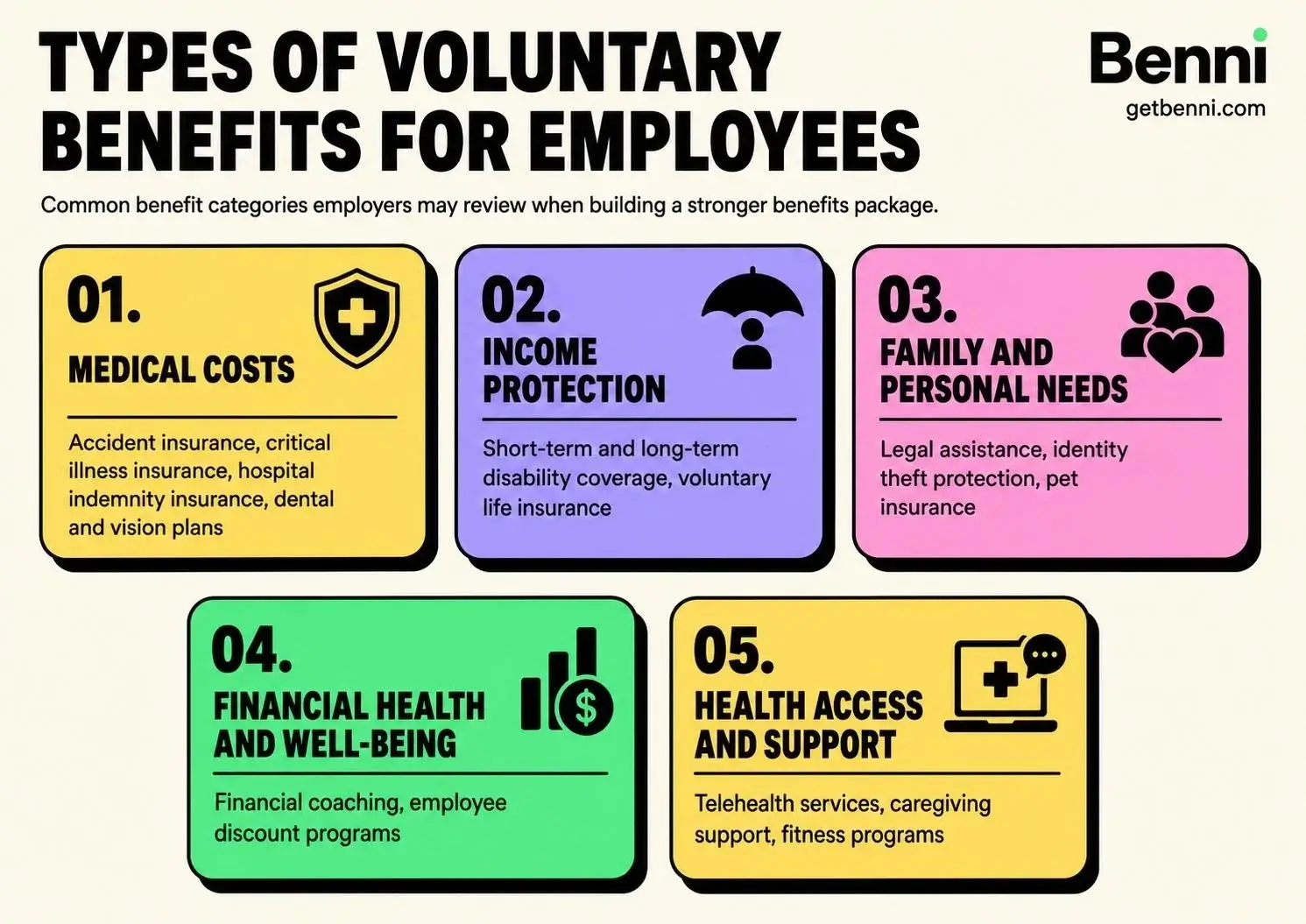
The main types of voluntary benefits support a range of employee needs, including:
- Medical costs: Accident insurance, critical illness insurance, hospital indemnity insurance, dental and vision plans
- Income protection: Short-term and long-term disability coverage, voluntary life insurance
- Family and personal needs: Legal assistance, identity theft protection, pet insurance
- Financial health and well-being: Financial coaching, employee discount programs
- Health access and support: Telehealth services, caregiving support, fitness programs
Each category serves a different purpose, so businesses do not need to offer every available option. The right mix depends on:
- Workforce demographics
- Employee requests and preferences
- Existing coverage gaps
- Budget limits
- Provider availability
- Administrative capacity of the HR team
Health and Medical Voluntary Benefits
These benefits help employees cover out-of-pocket healthcare costs and access additional services beyond their primary medical plan.
Accident Insurance
Accident insurance pays benefits after certain covered accidental injuries. A policy may provide set payments for emergency care, diagnostic tests, hospital visits, fractures, follow-up treatment, or physical therapy. Employees can use the money for medical bills or daily expenses. Payment amounts, covered injuries, exclusions, and claim requirements depend on the policy.
Critical Illness Insurance
Critical illness insurance may provide a lump-sum payment after an employee receives a diagnosis covered by the policy. Covered conditions may include cancer, heart attack, or stroke, based on the plan terms. Employees may use the payment for treatment costs, household bills, travel, childcare, or other expenses during recovery.
Hospital Indemnity Insurance
Hospital indemnity insurance pays fixed benefits for qualifying hospital admissions, stays, or related care. The payment goes to the insured employee rather than the medical provider in many plans. It can help with deductibles, transportation, childcare, or household costs. Benefit amounts and eligible services vary by carrier and policy.
Telehealth and Supplemental Health Services
Telehealth and supplemental health services can give employees easier access to virtual visits, health navigation, medical second opinions, or discounted care. These programs may help workers find providers, discuss non-emergency concerns, or review treatment options. Service limits, fees, provider networks, and availability depend on the program selected by the employer.
Dental and Vision Benefits
Dental and vision benefits support routine care and help employees manage out-of-pocket costs not typically covered by primary medical plans.
Dental Insurance
Voluntary dental insurance can help employees pay for preventive care and covered dental procedures. A plan may include exams, cleanings, X-rays, fillings, extractions, crowns, dentures, or other services. Coverage percentages, deductibles, waiting periods, annual maximums, and provider networks differ by policy. Employees should review these terms before enrolling.
Vision Insurance
Voluntary vision insurance helps employees manage the cost of routine eye care and corrective eyewear. Plans may cover or discount eye exams, prescription lenses, frames, and contact lenses. Some plans may offer savings on laser eye procedures. Allowances, copays, replacement schedules, and participating providers depend on the selected plan.
One employer shared that a complicated benefits situation became much easier with clear guidance throughout the process. The team remained available, answered questions, and helped the organization move through each step with confidence.
Income Protection Benefits
Income protection benefits provide financial support when employees are unable to work due to a covered illness, injury, or medical condition.
Short-Term Disability Insurance
Short-term disability insurance may replace part of an employee’s income during a temporary absence caused by a covered illness, injury, pregnancy, or medical condition. Benefits usually begin after a waiting period and continue for a set number of weeks or months. Coverage limits, exclusions, and payment amounts vary by policy.
Long-Term Disability Insurance
Long-term disability insurance may provide partial income replacement when a covered condition keeps an employee from working for an extended period. Payments often begin after a longer waiting period than short-term coverage. The policy may define disability based on the employee’s current occupation or ability to perform other work.
Life and Personal Security Benefits
Life and personal security benefits help employees protect their families, personal information, and access to legal support services.
Voluntary Life Insurance
Voluntary life insurance lets employees purchase life coverage through their workplace, often through payroll deductions. Employees may be able to select a coverage amount and name one or more beneficiaries. Some plans offer spouse or dependent coverage. Rates, medical questions, coverage limits, and portability rules vary by policy.
Identity Theft Protection
Identity theft protection may include credit monitoring, fraud alerts, identity restoration support, and help responding to stolen personal information. These services cannot prevent every form of fraud, but they may help employees spot suspicious activity and respond sooner. Available monitoring tools, family coverage, and recovery services depend on the provider.
Legal Insurance or Legal Assistance
Legal insurance or legal assistance plans give employees access to attorneys for certain personal legal matters. Covered services may include wills, estate documents, property matters, family law consultations, traffic issues, or identity theft support. Plans may use a provider network, set service limits, or charge fees for matters outside the coverage terms.
Financial Wellness Benefits
Financial wellness benefits give employees tools and services for managing money, debt, savings, and long-term goals. Employers may offer financial coaching, budgeting tools, tax guidance, credit counseling, student loan support, emergency savings programs, or investment education. These programs can help workers make informed financial decisions and prepare for unexpected expenses.
Some services provide access to a financial professional, and others use online platforms or educational resources. Employers should compare service fees, privacy practices, employee access, educational support, and provider qualifications before selecting a program. Financial wellness benefits are not always insurance products, and the available features differ by provider. Employee feedback can help HR teams identify which financial concerns deserve the most attention.
Wellness and Lifestyle Benefits
Wellness and lifestyle benefits support employees’ physical health, emotional well-being, and daily needs outside standard medical coverage. Options may include gym membership discounts, fitness classes, wellness coaching, mental health resources, employee assistance services, travel support, and discount programs. Some employers offer caregiving resources or virtual wellness platforms through this category.
These benefits can give employees more choices based on their interests, schedules, and personal circumstances. Employers should review participation costs, provider access, service limits, data privacy, and employee demand before adding a program. A long list of unused services may bring little value, so HR teams should focus on options employees are likely to use and can access without a difficult enrollment process.
Family and Personal Benefits
Family and personal benefits help employees manage costs and responsibilities connected to pets, children, aging relatives, and other dependents. Available options vary by provider and workforce needs.
Pet Insurance
Pet insurance may help employees pay eligible veterinary expenses for covered illnesses, injuries, tests, treatments, or procedures. Some plans offer optional coverage for routine care. Deductibles, reimbursement rates, annual limits, waiting periods, exclusions, and covered animals vary by policy. Employees should review how claims are filed and which expenses qualify before enrolling.
Caregiving and Family Support
Caregiving and family support benefits may include childcare resources, eldercare guidance, fertility services, adoption assistance, backup care, or help locating care providers. These programs can support employees handling family responsibilities alongside work. Employers should review eligibility rules, service locations, employee fees, privacy policies, and the level of direct support offered by the provider.
Other Voluntary Benefits Employers May Consider
Employers may offer voluntary benefits that address transportation, education, travel, household expenses, or everyday purchases. Options may include commuter programs, employee discount services, travel accident insurance, educational assistance, home and auto insurance purchasing programs, or prepaid legal services. These offerings can support employees with costs that fall outside traditional health and retirement plans.
Employers should focus on options that match clear workforce needs rather than adding a large number of programs with low participation. Before selecting a benefit, review employee pricing, provider access, enrollment rules, service limits, portability, and administrative demands. Employee surveys and participation data can help determine which programs provide useful support and which ones may be removed during future plan reviews.
How to Choose the Right Types of Voluntary Benefits
The right voluntary benefits should address real employee needs and gaps within the current benefits package. Employers can begin by reviewing existing coverage, gathering employee feedback, and studying workforce factors such as age ranges, family responsibilities, income levels, and work locations. Next, compare providers based on employee costs, coverage limits, exclusions, eligibility rules, claims support, enrollment tools, and administrative requirements.
HR teams should review whether employees can clearly explain the benefit’s purpose and see how it applies to their lives. A benefits broker can help compare available options, identify coverage overlaps, and review plan terms. After enrollment, employers should track participation, employee questions, claims experiences, and usage before renewing or changing the program.
One employer described the benefits process as seamless for the staff, with each step explained clearly and questions answered along the way. Benni Agency can help employers compare voluntary benefit options, review plan details, and prepare a benefits program employees can understand and use.