Choosing the right types of group insurance can help employers protect employees, manage benefit costs, and build a benefits package that fits real workforce needs. Common options include health, dental, vision, life, disability, accident, critical illness, and hospital indemnity coverage.
For business owners and HR teams, the challenge is deciding which options deserve priority and which can be offered as voluntary benefits. The right mix depends on employee needs, budget, workforce size, and coverage goals. This guide breaks each option into clear, practical terms so you can compare them with confidence.
Key Takeaways
- Group insurance can cover several employee needs, including medical care, dental and vision services, life protection, disability income, accidents, serious illnesses, and hospital stays.
- Health insurance is often the starting point, with dental, vision, life, and disability coverage added based on workforce needs and budget.
- Voluntary benefits can fill coverage gaps without requiring the employer to pay the full premium for every option.
- Employers should compare employee needs, total costs, exclusions, benefit limits, eligibility rules, and administration before choosing plans.
- A strong package should match employee priorities and business budget, then be reviewed before each renewal to keep coverage useful and affordable.
What Is Group Insurance and How Does It Work?
Group insurance gives eligible employees coverage through a policy or benefits plan offered by an employer or another qualifying group. Instead of each employee finding coverage on their own, you choose the benefits to offer, set eligibility rules, and decide how much of the premium your business will pay.
Employees can then enroll in the coverage available to them, and some plans may also include spouses or dependents. Small businesses may also have access to group options like health and dental coverage through SHOP, where available. For employers, this creates a simpler, more organized way to offer benefits without setting up separate policies for every employee.
What Are the Main Types of Group Insurance?
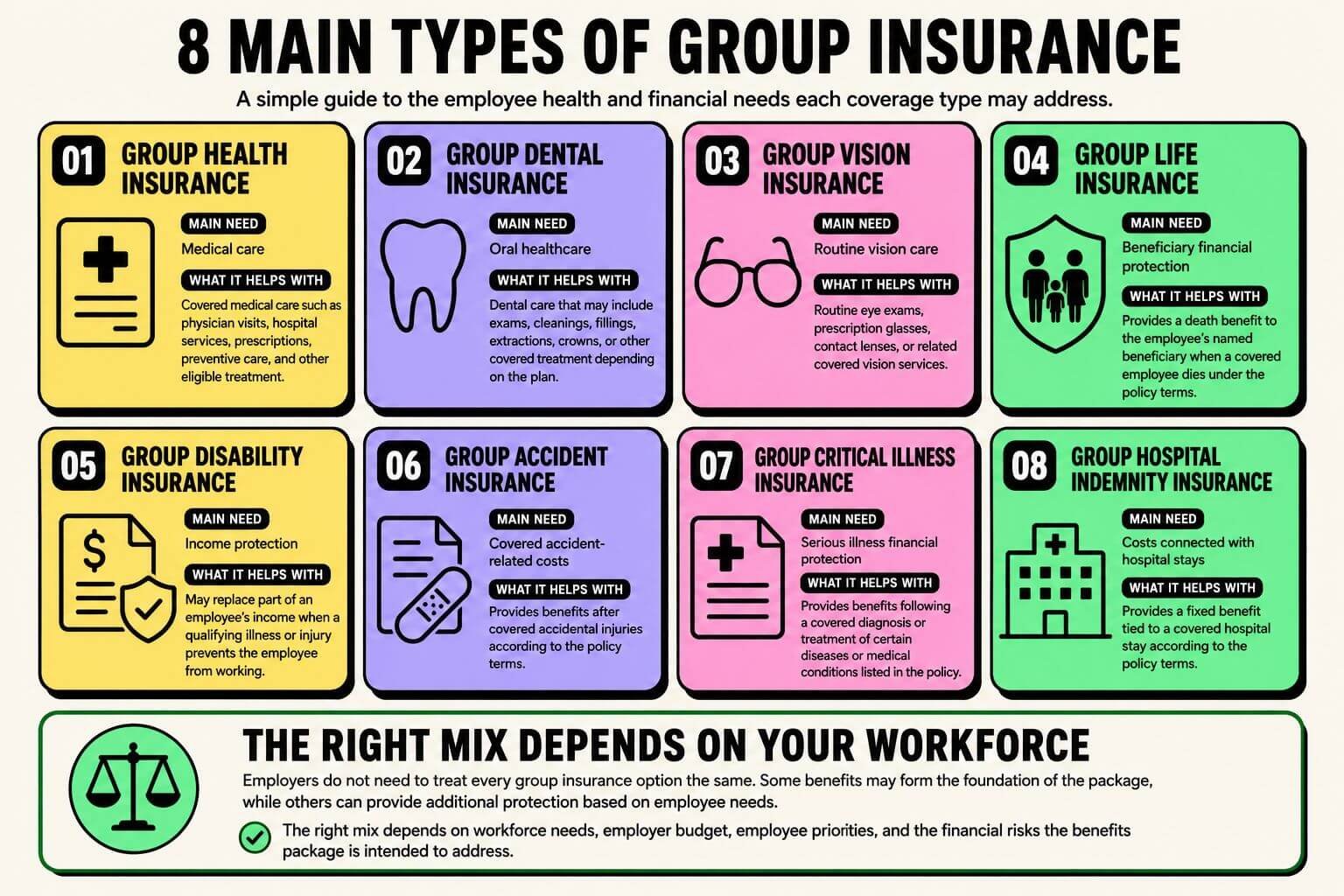
Group insurance helps you protect your employees from common health and financial risks. Depending on the needs of your team, you can choose different types of coverage to create a benefits package that feels practical and useful. There are eight main types of group insurance, and each one covers a different area of an employee’s health or financial well-being. Understanding these options can help you choose the right mix of benefits for your team.
Group Health Insurance
Group health insurance helps employees pay for covered medical care, such as physician visits, hospital services, prescriptions, preventive care, and other eligible treatment. Employers may offer one plan or give employees several plan choices. For small businesses, SHOP can provide health coverage for eligible groups with 1 to 50 employees.
Group Dental Insurance
Group dental insurance helps employees manage costs tied to oral health care. Coverage often includes preventive services such as exams and cleanings, with some plans covering fillings, extractions, crowns, or other treatment. Employers can offer dental coverage alongside medical insurance or, in some SHOP situations, offer dental coverage separately.
Group Vision Insurance
Group vision insurance commonly helps pay for routine eye exams, prescription glasses, contact lenses, or related vision services based on the plan. This coverage is usually separate from major medical insurance. For employers, vision benefits can add a practical everyday benefit without requiring the same cost commitment associated with medical coverage.
Group Life Insurance
Group life insurance pays a death benefit to the employee’s named beneficiary when a covered employee dies under the policy terms. Many employers provide group term life coverage based on a flat amount or salary multiple. The IRS states that the first $50,000 of qualifying employer-provided group term life coverage is commonly excluded from employee income under federal tax rules.
Group Disability Insurance
Group disability insurance can replace part of an employee’s income when a qualifying illness or injury prevents that person from working. Plans may provide short-term or long-term benefits, depending on policy terms. The U.S. Department of Labor notes that disability definitions and eligibility rules can differ from one employer plan to another.
Group Accident Insurance
Group accident insurance provides benefits after covered accidental injuries. Depending on the policy, benefits may relate to medical treatment, disability, dismemberment, or other covered losses. NAIC classifications recognize group accident-only insurance and accident indemnity products that can pay stated or fixed benefits tied to qualifying accidents.
Group Critical Illness Insurance
Critical illness insurance provides benefits after diagnosis or treatment of certain named diseases or medical conditions listed in the policy. The payment structure varies by contract. NAIC’s 2026 product classifications state that critical illness benefits may be paid based on expenses, a daily amount, or a principal sum.
Group Hospital Indemnity Insurance
Hospital indemnity insurance pays a fixed benefit tied to a covered hospital stay, rather than reimbursing every medical bill. NAIC describes group hospital indemnity coverage as paying a fixed dollar amount for each covered day of hospital confinement, subject to policy terms. Employees can use the benefit for expenses they face during recovery.
Which Types of Group Insurance Should Employers Offer First?
Start with benefits that address the largest financial risks your employees are likely to face. For many employers, medical coverage comes first, followed by dental, vision, life, and disability coverage based on budget and workforce needs. The right order is different for every business. A company with younger employees may see strong interest in medical, dental, and accident coverage. A workforce supporting families may place more value on life and disability protection.
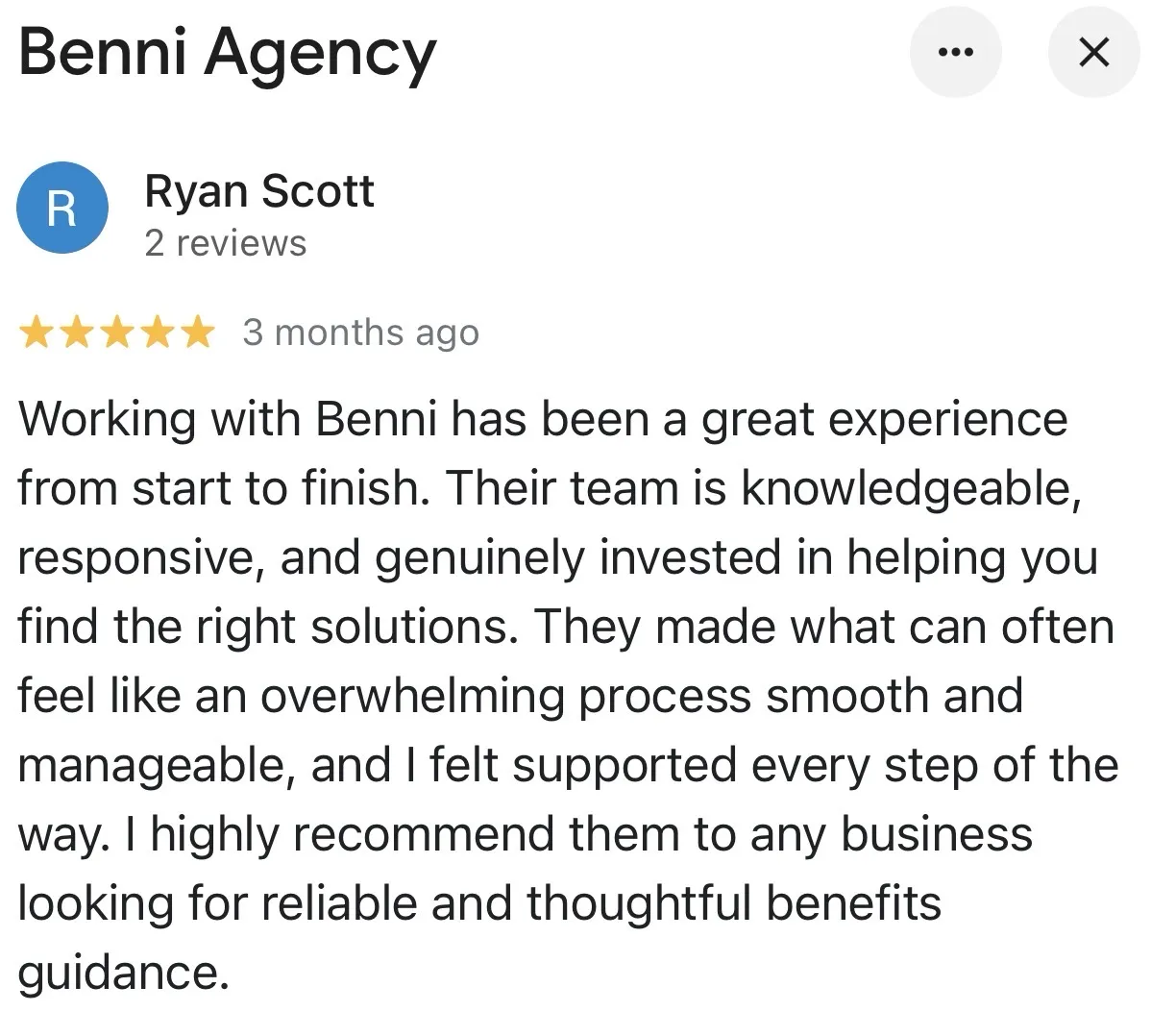
One employer described working with Benni Agency as a supportive experience from start to finish, noting that the team was knowledgeable, responsive, and invested in helping them find the right solutions. That kind of guidance can be valuable when employers are comparing several coverage options and trying to make benefits decisions easier to manage.
Before adding more options, review employee feedback, participation levels, premium costs, coverage gaps, and administrative workload. Your first goal should be a benefits package employees can understand, afford, and realistically use.
Core Insurance Benefits
Core benefits usually address medical care, routine health needs, family financial protection, and loss of income. Health, dental, vision, life, and disability insurance often fit this group. Employers should compare employee priorities and available budget before deciding which benefits receive employer contributions and which coverage levels make sense.
Supplemental and Voluntary Insurance Benefits
Accident, critical illness, and hospital indemnity plans can fill financial gaps left by core coverage. These plans are often offered as voluntary and supplemental health benefits, giving employees the option to select extra protection based on their own needs. Benni Agency offers these coverage types as part of its supplemental benefits services, including accident, critical illness, and hospital indemnity insurance. Review benefit triggers, exclusions, payment amounts, employee costs, and how each option fits with your core benefits before adding coverage to your enrollment package.
How Do Employer-Paid and Voluntary Group Insurance Differ?
The main difference is who pays the premium and how employees choose coverage. With employer-paid insurance, the business pays all or part of the premium. Health, life, and disability coverage are common examples where employers may contribute.
With voluntary insurance, employees usually choose the coverage and pay most or all of the premium through payroll deductions. Employers exploring voluntary benefits for employees can offer options such as accident, critical illness, hospital indemnity, supplemental life, dental, and vision coverage. Your benefits package can use both approaches. Employer funding can support priority benefits, and voluntary options can give employees more choice without placing the full premium cost on your business.
What Should Employers Compare When Choosing Group Insurance?
Choosing group insurance should start with what your employees need, what the business can afford, and what each policy actually covers. Looking at premiums alone can leave employees with benefits that seem affordable but provide weak protection when they need care. Compare each option based on:
- Employee needs and expected participation
- Employer and employee premium costs
- Deductibles, copays, benefit limits, and exclusions
- Provider access for health-related plans
- Eligibility and waiting periods
- Enrollment and administration requirements
The U.S. Department of Labor recommends reviewing plan documents that explain benefits, cost sharing, coverage limits, eligibility, and claims procedures.
Employee Coverage Needs
Start by asking employees which benefits they value and where they face coverage gaps. Consider workforce age, family coverage needs, job roles, income levels, and current participation. Employee interest matters since access does not guarantee enrollment. BLS reported that 72% of private-industry workers had access to medical benefits in March 2025, compared with 45% participation.
Employer and Employee Costs
Compare the full cost of each plan, including employer contributions, employee premiums, deductibles, copays, and other cost sharing. A lower premium does not automatically mean better value. Employers should look at what workers may pay when receiving care and whether those costs fit employee budgets. Small employers can compare SHOP plan options and prices where eligible.
Coverage Limits and Exclusions
Review what the policy covers, what it leaves out, and where benefit limits apply. Check exclusions, waiting periods, benefit maximums, deductibles, network rules, and claim requirements. For health plans, the Summary of Benefits and Coverage gives employees a standardized view of covered benefits, cost-sharing rules, and coverage limitations, according to the U.S. Department of Labor.
Enrollment and Benefits Administration
A good plan still creates problems if enrollment is confusing or administration takes too much HR time. Compare eligibility tracking, enrollment tools, payroll deductions, employee communications, plan documents, and support during benefit changes. Employers should know who handles employee questions, enrollment corrections, qualifying events, and carrier updates before selecting coverage.
What Are the Benefits of Offering Group Insurance to Employees?
Group insurance can give employees access to coverage through the workplace and financial protection against medical costs, lost income, accidents, illness, or death, depending on the benefits offered. It can give employers a clearer way to organize several benefits under one employee program.
Access can matter in hiring and retention too. BLS reported that 87% of full-time private-industry workers had access to healthcare benefits in March 2025, compared with 27% of part-time workers. A well-chosen package can help your business:
- Support employee financial security
- Give workers more benefit choices
- Address major coverage gaps
- Create a stronger compensation package
- Make benefits easier to manage
How Should Employers Build the Right Group Insurance Package?
Build your group insurance package around employee priorities, business budget, and the financial risks your workforce needs help covering. Start with medical coverage or another core benefit employees value most, then consider dental, vision, life, disability, and voluntary options. Many employers turn to an employee benefits partner such as Benni Agency to compare plan choices, review costs, and spot coverage gaps before making final decisions.
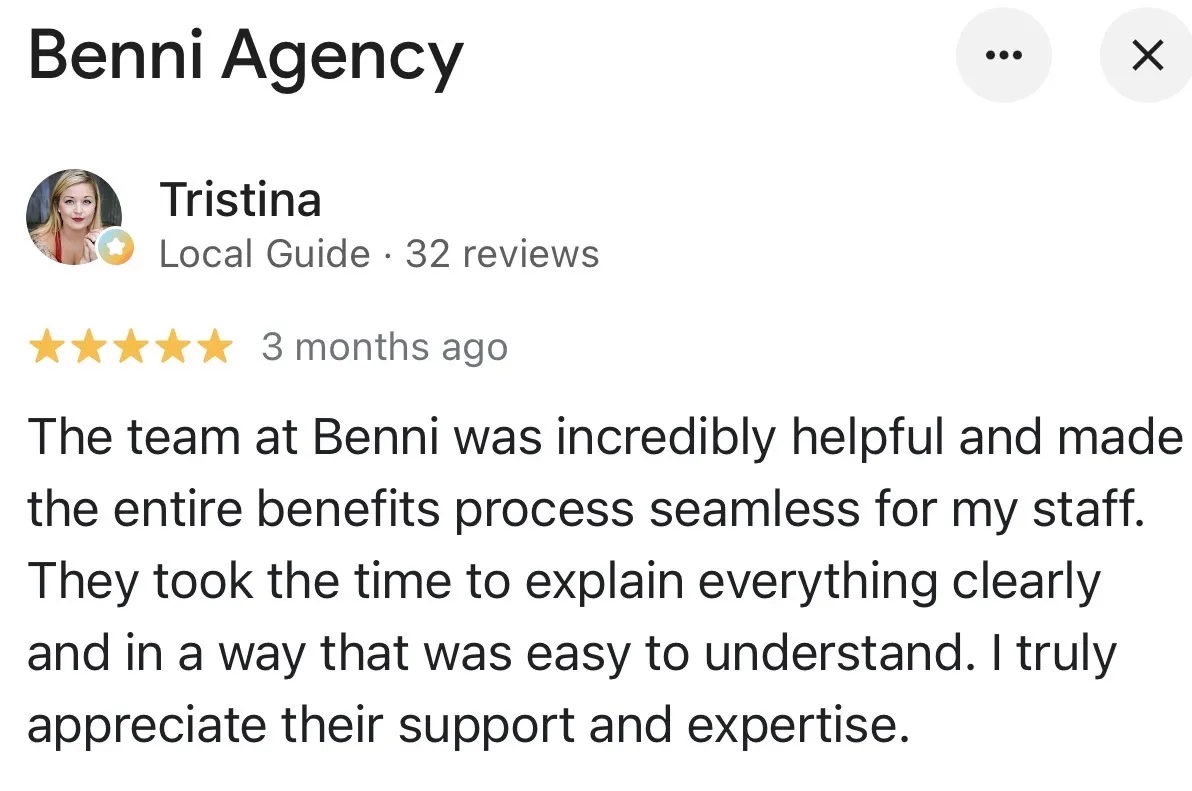
One employer shared that the benefits process became much easier for the staff because the team took time to explain everything clearly and remained available to answer questions. Clear support like this can help HR teams and employees feel more comfortable during enrollment and benefit changes.
Use a simple process:
- Review workforce needs and current benefit use.
- Set a realistic employer contribution budget.
- Identify core benefits employees need most.
- Compare premiums, coverage, exclusions, and employee costs.
- Add voluntary coverage where it fills a real gap.
- Review enrollment and administrative support.
- Reassess the package before each renewal.