Group life insurance for small business gives employers a simple way to provide life coverage to employees through a single group policy. It can strengthen your employee benefits package, support employee retention, and offer financial protection to workers’ families if the unexpected happens. Most small business plans use group term life insurance, with the employer paying all or part of the premium.
Employees may purchase extra coverage through payroll deductions. For business owners and HR teams, key points include cost, coverage levels, eligibility rules, tax treatment, and what happens when an employee leaves. In this guide, we’ll explain how the coverage works, available plan options, and what employers should review before choosing a policy.
Key Takeaways
- Group life insurance lets small businesses provide employee life coverage through one employer-sponsored policy.
- Employers can pay the full premium, share the cost, or offer voluntary coverage through payroll deductions.
- Coverage may use a flat amount, such as $50,000, or a salary-based formula tied to employee earnings.
- Employer-provided group term coverage up to $50,000 is usually excluded from taxable income under Section 79.
- Coverage often ends after employment, though portability or conversion options may let former employees continue protection
What Is Group Life Insurance for a Small Business?
Group life insurance is an employer-sponsored policy that covers eligible employees under one contract. The business selects the insurer, coverage amount, eligibility terms, and payment structure. Employees receive individual coverage certificates and name the people who should receive the benefit after their death.
Many small employers use group term life insurance since it offers straightforward protection for a fixed period. Coverage often stays active only during employment. For business owners and HR teams, this benefit can add financial protection to the employee package without requiring each worker to purchase a separate individual policy.
How Does Group Life Insurance Work for Small Businesses?
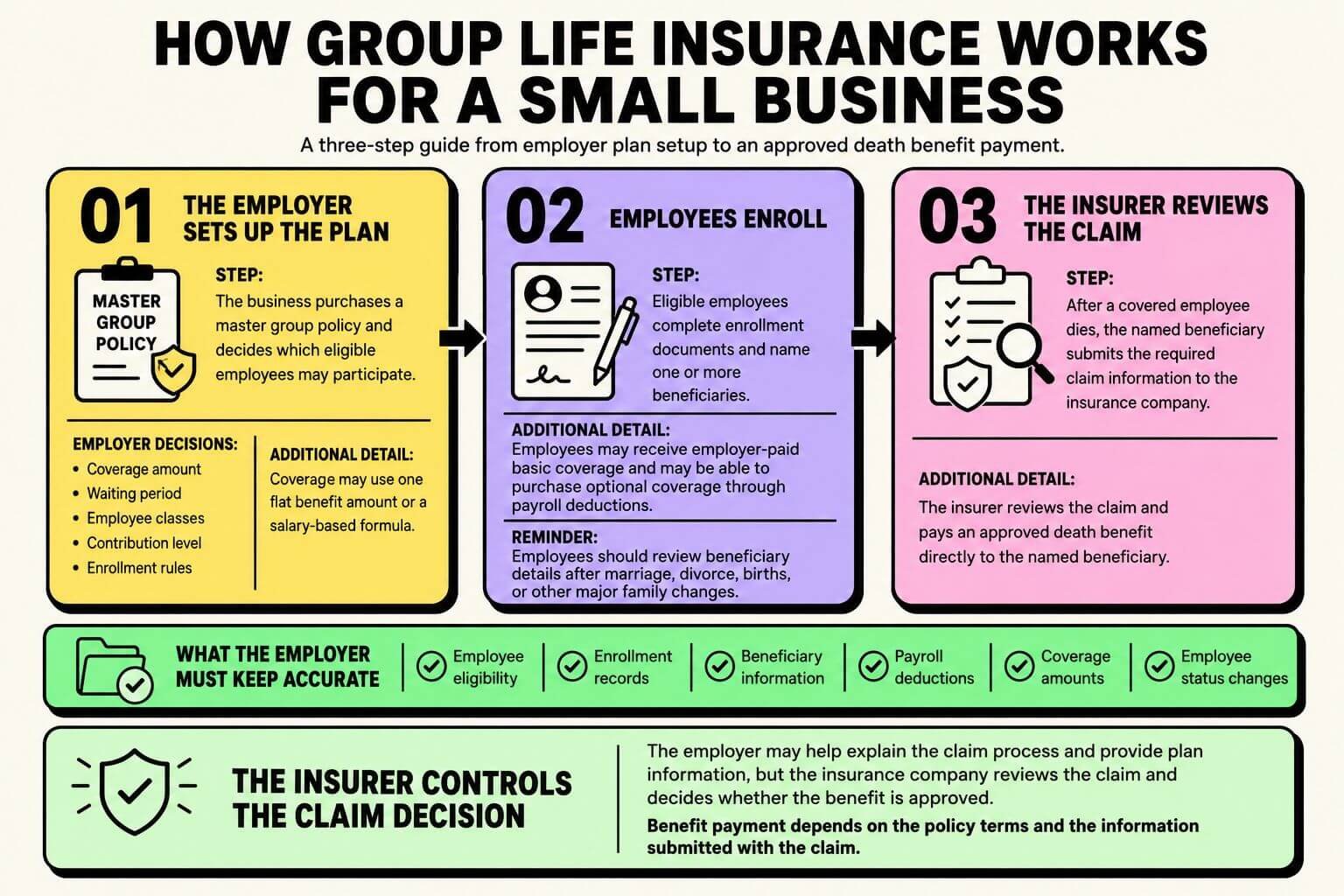
A small business purchases a master group policy from an insurance company and makes coverage available to eligible employees. The employer decides how much coverage to provide and whether the company, employees, or both parties will pay the premiums. Employees complete enrollment forms and select beneficiaries. Once coverage begins, the insurer handles claims and pays approved death benefits directly to beneficiaries.
Basic coverage may require little medical review. Employees requesting higher amounts may need to answer health questions. Employers must keep employee records, payroll deductions, eligibility changes, and coverage details accurate throughout the plan year.
The Employer Chooses the Plan and Eligibility Rules
The employer chooses the coverage amount, waiting period, employee classes, contribution level, and enrollment rules. Coverage may use one flat amount, such as $50,000, or a salary-based formula. Clear eligibility rules help HR teams apply the plan fairly and explain when new hires can enroll.
Employees Enroll and Name Their Beneficiaries
Eligible employees complete enrollment documents and name one or more beneficiaries to receive the death benefit. Workers may accept employer-paid basic coverage and choose optional coverage through payroll deductions. HR teams should remind employees to review beneficiary details after marriage, divorce, births, or other major family changes.
The Insurer Pays the Death Benefit
After a covered employee dies, the beneficiary submits a claim and required records to the insurance company. The insurer reviews the claim and pays the approved death benefit directly to the named beneficiary. The employer may help explain the claim process, but it does not control the payment decision.
What Types of Group Life Insurance Can Small Businesses Offer?
Small businesses can offer several types of employee life coverage based on budget, workforce needs, and benefit goals. Many begin with employer-paid group term life, then let employees buy extra protection. Some plans include options for spouses, children, or accidental death. Employers may explore group universal life insurance for employees who want workplace coverage with a permanent life insurance component.
A basic plan can provide a useful starting point, with voluntary choices added as the team grows. Reviewing employee needs, premium costs, coverage limits, and enrollment requirements can help business owners build a life insurance benefit that fits their workforce and payroll process.
Employer-Paid Basic Group Term Life Insurance
Basic group term life insurance gives eligible employees a set amount of coverage paid fully or partly by the employer. The benefit may use a flat dollar amount or a multiple of annual salary. This option gives workers basic protection and adds value to the company’s employee benefits package.
Voluntary Supplemental Life Insurance
Voluntary supplemental life insurance lets employees purchase coverage above the basic employer-funded amount. Premiums are usually deducted from payroll, which makes payments simple for workers. Coverage up to a stated limit may be available without health questions. Higher amounts may require medical information and approval from the insurer.
Spouse, Dependent, and AD&D Coverage
Some group plans let employees purchase spouse and dependent coverage for eligible family members. Employers may offer accidental death and dismemberment coverage, known as AD&D, as a separate option or plan feature. AD&D pays benefits for covered accidental deaths or serious injuries listed in the policy.
How Much Does Group Life Insurance Cost a Small Business?
The cost of small business group life insurance varies by workforce size, employee ages, coverage amounts, and the insurer’s pricing rules. Employers can fund the full benefit, split premiums with employees, or provide voluntary coverage paid through payroll deductions. A basic employer-paid plan usually costs less than one offering high benefit amounts, dependent coverage, and extra policy features.
One customer said the team made a complicated benefits process feel smooth, clear, and manageable from start to finish. Responsive guidance and thoughtful recommendations helped the business review its options with greater confidence.
Business owners should compare the monthly cost per employee, participation rules, renewal pricing, and administrative work. Reviewing several plan structures can help you offer useful coverage without placing too much pressure on your benefits budget.
Factors That Affect Group Life Insurance Rates
Insurance companies review the number of employees, employee ages, benefit amounts, job risks, and plan features when pricing coverage. Rates may change when your workforce grows or employee demographics shift. Salary-based coverage can cost more than a modest flat benefit since higher-paid employees receive larger death benefits.
Employer-Paid, Shared-Cost, and Voluntary Options
With an employer-paid plan, the business covers the full premium for basic insurance. A shared-cost plan divides premiums between the company and employees. Voluntary coverage places the premium on employees through payroll deductions. Some businesses fund a basic amount, then let employees buy extra protection at their own expense.
How Much Life Insurance Coverage Should a Small Business Offer?
There is no single coverage amount that fits every small business. Employers often choose a flat benefit, such as $25,000 or $50,000, or a salary-based amount, such as one times annual earnings. Your decision should reflect the available budget, employee income levels, workforce needs, and tax treatment.
A modest employer-paid benefit paired with optional employee-paid coverage can give workers more choice. Review benefit caps, guaranteed issue limits, and eligibility rules before setting the amount. Clear employee communication matters, since workers need to know what the plan covers and whether they need separate personal insurance.
Flat-Dollar Coverage vs. Salary-Based Coverage
Flat-dollar coverage gives every eligible employee the same benefit, such as $50,000. This structure is easy to explain and manage. Salary-based coverage sets the benefit at a multiple of earnings, such as one times annual salary. It can provide higher-paid employees with larger benefits but may increase plan costs.
Guaranteed Issue Limits and Medical Questions
A guaranteed issue limit is the coverage amount an eligible employee may receive without providing medical information. Employees seeking higher amounts may need to answer health questions or submit evidence of insurability. The insurer can approve, limit, or deny coverage above the guaranteed amount based on its underwriting rules.
What Tax Rules Apply to Small Business Group Life Insurance?
Federal tax rules affect employer-provided group term life coverage. Qualifying coverage up to $50,000 is usually excluded from an employee’s taxable income under Internal Revenue Code Section 79. The calculated cost of employer-provided coverage above that amount is treated as imputed income.
Employers must record the taxable amount through payroll and report it on Form W-2. Plans that favor key employees through eligibility or benefit levels can lose favorable tax treatment for those workers. Business owners should coordinate plan setup with their broker, payroll provider, and tax adviser so coverage amounts and reporting remain accurate.
The $50,000 Group Term Life Insurance Rule
Section 79 permits eligible employees to exclude the cost of up to $50,000 in employer-provided group term life insurance from taxable income. The rule applies to qualifying group term coverage, not every form of life insurance. Coverage exceeding $50,000 may create taxable income for the employee.
Imputed Income and W-2 Reporting
The taxable value of coverage above $50,000 is called imputed income. Employers calculate it using the IRS premium table rather than the insurer’s actual premium rate. The amount is reduced by eligible employee contributions and reported through payroll on Form W-2, including Code C reporting requirements.
Nondiscrimination Rules for Owners and Highly Compensated Employees
A plan that favors key employees in participation or benefits may trigger different tax treatment. In that case, the full cost of coverage for affected key employees may need to be included in taxable wages, not just the cost above $50,000. Employers should review employee classes before finalizing benefits.
What Are the Benefits and Limits of Group Life Insurance?
Group life insurance can help small businesses offer basic financial protection at a manageable cost. Employees may gain access to coverage with limited medical review, simple payroll deductions, and optional spouse or dependent benefits. For employers, the plan can strengthen the benefits package and support hiring and retention goals.
The main limit is that workplace coverage may not meet every employee’s full financial needs. Benefit amounts can be modest, coverage may end after employment, and higher limits may require health information. Employees should view group coverage as a starting point, then review whether personal life insurance is needed.
What Happens to Group Life Insurance When an Employee Leaves?
Group life insurance often ends when an employee leaves the company or no longer meets the plan’s eligibility rules. The exact termination date depends on the policy and the reason employment ended. Some plans let former employees continue coverage through portability or convert the group benefit into an individual policy.
These options may have strict application deadlines and higher premiums. HR teams should explain the available choices before coverage ends and provide any required forms. Clear communication helps former employees avoid an unexpected gap and gives them time to compare continuation costs with other personal life insurance options.
How Can a Small Business Set Up a Group Life Insurance Plan?
Start by reviewing your employee count, budget, workforce needs, and current benefits package. Compare insurance companies, coverage amounts, participation rules, waiting periods, guaranteed issue limits, and renewal terms. Decide whether the business will pay the full premium, share the cost, or offer employee-paid coverage.
Another employer shared that the benefits process felt seamless for the entire staff. The team explained each step clearly, answered questions in simple terms, and made the available choices easier for employees to understand.
Set clear eligibility rules and prepare an enrollment process for beneficiary details and payroll deductions. Benni Agency can help compare group life insurance options, review carrier requirements, and choose a plan that fits your workforce and budget. Speak with the team to discuss coverage choices and enrollment steps.
Is Group Life Insurance Worth It for Your Small Business?
Group life insurance may be worth offering if you want a useful employee benefit without committing to a high monthly cost. It can give workers basic protection and make your benefits package more competitive. The best fit depends on your budget, employee interest, payroll setup, and the coverage options available in your market.
A common approach is to fund a modest base benefit and let employees purchase extra coverage. Review costs, tax rules, participation requirements, and continuation options before choosing a plan. A clear plan with simple enrollment and communication can provide real value to both your business and your employees.
One thought on “How Does Group Life Insurance Work for Small Businesses?”
Comments are closed.