Insurance for a small cleaning business can cost a few hundred dollars annually for basic liability coverage, while businesses needing multiple policies may pay considerably more. The actual price depends on the cleaning services offered, employee count, location, and coverage requirements.
Even a cleaning business with one employee can face expenses from accidental property damage, customer injuries, or equipment losses. Understanding which policies you need and what affects their premiums helps you plan your insurance budget. It also makes comparing quotes easier when you are choosing coverage for your cleaning business.
Key Takeaways
Insurance costs vary: Cleaning services, workforce size, location, and coverage requirements determine how much a cleaning business pays.
General liability is a common starting point: It can cover certain third-party injury and property damage claims.
Employee coverage requirements differ by state: South Carolina generally requires workers’ compensation for businesses regularly employing four or more workers, subject to exemptions.
Multiple policies may be necessary: Workers’ compensation, commercial auto, property coverage, and janitorial bonds address different business risks.
Comparable quotes help with budgeting: Review policy limits, exclusions, deductibles, and business activities before selecting insurance.
How Much Does Insurance Cost for a Small Cleaning Business?
The cost of insurance for a small cleaning business varies because each policy covers different risks. General liability insurance is often a starting point for cleaning businesses, while companies with employees, commercial vehicles, or expensive equipment may need additional protection.
There is no single reliable national average that represents every cleaning company’s total insurance expenses. Premiums depend on the insurer’s assessment of the business and the coverage purchased. Here is how common insurance policies affect the overall budget:
| Insurance Type | What Affects the Cost |
| General liability insurance | Cleaning activities, annual revenue, claims history, and coverage limits |
| Workers’ compensation insurance | Employee payroll, job classifications, and state requirements |
| Commercial auto insurance | Vehicle type, driving history, location, and business use |
| Business owner’s policy (BOP) | Property values, liability coverage, location, and policy limits |
| Janitorial bond | Bond amount, employee count, and underwriting requirements |
A business owner’s policy generally combines commercial property and general liability coverage, so purchasing one may eliminate the need for separate policies covering those same risks. For a meaningful monthly or annual estimate, business owners should request quotes based on their actual operations rather than adding together unrelated insurance averages.
Insurance Costs for Solo Cleaners vs. Cleaning Companies
Solo cleaners often have fewer insurance needs because they generally have no employees and may use limited equipment. General liability coverage may be their primary expense. Cleaning companies with employees may also need workers’ compensation. Businesses operating vehicles or maintaining equipment inventories could face further insurance expenses. The total depends on their operations and coverage requirements.
What Types of Insurance Does a Small Cleaning Business Need?
General liability insurance is a common starting point because cleaning businesses regularly work on customers’ properties. Other policies may be appropriate depending on employees, equipment, and services.
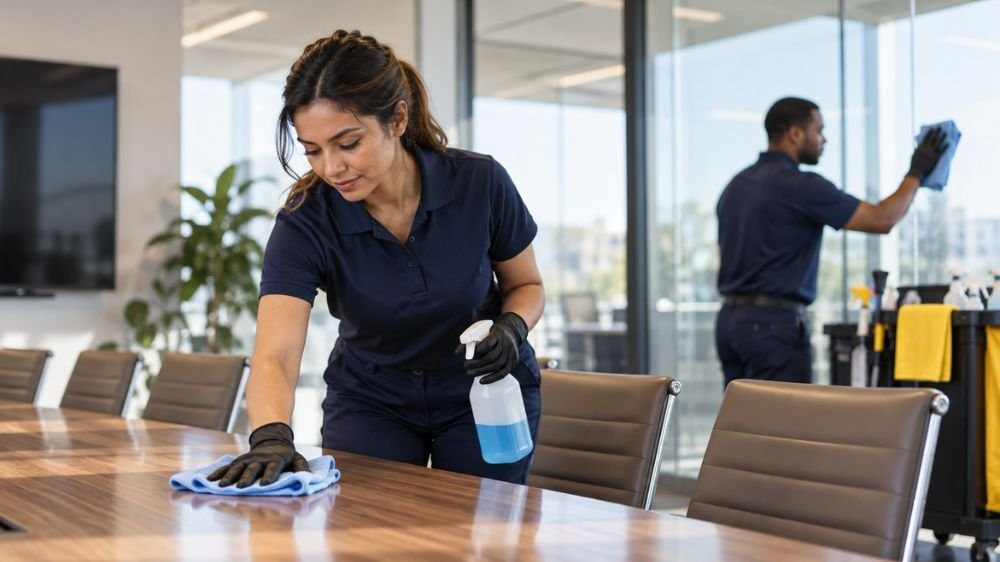
Common coverage options include:
- General liability insurance: Helps cover certain third-party injuries and property damage, such as accidentally damaging a customer’s furniture.
- Workers’ compensation insurance: Covers qualifying employee work-related injuries and illnesses, subject to state law.
- Commercial auto insurance: Covers eligible vehicle-related losses when vehicles are used for business.
- Business owner’s policy (BOP): Generally combines general liability and commercial property insurance.
- Janitorial bond: May provide protection against specified employee dishonesty or theft losses involving client property.
Businesses with expensive portable cleaning equipment may also need equipment coverage. The right combination depends on the cleaning activities performed and the risks involved. Business owners can review available commercial business insurance options to better understand their coverage needs.
What Factors Affect Cleaning Business Insurance Costs?
Cleaning business insurance costs depend on the company’s activities, workforce, location, and coverage choices. Insurers assess these details to estimate the likelihood and potential size of claims. Common pricing factors include:
- Type of cleaning: Residential cleaning, office janitorial work, and specialized cleaning services involve different risks.
- Employees and payroll: More employees or higher payroll can increase workers’ compensation premiums.
- Annual revenue: Revenue may influence how insurers assess business activity and liability exposure.
- Business location: Insurance rates and coverage requirements can vary by state. For example, a cleaning company consulting an insurance agency in Sumter, SC would need to consider South Carolina requirements alongside its cleaning activities, workforce, and coverage limits.
- Claims history: Previous claims may influence future premiums.
- Coverage limits and deductibles: Higher limits can increase premiums, while higher deductibles may reduce them.
The National Association of Insurance Commissioners also identifies business location, claims history, and risk management practices as factors affecting insurance costs.
Is Insurance Required for a Small Cleaning Business?
Insurance requirements depend on state law, business activities, and customer contracts. General liability insurance is not universally required by law, but clients or commercial property managers may require it before allowing cleaning work. Workers’ compensation requirements vary by state.
According to the South Carolina Workers’ Compensation Commission, businesses regularly employing four or more employees generally must maintain workers’ compensation insurance. Part-time employees and family members count toward this requirement, although exemptions apply.
Businesses operating vehicles must also satisfy applicable state auto insurance requirements. Some cleaning contracts require specific liability limits, bonding, or a certificate of insurance (COI), which documents coverage. Business owners should check applicable state requirements and customer contracts before deciding which policies to purchase.
How Can a Small Cleaning Business Lower Its Insurance Costs?
Cleaning businesses can manage insurance expenses by reviewing coverage needs, improving safety practices, and comparing policies with similar terms. Practical steps include:
- Compare quotes using the same coverage limits, deductibles, and policy types.
- Consider a business owner’s policy when both liability and commercial property coverage are needed.
- Maintain accurate employee, payroll, and business activity records.
- Train employees in safe chemical handling, equipment use, and slip prevention.
- Review insurance after hiring employees or changing cleaning services.
Choosing a higher deductible may reduce premiums, but it increases the amount the business pays for certain covered losses. The goal is to avoid unnecessary coverage expenses without leaving significant business risks uninsured. Lower premiums alone do not necessarily mean better insurance value.
How Do You Get an Accurate Cleaning Business Insurance Quote?
An accurate cleaning business insurance quote requires information about the company’s operations and coverage needs. Preparing these details before requesting quotes helps insurers assess the business correctly.

You may need to provide:
- Business location and services offered
- Annual revenue and employee payroll
- Number of employees and their job responsibilities
- Business vehicles and equipment
- Previous insurance claims
- Required coverage limits from customer contracts
Compare policy exclusions, deductibles, coverage limits, and premiums before purchasing. Working with an experienced insurance broker can help business owners understand available policies and identify coverage differences. Review the final quote carefully to confirm that it reflects your cleaning activities and the insurance requirements applicable to your business.