Employees can face serious financial pressure when an illness or injury keeps them from working. For employers, that can create challenges with retention, productivity, and workforce stability. Income protection benefits help replace part of an employee’s lost income, giving workers more financial support during difficult periods while helping businesses maintain a stronger benefits strategy. This guide is for employers and HR teams who want to understand how income protection supports employees, improves workplace stability, and helps them make smarter benefits decisions.
Key Takeaways
- Income protection benefits help replace lost wages when employees cannot work because of a covered illness or injury.
- Employees may feel more supported when their employer provides financial protection during unexpected health challenges.
- Lower financial stress can help employees focus on recovery instead of worrying about immediate income loss.
- Return-to-work support and clear benefit communication can improve the overall value employees receive from coverage.
- Employers can measure benefit effectiveness through participation, employee feedback, absence trends, and return-to-work outcomes.
What Are Income Protection Benefits?
Income protection benefits provide financial support when an employee cannot work because of a qualifying illness, injury, or disability. These benefits are designed to replace part of an employee’s income during a period when earning a regular paycheck becomes difficult. Common examples include:
- Short-term disability insurance, which generally helps cover shorter periods away from work.
- Long-term disability insurance, which provides support for longer qualifying disabilities.
- Employer-sponsored or voluntary disability benefits that employees can access as part of a benefits package.
According to the South Carolina Department of Insurance, disability income coverage provides payments during a covered disability, usually based on a percentage of the insured person’s income and subject to policy limits. For employers, income protection is not only about offering another benefit. It is about helping employees maintain financial stability when they experience situations that could otherwise create major personal and workplace disruption. Employers reviewing their options can explore different income protection coverage approaches based on employee needs, budget, and overall benefits goals.
Why Income Protection Can Improve Employee Retention
Reducing Financial Pressure During Difficult Times
Employees who experience an unexpected illness or injury often face two problems at the same time: managing their health and managing their finances. Without income protection, an employee may have to make difficult decisions about returning to work too soon, using savings, taking on debt, or searching for another source of income. Income protection benefits can help reduce that pressure by providing financial support while an employee focuses on recovery.
For employers, that support can influence how employees view the workplace. When workers feel their employer has prepared for difficult situations, they may see greater value in staying with the company. Access to these benefits can also be a differentiator. According to the U.S. Bureau of Labor Statistics, access to short-term and long-term disability benefits is not available to every private-industry worker in the South. That creates an opportunity for employers to provide meaningful protection that many employees may not already have.
Showing Employees Their Benefits Matter
Employees often judge a benefits package by how useful it becomes when they actually need it. Health insurance, retirement plans, and paid time off all matter, but income protection addresses a specific concern: what happens if someone cannot continue earning their regular paycheck? A benefit becomes more valuable when employees understand:
- What coverage they have.
- When they can use it.
- How the claims process works.
- How it supports them during recovery.
Clear communication can make the difference between a benefit employees ignore and one they genuinely appreciate.
How Income Protection Benefits Can Support Productivity
Reducing Financial Distractions
Financial stress can affect an employee’s ability to focus at work. Concerns about bills, lost wages, and future expenses can create distractions during an already difficult period. Income protection benefits can help reduce some of that uncertainty by providing financial support when employees need it most. This does not mean a benefit automatically creates higher productivity. Instead, it removes one barrier that can make recovery and workplace performance more difficult.
Supporting Recovery and Return to Work
A strong income protection strategy should support employees throughout their absence and return-to-work process. Depending on the plan, support may include:
- Income replacement during approved leave periods.
- Rehabilitation resources.
- Communication throughout the claims process.
- A structured return-to-work approach.
Helping experienced employees return after an illness or injury can also reduce disruption for employers. Replacing trained workers takes time, while supporting recovery may help maintain continuity. Employers looking to understand specific disability options can also review how short-term disability benefits work and how they fit into a broader benefits strategy.
What Determines Whether Income Protection Actually Works?
Plan Design Matters
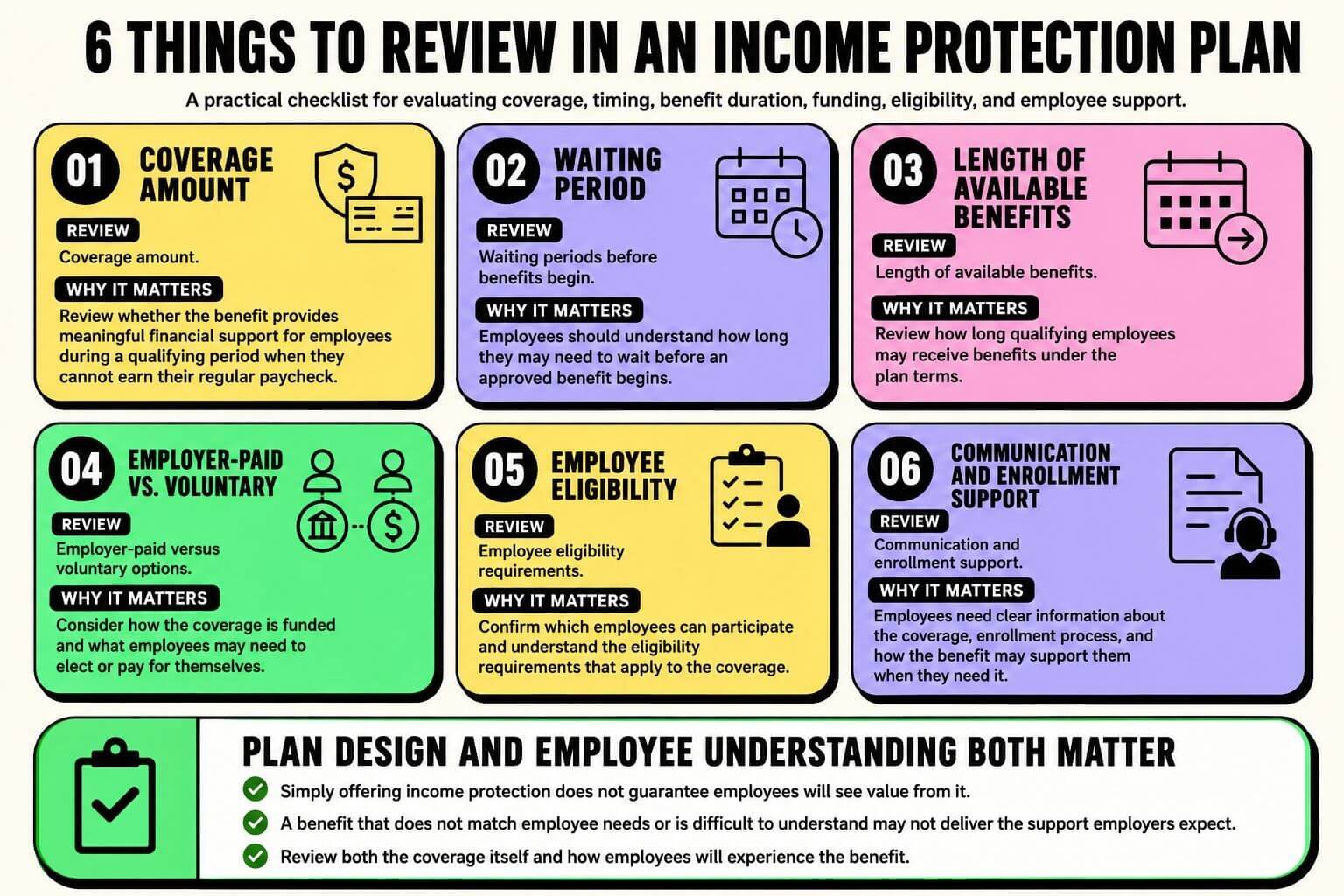
Simply offering income protection does not guarantee employees will see value from it. Employers should review important details such as:
- Coverage amount.
- Waiting periods before benefits begin.
- Length of available benefits.
- Employer-paid versus voluntary options.
- Employee eligibility requirements.
- Communication and enrollment support.
A benefit that does not match employee needs or is difficult to understand may not deliver the support employers expect.
Employees Need to Understand Their Benefits
Even a strong benefits package has limited value if employees do not know what is available. Employers should make benefits information easy to find and explain coverage in simple terms. Using effective benefits administration tools can help employees review available coverage, complete enrollment, and access important information when they need it.
Measuring the Impact of Income Protection Benefits
Employers should look beyond whether a benefit exists. They should also evaluate whether employees understand and use it. Useful measurements include:
- Employee feedback and satisfaction surveys.
- Participation and enrollment rates.
- Questions employees ask about coverage.
- Absence patterns.
- Return-to-work outcomes.
- Retention trends after employee leave.
These measurements help employers understand whether their benefits strategy is meeting employee needs. A benefit does not need to eliminate every workforce challenge to provide value. It needs to provide meaningful support where employees need it most.
How Income Protection Fits Into a Strong Benefits Strategy
Income protection is one part of a complete employee benefits approach. Employers often combine income protection with other benefits that support employee health, financial security, and workplace satisfaction, including:
- Health insurance.
- Dental and vision benefits.
- Retirement benefits.
- Voluntary benefits.
- Benefits administration support.
The goal is not simply offering more benefits. The goal is creating a benefits package employees understand and value. Income protection can play an important role because it addresses a concern employees may not think about until they experience it: how they will manage financially if they cannot work. For employers building a broader retention approach, reviewing an overall employee retention strategy can help connect income protection with other benefits decisions.
Building an Income Protection Strategy Employees Can Rely On
Income protection works best when employers review both the coverage itself and how employees experience the benefit. Businesses should consider whether their current plan provides meaningful support, whether employees understand available coverage, and whether the enrollment process makes benefits easy to access. A benefits review can help identify gaps in disability coverage, communication, and administration. It can also help employers compare options based on workforce needs, budget, and long-term goals.
Benni Agency works with employers to evaluate employee benefits strategies and identify coverage options that support employees during important life events. If you are reviewing your benefits package, exploring your income protection options can be a practical place to start.