You may be looking at a fully insured renewal and a level-funded quote that seems attractive, but the monthly price does not tell the whole story. Fully insured plans place covered claims risk with the insurance carrier, while level-funded plans use employer funding for expected claims along with administration and stop-loss protection.
The right choice depends on cost, risk, contract terms, claims activity, and how much plan oversight your team can handle. This article is for employers and HR teams that want to compare both options clearly before making a benefits decision.
Key Takeaways
- Fully insured plans place covered claims risk with the insurer while the employer pays a fixed premium for the policy period.
- Level-funded plans combine expected claims funding, administrative costs, and stop-loss protection into predictable monthly payments.
- Unused claims funds may result in a refund or credit under some level-funded contracts, but the rules vary.
- Stop-loss coverage limits defined claims exposure, but it does not make level funding risk-free.
- Price alone should not decide the plan. Compare maximum exposure, administration, reporting, contract terms, and renewal rules.
- South Carolina regulates fully insured and self-funded arrangements differently, which matters when employers compare plan structures.
What Is the Difference Between Fully Insured and Level Funded Plans?
The biggest difference is who carries the financial risk for employee medical claims. With a fully insured plan, your company pays an insurance carrier a set premium. The carrier pays covered claims and assumes the claims risk during the policy period.
A level-funded plan works differently. It is generally a form of self-funding packaged into predictable monthly payments. Part of that payment funds expected employee claims, while the rest covers administration and stop-loss protection. KFF describes level-funded arrangements as plans that combine self-funding with stop-loss insurance designed to limit an employer’s liability. Employers comparing major medical plans should look at both the benefits employees receive and the way those benefits are funded.
How Fully Insured Plans Work
With a fully insured plan, the employer pays a fixed monthly premium to an insurance carrier. The carrier handles covered claims and takes on the financial risk if claims are higher than expected. If employees use less healthcare than projected, the employer generally does not receive part of the premium back simply because claims were lower. This structure can appeal to employers that want straightforward monthly budgeting and fewer funding decisions to manage.
How Level Funded Plans Work
A level-funded plan usually divides the employer’s monthly payment into three main parts:
- Expected employee claims
- Administrative costs
- Stop-loss insurance
The employer funds claims up to limits defined in the contract. Stop-loss protection helps limit exposure if claims become unusually high. If claims finish below the amount funded, some contracts may return part of the unused claims money or apply it as a credit. That treatment depends on the plan agreement, so a refund should never be assumed.
Fully Insured vs Level Funded: Side-by-Side Comparison
A fully insured plan gives employers a fixed premium and transfers covered claims risk to the insurer. A level-funded plan keeps monthly payments predictable while tying part of the cost to expected claims. The biggest practical difference is risk and cost structure. Fully insured plans are simpler, while level-funded plans may offer more claims visibility and possible unused-fund savings, depending on the contract.
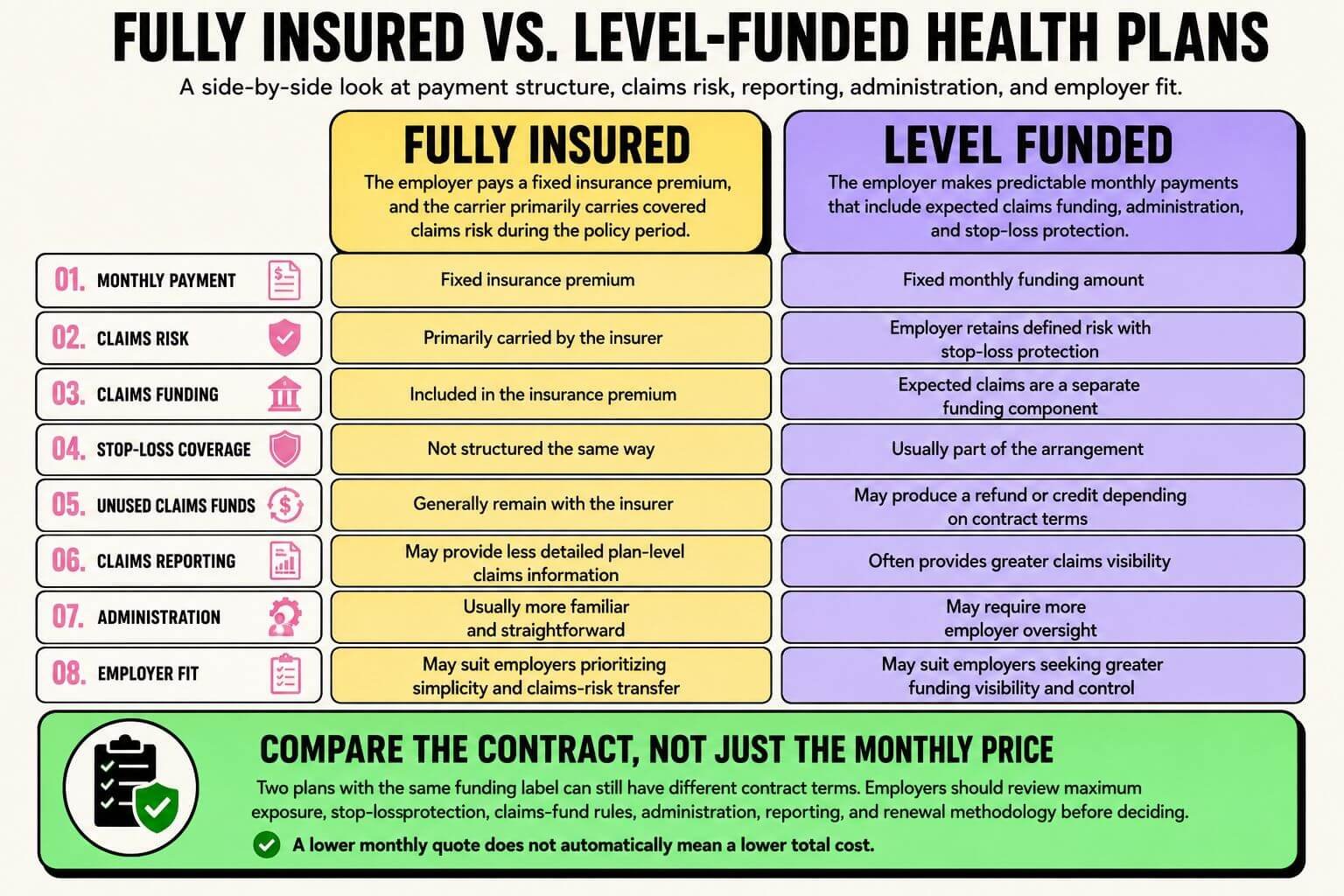
The table helps explain the structure, but two plans that are both labeled “level funded” can still have very different contract terms. Always review the actual proposal.
Cost, Claims Risk, and Stop-Loss Protection
A level-funded quote can sometimes appear less expensive than a fully insured renewal, but the first monthly number is only one part of the comparison. Look at the total potential employer cost. That includes:
- Monthly funding
- Administrative fees
- Stop-loss costs
- Maximum claims exposure
- Contract provisions
- Renewal methodology
You also need to understand what happens when claims perform much better or worse than projected.
What Happens When Claims Run High?
Level-funded plans typically include stop-loss insurance to protect against claims above specified levels. Specific stop-loss generally addresses unusually large claims associated with an individual covered person. Aggregate stop-loss addresses total claims that exceed an agreed threshold across the covered group.
KFF notes that stop-loss coverage transfers a substantial share of risk to insurers in level-funded arrangements. Still, employers should review the actual attachment points and maximum liability rather than assuming all high claims will have the same treatment.
What Happens When Claims Run Low?
Lower claims can be one of the attractive parts of level funding. If the claims account finishes with money left over, the employer may receive some of that amount back or receive a credit, depending on the contract. Before counting on that money, ask:
- What percentage of unused claims funds can be returned?
- When is the amount calculated?
- Is it paid as cash or applied to renewal?
- How are outstanding or runout claims handled?
- What happens if the employer changes plans or vendors?
These details can materially change the economics of a proposal.
Administration and Claims Data
Funding structure also affects how much your HR or benefits team may need to manage. A fully insured plan usually follows a familiar carrier setup. The employer pays the premium, manages eligibility and enrollment, and relies heavily on the carrier for claims administration. Level funding may provide more detailed reporting about claims and plan performance. That information can help employers understand where healthcare dollars are going, but it also gives the team more information to review.
Good benefits administration matters under either model. Enrollment, payroll deductions, eligibility changes, employee questions, reporting, and carrier updates still need to work properly. A plan that saves money on paper can lose some of its appeal if the administrative burden creates problems for HR and employees.
Which Type of Plan May Fit Your Business?
There is no funding structure that automatically works best for every employer. Your decision should reflect your budget, workforce, internal resources, comfort with claims risk, and the actual contract being offered.
Fully Insured May Fit Better When…
A fully insured plan may make more sense if:
- Simple budgeting is a priority
- Your team wants fewer funding variables to monitor
- You have limited HR or finance capacity for plan oversight
- Leadership prefers transferring claims risk to an insurance carrier
- Your current fully insured arrangement is competitive and working well
There is nothing inherently outdated about fully insured coverage. For some employers, predictable administration and risk transfer are worth paying for.
Level Funding May Fit Better When…
Level funding may deserve a closer look if:
- Your business wants greater visibility into claims performance
- You are reviewing alternatives to a difficult fully insured renewal
- Leadership is comfortable evaluating plan performance during the year
- Your team has enough administrative support
- The stop-loss and maximum-liability terms fit your risk tolerance
Level funding is already common among smaller employers. KFF reported that 37% of covered workers at firms with 10 to 199 workers were enrolled in level-funded plans in 2025. That does not mean 37% is the right benchmark for your company. It simply shows that level funding has become a meaningful part of the employer health-plan market. If neither structure fits your goals, it may make sense to compare other health plan options before settling on a renewal.
What South Carolina Employers Should Know
South Carolina defines its small-group health insurance market as employers with 2 to 50 employees, according to the South Carolina Department of Insurance. The funding structure also affects oversight. The department explains that fully insured employer plans are regulated by state insurance authorities, while many private-sector self-funded plans fall primarily under federal ERISA oversight through the U.S. Department of Labor. That distinction matters for South Carolina employers comparing a traditional insured policy with a level-funded arrangement. Ask how the proposed plan is funded and which rules apply before changing coverage.
Questions to Review Before Switching Plans
A lower quote can get your attention. The contract should decide whether the numbers actually make sense. Before leaving a fully insured plan for level funding, ask:
- What is our maximum annual financial exposure?
- What are the specific and aggregate stop-loss limits?
- How are unused claims funds handled?
- What happens to claims submitted after the plan year ends?
- Which administrative charges are fixed?
- What claims reports will we receive?
- How much usable claims data will be available?
- How will next year’s rates be calculated?
- What happens to remaining claims funds if we leave?
- Who handles employee enrollment and ongoing support?
Ask for these answers in plain language. If you cannot tell what your company could pay in a good claims year, a difficult claims year, and at renewal, you do not yet have enough information to compare the proposals properly.
Compare the Full Plan, Not Just the Quote
A fully insured quote and a level-funded quote can look easy to compare when you put the monthly costs next to each other. The important differences are often deeper in the contract. Review the maximum employer exposure, stop-loss terms, administrative fees, claims reporting, refund provisions, runout claims, and renewal methodology. A lower first-year number does not automatically produce a lower long-term cost or a better experience for your HR team.
Think about your internal resources too. A company that wants simple administration may reach a different conclusion from an employer that wants more claims visibility and is comfortable reviewing plan performance. Benni Agency can help employers compare major medical plans and understand what each proposal actually includes. If you are reviewing both options, compare the complete cost and contract terms before choosing based on the monthly rate.