Choosing dental, vision, and life benefits can look simple until you compare actual plans. Employers should look for useful dental coverage, practical vision benefits, and basic life insurance with room for employees to add more coverage when needed. Price matters, but networks, benefit limits, employee costs, and plan rules matter too.
This article is for business owners and HR teams who want to build a benefits package employees can understand and use without adding coverage that provides little practical value.
Key Takeaways
- Dental coverage should go beyond preventive care. Check networks, deductibles, annual maximums, and coverage for basic and major services.
- Vision benefits should cover services employees are likely to use, including exams, glasses, lenses, or contacts.
- Basic group life plus optional supplemental coverage gives employees a starting level of financial protection with room to buy more.
- Employers can use different contribution approaches for dental, vision, and life rather than paying for every benefit the same way.
- Do not compare plans on premium alone. Employee costs, provider access, coverage limits, and enrollment also affect how useful a benefit is.
What Dental, Vision, and Life Benefits Should Employers Offer?
There is no single benefits package that works for every company. A practical starting point is dental coverage that handles preventive care and provides meaningful help with other dental services, vision coverage that helps employees pay for routine eye care and corrective eyewear, and basic life insurance that provides a foundation of financial protection. The details matter.
A dental plan with a weak provider network may frustrate employees. A vision plan with a small allowance may provide less value than expected. Life insurance may look adequate until employees realize they need more protection for a spouse or family. Your workforce, budget, employee contributions, and available carriers should guide the final mix.
What Should Employers Look for in Dental Insurance?
A dental plan should be evaluated on more than cleanings and exams. Review:
- Preventive services
- Fillings and other basic services
- Crowns, bridges, dentures, and other major services
- Deductibles
- Annual benefit maximums
- Provider networks
- Waiting periods
- Orthodontic coverage, if offered
- Employee and dependent costs
Annual maximums and network rules deserve close attention. Two plans can both be called dental insurance while providing very different financial value. South Carolina’s Public Employee Benefit Authority offers a useful local example. Its Dental Plus and Basic Dental options differ in allowed amounts, network structure, premiums, out-of-pocket costs, and annual maximums. Dental Plus currently lists a $2,000 annual maximum per covered person, compared with $1,000 under Basic Dental. That does not make either public plan a standard for private employers. It simply shows why employers should compare the details behind the plan name.
What Should Employers Look for in Vision Insurance?
Vision insurance is usually easier to compare, but employers should still check what employees will actually receive. Look at:
- Routine eye exam frequency
- Frame allowances
- Prescription lens benefits
- Contact lens allowances
- Provider networks
- Replacement frequency
- Employee and dependent premiums
- Coverage or discounts for lens upgrades
A low monthly premium does not automatically make a vision plan a good choice. For example, an employee who regularly wears contacts may care more about the contact allowance than the frame benefit. Someone with children may place more value on network access and predictable exam costs. The goal is to choose coverage employees can understand and are likely to use.
How Should Employers Structure Life Insurance?
Life insurance serves a different purpose from dental and vision coverage. It helps provide financial protection if an insured employee dies. A common structure combines basic employer-sponsored coverage with optional supplemental coverage. Employers reviewing group life insurance should compare benefit amounts, eligibility, employee buy-up options, dependent coverage, beneficiary rules, and what happens to coverage after employment ends.
Basic Employer-Paid Life Insurance
Basic group life insurance can provide employees with a starting amount of coverage at little or no direct cost to them. Employers may see plans based on a fixed dollar amount or a multiple of salary. The right level depends on the employer’s budget and available plan options. The goal is to provide a useful base benefit without assuming that one coverage amount will meet every employee’s needs.
Supplemental and Dependent Life Options
Some employees will want more life insurance than the basic employer benefit provides. Supplemental coverage can let employees purchase additional protection through work. Plans may also offer spouse or dependent coverage. When comparing options, check guaranteed-issue limits, evidence-of-insurability rules, beneficiary procedures, and portability or conversion provisions. These details can affect how useful the benefit is when employees need to make changes.
Should Employers Pay for These Benefits?
Employers do not have to approach dental, vision, and life coverage in exactly the same way. Common approaches include:
Employer-paid coverage: The company pays the full premium for a selected benefit.
Shared-cost coverage: The company pays part and employees contribute the rest.
Voluntary coverage: Employees choose whether to enroll and generally pay the cost through payroll deductions.
A mixed approach can also work. For example, an employer might pay for basic life insurance, share the cost of dental coverage, and let employees elect vision or supplemental life voluntarily. Choose a contribution structure the business can maintain from year to year. A benefit that becomes unaffordable at renewal is difficult for both the employer and employees.
How Do You Choose the Right Benefits for Your Workforce?
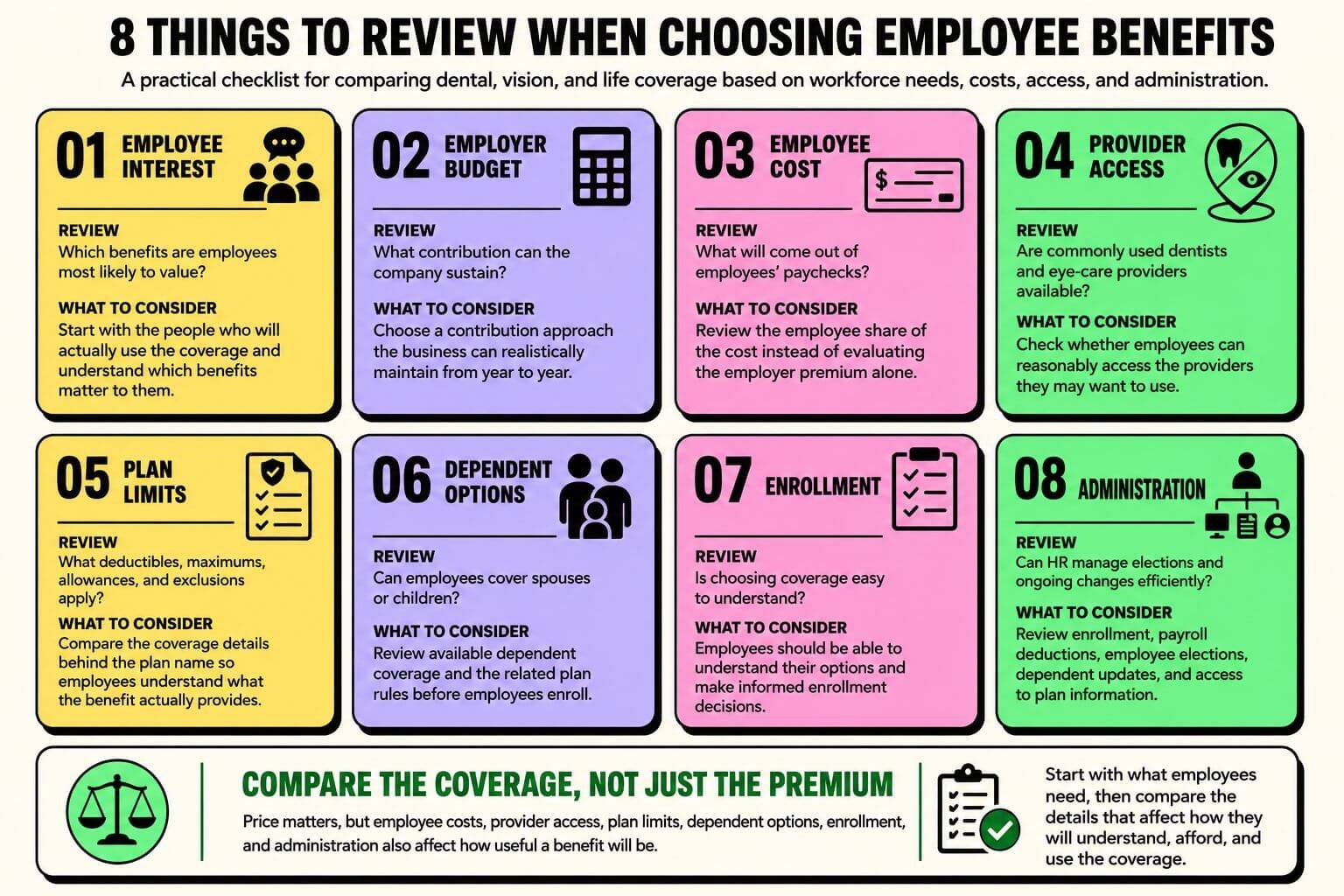
Start with the people who will use the benefits. Ask employees what matters to them, then compare available plans against a clear checklist:
- Employee interest: Which benefits are employees most likely to value?
- Employer budget: What contribution can the company sustain?
- Employee cost: What will come out of employees’ paychecks?
- Provider access: Are commonly used dentists and eye-care providers available?
- Plan limits: What deductibles, maximums, allowances, and exclusions apply?
- Dependent options: Can employees cover spouses or children?
- Enrollment: Is choosing coverage easy to understand?
- Administration: Can HR manage elections and ongoing changes efficiently?
Administration is easy to overlook during plan selection. Good benefits administration can help manage enrollment, payroll deductions, employee elections, dependent updates, and access to plan information.
Common Mistakes When Choosing Dental, Vision, and Life Benefits
One common mistake is choosing the lowest premium without checking what employees receive for it. Other problems include:
- Ignoring provider networks
- Comparing dental plans without checking annual maximums
- Overlooking vision allowances and benefit frequency
- Offering life insurance without explaining beneficiary choices
- Giving employees too many options without clear education
- Forgetting to review dependent costs
- Ignoring payroll and enrollment requirements
Employees do not judge benefits from a plan summary alone. They notice whether they can find a provider, understand their coverage, afford their share of the premium, and use the benefit when they need it.
Compare the Coverage, Not Just the Premium
Choosing dental, vision, and life benefits becomes harder once several carriers and plan designs are on the table. Two options with similar premiums can have very different provider networks, annual limits, eyewear allowances, employee contributions, or life insurance provisions. Start by deciding what you want each benefit to do for employees. Then compare the details that affect how people will use the coverage.
Benni Agency helps employers review these choices through its benefits consulting support, including plan review, workforce needs, employee communication, and benefits administration. The goal is not to add every option available. It is to choose coverage your company can support, and employees can understand.