Are voluntary benefits worth it for employers? They can be, especially when they fill real coverage gaps, give employees more choice, and add value without placing the full cost on the business. The real challenge is choosing benefits employees will use and explaining them clearly enough to support strong participation.
For employers, business owners, and HR teams, voluntary benefits can strengthen a benefits package, support recruitment, and help employees manage costs linked to accidents, illness, disability, or hospital stays. This guide is for decision-makers who want to judge value, cost, and fit before adding new options.
Key Takeaways
- Voluntary benefits can fill gaps in medical, life, and disability coverage.
- Employers should choose plans based on real employee needs.
- Clear communication can improve participation and reduce confusion.
- Cost, payroll setup, and HR workload should be reviewed before launch.
- Regular plan reviews help employers keep useful options and remove weak ones.
Should Employers Invest in Voluntary Benefits?
Employers should invest in voluntary benefits when the options solve real financial and coverage concerns within their workforce. These plans can give employees more choice without requiring the business to fund every premium. ADP describes voluntary benefits as employer-sponsored programs that are often employee-paid or partly employer-paid, with access to group rates in some cases.
Before adding coverage, review:
- Gaps in the current benefits package
- Employee questions and requests
- Expected participation
- Payroll and enrollment capacity
- The cost paid by employees
- Overlap with current coverage
A focused plan can strengthen your benefits package. A long menu of poorly explained options can create confusion and extra work.
When Voluntary Benefits Are Usually Worth Offering
Voluntary benefits may fit your business when employees face high deductibles, limited income protection, or gaps in life and disability coverage. In 2025, the average annual deductible for workers with single coverage and a general deductible reached $1,886.
Thirty-four percent of covered workers had deductibles of $2,000 or more. These figures show why added coverage may appeal to employees concerned about accident, hospital, or illness-related costs. Voluntary benefits may support recruitment, provide more choice, and help workers manage selected expenses. The strongest fit exists when employees request added options and your HR team can explain each plan clearly.
When Voluntary Benefits May Not Be Worth the Added Complexity
These benefits may offer limited value when they repeat current coverage, carry high employee costs, or attract little interest. A plan can create extra work through payroll deductions, enrollment corrections, employee questions, and carrier coordination. Low participation may signal that the benefit is too expensive, hard to explain, or poorly matched to your workforce. Review those issues before renewing or adding more options.
Are Voluntary Benefits Worth It for Small Businesses?
Voluntary benefits can help a small business offer more choice without paying the full premium for every option. This may make a smaller benefits package feel more competitive. The program still needs to remain simple. Choose a few plans tied to clear employee concerns, use one organized enrollment process, and provide plain-language materials. Too many carriers or similar products can place extra pressure on a small HR team.
How Do Voluntary Benefits Support an Existing Employee Benefits Package?
Voluntary benefits add another layer of protection around core coverage such as health insurance, employer-paid life insurance, and disability insurance. They are meant to fill selected gaps, not replace a strong primary benefits package.
For example, an employee with health insurance may still face a deductible, hospital costs, travel expenses, or lost income after an injury. Accident, hospital indemnity, critical illness, or disability coverage may provide payments tied to covered events. MetLife lists these plans among common workplace voluntary benefit options. Employers should review where employees face the greatest financial exposure. From there, they can select a small number of plans that complement current coverage and give employees a clear reason to enroll.
What Value Can Voluntary Benefits Create for Employers and Employees?
For employees, voluntary benefits can offer more choice, financial protection, and convenient payroll deductions. Group access may provide rates that are lower than employees could find on their own. For employers, the value can include:
- A more competitive benefits package
- Added support for recruitment and retention
- More options for employees with different needs
- Greater benefit choice without full employer funding
- Better protection against selected financial risks
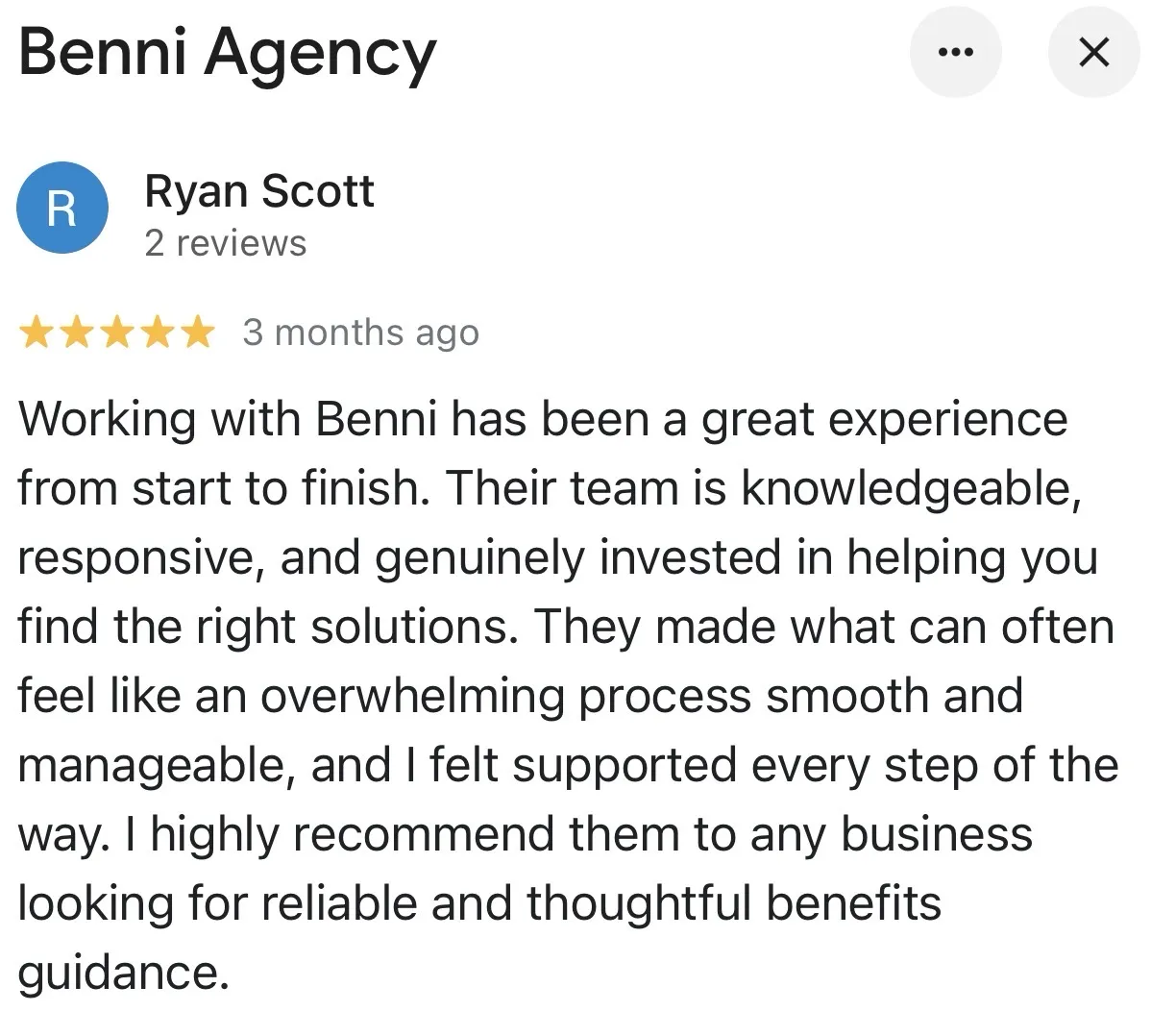
One employer described the benefits process as smooth and manageable from start to finish. The team provided clear guidance, responded quickly, and helped the business find options that matched its needs. This kind of support can make complex benefit decisions easier for employers and HR teams.
The value depends on plan quality and employee use. A benefit that looks attractive on a comparison sheet may fail if employees cannot explain what it covers. Clear plan choices, fair pricing, and useful education turn optional coverage into a benefit employees can use with confidence.
What Costs and Administrative Risks Should Employers Review?
Voluntary benefits may carry little direct premium cost for your business, yet they still require planning, staff time, and accurate administration. Employers should review the full workload before adding new plans. Key areas include:
- Employer premium contributions
- Setup or technology fees
- Payroll deduction management
- Enrollment support
- Employee education
- Carrier coordination
- Compliance review
- Ongoing plan questions
Some voluntary benefits are employee-paid, employer-paid, or funded through shared contributions. Enrollment may use payroll deductions or a Section 125 cafeteria plan, depending on the benefit and program structure. Your HR and payroll teams need a clear process for enrollment, deductions, status changes, and terminations. A benefit may look affordable on paper yet create added costs through correction work, employee confusion, and repeated support requests.
Direct and Indirect Employer Costs
Direct costs may include premium contributions, implementation fees, technology charges, communication materials, or benefits advisor support. Indirect costs often come from HR time, payroll setup, enrollment meetings, employee questions, and deduction corrections. Group voluntary rates may cost less than comparable individual options, yet employers still need to compare pricing, plan quality, and administrative demands before making a selection.
Enrollment, Payroll, and Administration Risks
Voluntary payroll deductions require employee authorization and accurate records. Errors can lead to incorrect deductions, delayed coverage, missed enrollments, or employee complaints. Your team should confirm eligibility rules, deduction amounts, effective dates, carrier file transfers, and termination procedures. Using fewer systems and a clear enrollment workflow can reduce correction work and make the program easier for employees and HR staff.
Which Voluntary Benefits Are Most Likely to Be Worth Offering?
The best voluntary benefits are the ones that address clear gaps in your current package. Common voluntary benefit options include accident, critical illness, hospital indemnity, disability, life, dental, and vision insurance. These plans may help employees manage injury expenses, hospital costs, income loss, family protection, or routine care needs.
Start with a small group of options connected to concerns your employees already raise. For example, accident or hospital coverage may interest employees enrolled in high-deductible medical plans. Disability insurance may matter more when your current package provides limited income protection. Review each option based on:
- Employee need
- Cost per paycheck
- Coverage limits
- Exclusions
- Claim process
- Overlap with current plans
- Expected participation
A focused selection is easier to explain and manage than a large menu of similar products.
How Can Employers Choose Benefits Employees Will Actually Use?
Start by reviewing employee feedback, current coverage gaps, and enrollment data. Do not select plans from a standard carrier list without checking whether they fit your workforce. Ask employees which concerns matter most:
- Medical costs after an accident
- Lost income during an illness or injury
- Family financial protection
- Dental or vision expenses
- Hospital-related costs
- Legal or identity protection
Next, compare those responses with your current medical, life, and disability plans. Look for gaps where employees face meaningful financial exposure. Check the cost per paycheck, benefit limits, exclusions, portability rules, and claim requirements. Voluntary plans give employees the choice to participate or decline, and workplace group rates may be lower than individual rates. The final selection should remain affordable, easy to explain, and simple for your team to administer.
Why Clear Employee Communication Improves Participation and Value
Employees may skip useful coverage when the price, exclusions, payment rules, or claim steps feel unclear. Clear communication helps your team connect each benefit with a real financial need. Explain each plan using:
- Cost per paycheck and per month
- Covered events and common exclusions
- Benefit limits
- Payment method
- Claim steps
- Simple workplace examples
For example, an employee may see hospital coverage as another medical plan. A short example can show how it may provide a fixed payment after a covered hospital stay. SHRM recommends explaining why benefits are structured a certain way and what the program aims to achieve for employees. Plain-language education builds trust, supports informed choices, and can reduce repeated questions during enrollment.
How Should Employers Measure Whether Voluntary Benefits Are Working?
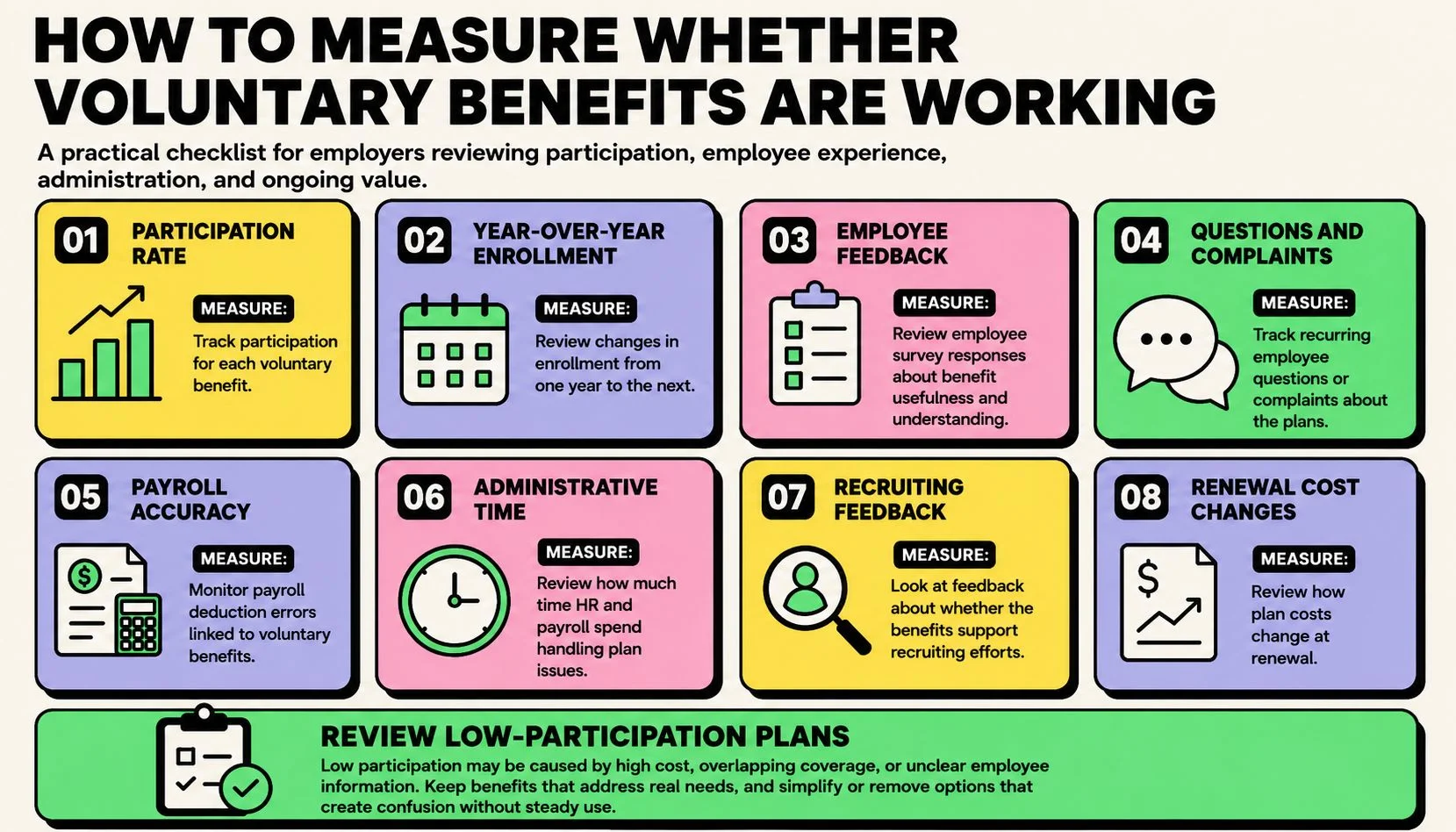
A voluntary benefits program is working when employees use the options, understand their choices, and experience few enrollment or payroll problems. Enrollment totals alone do not show the full value. Track these measures:
- Participation rate for each benefit
- Changes in enrollment from one year to the next
- Employee survey responses
- Questions or complaints
- Payroll deduction errors
- Time spent handling plan issues
- Recruiting feedback
- Renewal cost changes
Review low-participation plans to find the cause. The price may feel too high, the coverage may overlap with another plan, or employees may lack clear information. Keep benefits that address real needs. Simplify or remove options that create confusion without steady use. This regular review helps your business maintain a focused, useful benefits package.
Build a Voluntary Benefits Strategy Around Real Workforce Needs
A strong voluntary benefits strategy starts with your employees’ real concerns, current coverage gaps, and ability to pay. The best plan is not the one with the most options. It is the one employees can understand, afford, and use with confidence. Review:
- Current medical, life, and disability coverage
- Employee feedback and common questions
- Cost per paycheck
- Coverage limits and exclusions
- Enrollment and payroll needs
- Expected employee participation
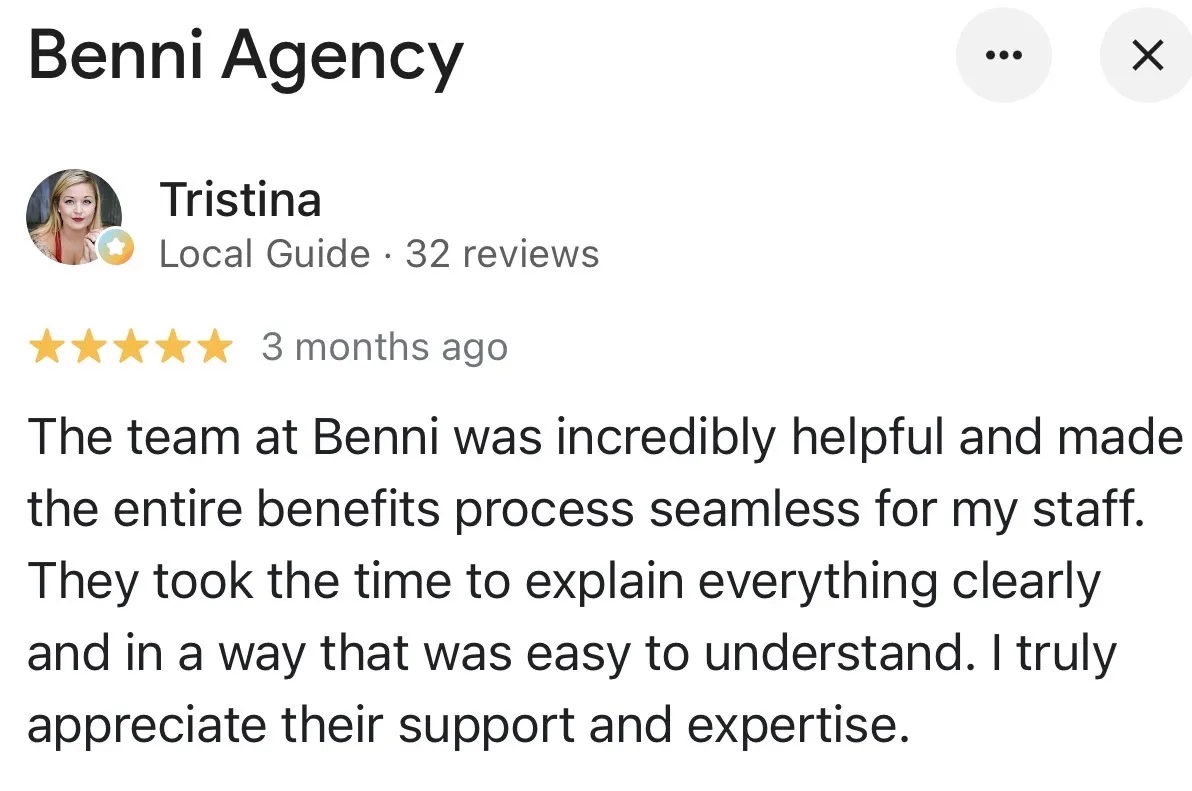
One employer shared that the benefits process felt seamless for the entire staff because each step was explained clearly and questions were answered in an easy-to-understand way. That experience shows how practical support and strong communication can help employees feel more confident during enrollment.
Benni Agency can help employers compare voluntary benefit options, identify gaps, and create a focused program that fits the workforce. Clear plan information and a simple enrollment process can help employees make informed choices without placing added pressure on HR teams.
One thought on “Are Voluntary Benefits Worth It for Employers?”
Comments are closed.