Adding more benefits does not automatically give employees more value. The voluntary benefits that tend to work best fill a real financial or coverage gap, fit employee budgets, and are simple enough for people to understand and use.
For employers, the goal is not to build the longest benefits menu. It is to choose options that make sense for the workforce you actually have. This article is for business owners and HR teams who want to choose useful voluntary benefits without adding unnecessary cost, confusion, or administrative work.
Key Takeaways
- The best voluntary benefits solve a real employee need. More choices do not automatically create more value.
- Coverage gaps should guide benefit selection. Accident, hospital indemnity, critical illness, disability, and life coverage address different financial risks.
- Affordability matters. A useful benefit may still see low participation if employees cannot comfortably fit the premium into their budget.
- Clear communication affects participation. Employees need to know what coverage does, when it may help, and what it costs.
- Employers should review results each year. Participation, employee feedback, coverage overlap, and administrative problems can help show which options are worth keeping.
What Makes a Voluntary Benefit Valuable to Employees?
A voluntary benefit has value when employees can connect it to a real need. That starts with the rest of your benefits package. Where could employees still face a large medical bill? What happens if an injury or illness keeps someone from working? Do employees with families have enough life insurance? Are dental or vision benefits missing?
The benefit should address a clear gap rather than simply add another enrollment choice. Cost matters too. Because employees often pay some or all of the premium for voluntary coverage, even useful products can struggle if the price feels too high. Finally, employees need to understand what they are buying. If people cannot explain when a benefit may pay or why they might need it, offering the product alone will not create much value.
Which Voluntary Benefits Tend to Deliver the Most Value?
There is no single voluntary benefit that makes sense for every company. A warehouse workforce may have different concerns from an accounting firm. Younger employees may prioritize different benefits than workers supporting children or aging parents. Instead of asking which product is most popular, ask which financial risks your current benefits leave employees responsible for.
Accident and Hospital Indemnity Coverage
Accident and hospital indemnity coverage can help when employees are worried about expenses that their medical plan does not fully cover. For example, a high-deductible health plan may leave an employee responsible for a meaningful amount after an emergency room visit or hospital stay. Employers reviewing supplemental health benefits should first look at where their medical plan creates those out-of-pocket gaps. The right fit depends on the medical plan, employee budget, coverage details, and how likely employees are to understand the benefit.
Critical Illness Coverage
Critical illness coverage generally pays according to the terms of the policy when an employee experiences a covered serious illness. That money may help with costs that continue outside the doctor’s office, such as household bills or other expenses during treatment and recovery.
The key question is not simply whether critical illness coverage is available. Employers should look at what the policy covers, what employees pay, and whether it fills a meaningful gap in existing protection.
Disability and Income Protection
Medical insurance helps pay eligible healthcare expenses. It does not replace the paycheck an employee depends on if an illness or injury keeps that person from working. That is why disability coverage deserves separate attention.
According to the U.S. Bureau of Labor Statistics, in March 2025, only 37% of private-industry workers in the South had access to short-term disability benefits, while 34% had access to long-term disability coverage. For South Carolina employers, those regional numbers give useful context when reviewing employee income protection. When missed wages could create a serious financial problem, income protection options such as short-term or long-term disability coverage may be worth reviewing.
Supplemental Life Insurance
Employer-paid basic life insurance may provide a starting point, but some employees want additional protection based on their own financial responsibilities. Employees with children, mortgages, spouses, or other dependents may want the option to purchase more coverage. Employers considering additional life insurance options should give employees enough information to compare costs and coverage rather than assuming everyone needs the same amount.
Dental, Vision, and Other Employee-Paid Options
Dental and vision coverage can be valuable because employees understand the need and may use the benefits regularly. Other voluntary choices can include telehealth, legal assistance, identity protection, wellness programs, pet insurance, or similar employee-paid products. More is not always better. A focused group of benefits tied to employee needs is usually easier to explain than a large catalog full of options employees have to sort through during enrollment.
How Should Employers Decide What Their Employees Need?
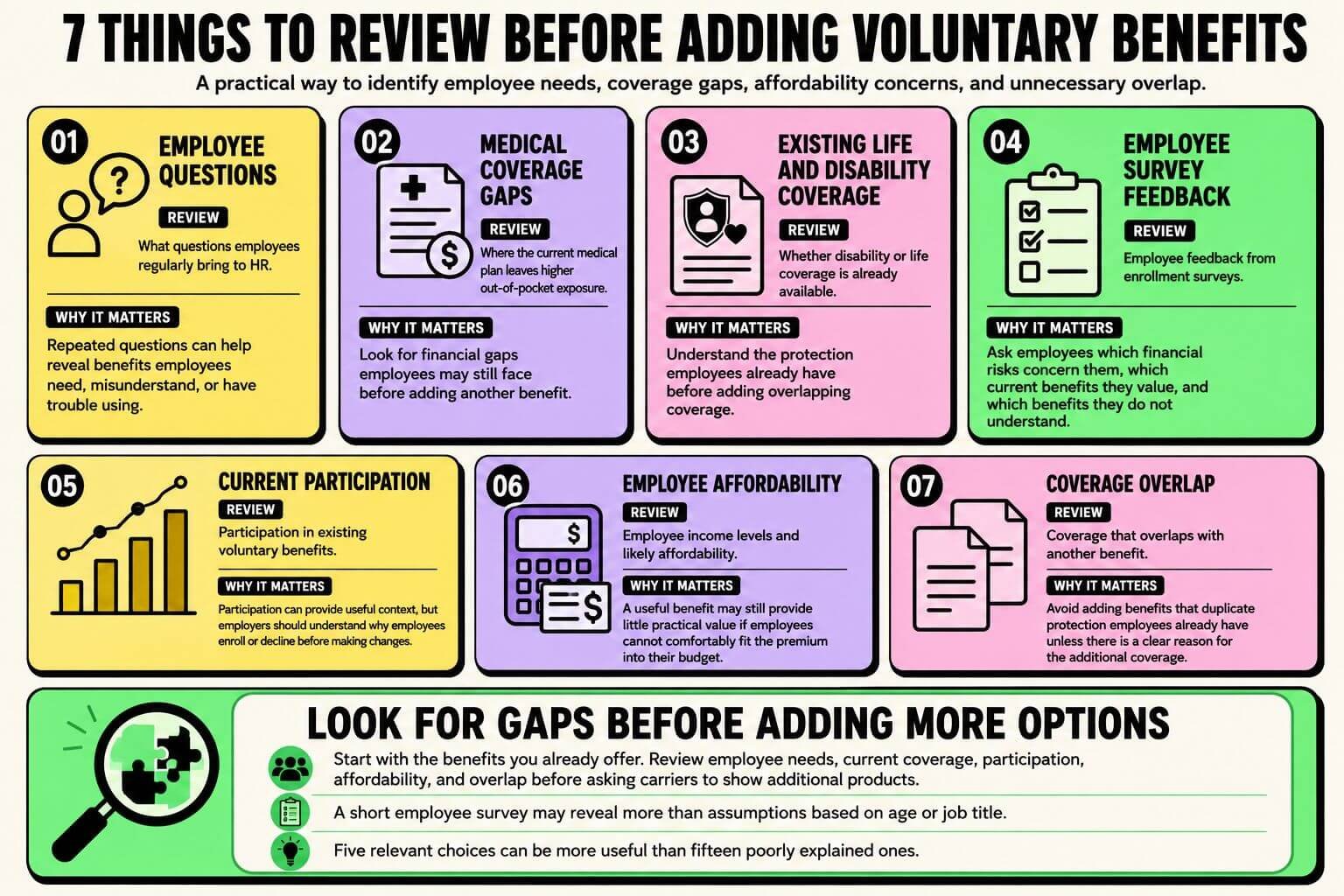
Start with the benefits you already offer. Look for gaps before asking carriers to show you additional products. A simple review can include:
- What questions employees regularly bring to HR
- Where the current medical plan leaves higher out-of-pocket exposure
- Whether disability or life coverage is already available
- Employee feedback from enrollment surveys
- Participation in existing voluntary benefits
- Employee income levels and likely affordability
- Coverage that overlaps with another benefit
You can also ask employees directly. A short survey may tell you more than assumptions based on age or job title. Ask which financial risks concern employees, which current benefits they find useful, and which benefits they do not understand. Then narrow the menu. Five relevant choices can be more useful than fifteen poorly explained ones.
Why Communication and Administration Affect Benefit Value
A good voluntary benefit can perform poorly if enrollment is confusing. Employees need plain explanations. Instead of only giving them a product name and policy summary, explain the kind of situation the benefit is meant to address. For example: “Hospital indemnity coverage may provide a set benefit after a covered hospital admission.” That gives employees more context than simply listing “Hospital Indemnity” in an enrollment portal.
Administration matters behind the scenes too. Eligibility files need to be correct. Employee elections need to reach carriers. Payroll deductions need to match what employees selected. New hires and coverage changes need to be handled consistently. Good benefits administration technology can help keep enrollment information, eligibility, and payroll-related processes organized. The easier the program is for employees and HR to manage, the better chance it has of working as intended.
Common Mistakes That Reduce the Value of Voluntary Benefits
One of the easiest mistakes is offering too many choices. Employees already have medical plans, deductibles, provider networks, tax-advantaged accounts, life insurance, and other decisions to make. Adding a long list of unfamiliar voluntary products can make enrollment harder rather than better. Other common problems include:
- Choosing products without asking employees what they need
- Ignoring whether premiums fit employee budgets
- Offering coverage that overlaps with existing benefits
- Using technical insurance language during enrollment
- Failing to explain what a benefit is meant to cover
- Creating payroll deduction errors
- Keeping low-interest products year after year without reviewing them
Watch employee behavior. If nearly everyone skips a benefit or HR repeatedly has to explain what it does, the issue may be the product, the price, or the way it is being communicated.
How to Tell Whether a Voluntary Benefit Is Working
Enrollment numbers are useful, but they do not tell the whole story. Start with participation. If employees repeatedly decline a product, find out why. They may not need it, may consider it too expensive, or may not understand the coverage. Then look at a few other signals:
- Has participation increased or fallen?
- What questions do employees ask about the benefit?
- Are employees confused during enrollment?
- Are payroll corrections common?
- Does the benefit duplicate another form of coverage?
- Have employee needs changed since the product was introduced?
Employee feedback can add context to the numbers. A benefit with modest enrollment may still be valuable to the employees who need it most. The goal is not to hit an arbitrary participation percentage. It is to know why the benefit is being offered and whether it still serves that purpose.
Review the Gaps Before Adding More Benefits
Adding another voluntary product is not always the answer. First, look at what your current benefits package already covers and where employees may still carry meaningful financial risk. Review the questions employees bring to HR, participation in current plans, medical deductibles and out-of-pocket costs, income protection, and benefits that employees regularly decline. Those details usually tell you more than choosing from a carrier’s full product catalog.
A focused benefits menu can also make enrollment easier. Employees have fewer overlapping choices to compare, while HR has fewer deductions, eligibility rules, and carrier processes to manage. Benni Agency helps employers compare voluntary benefit options alongside their existing benefits and identify where additional coverage may make practical sense. The goal is not to offer the most products. It is to give employees benefits they can understand and reasonably use. If you are reviewing your current package, start with the gaps employees are actually asking you to solve.