You want to offer employee benefits, but where should you start? For Mount Pleasant employers, the process begins with understanding your workforce, setting a realistic budget, and deciding which benefits structure fits the company. Choosing an insurance plan is only one part of the job. You also need clear eligibility rules, employee communication, payroll coordination, and ongoing administration.
This guide is for local business owners and HR teams who want to build a useful benefits package without creating unnecessary costs or confusion.
Key Takeaways
- Set your goals and budget first. Know why you are offering benefits and what the company can maintain before requesting plans.
- Review your workforce carefully. Employee count, eligibility, ZIP codes, dependents, and benefit priorities can affect your options.
- Compare different benefit structures. Group insurance, reimbursement arrangements, employer-paid coverage, and voluntary benefits serve different needs.
- Look beyond the premium. Check provider networks, prescriptions, deductibles, payroll costs, and administrative requirements.
- Prepare enrollment and payroll early. Clear deadlines and accurate deductions help coverage begin correctly.
- Review the program throughout the year. New hires, terminations, billing, and employee questions require ongoing attention.
Start With Your Benefits Goals and Budget
Before comparing insurance plans, decide what you want the benefits program to accomplish. Are you trying to recruit employees for hard-to-fill positions? Do you want to improve retention? Are employees asking for health insurance, dental coverage, or income protection? Your answer will help determine which benefits deserve priority.
Cost also needs to be discussed early. Build a budget that the company can maintain for the full plan year, not just during the first few months. Consider:
- The amount the company can contribute for each employee
- Whether the company will help cover dependents
- Administrative or technology costs
- Possible premium changes at renewal
- The cost of adding new eligible employees
- The amount employees may need to pay through payroll
The Charleston region’s labor force grew by nearly 67,000 people between 2018 and 2024, according to the Charleston Metro Chamber. That growth has created opportunities for local employers, but it also means companies need to think carefully about how compensation and benefits support their hiring goals. A larger package is not always a better package. The better question is whether the benefits are useful to employees and financially manageable for the business.
Review Your Workforce Before Choosing Benefits
The right benefits structure depends heavily on who works for your company. Two Mount Pleasant businesses with the same number of employees may need very different plans. One may have a stable team of full-time professionals. Another may rely on part-time, seasonal, or hourly employees. Those differences can affect eligibility, participation, contribution decisions, and employee affordability.
Confirm Eligibility and Employee Classes
Start by identifying which employees may qualify for coverage. Review:
- Full-time and part-time status
- Employee work locations
- Waiting periods for new hires
- Seasonal or temporary positions
- Dependent eligibility
- Expected hiring during the plan year
- Any employee classes the company plans to use
Eligibility rules should be clear and applied consistently. Employers considering different benefits for separate employee groups should have the arrangement reviewed before enrollment. Insurance, tax, and employment rules may affect how those groups can be structured. You will also need accurate employee information when requesting quotes or reviewing reimbursement options. This may include ages or birth dates, home ZIP codes, dependent details, and current coverage information.
Ask Employees What They Value
You do not have to guess which benefits employees want. A short, anonymous survey can help identify their main priorities. You might ask whether employees value:
- Access to certain doctors or hospitals
- Prescription drug coverage
- Lower payroll deductions
- Lower deductibles
- Dental and vision coverage
- Life or disability insurance
- Voluntary accident or critical illness coverage
- Benefits for spouses and children
Keep the questions focused on preferences. Do not ask employees to disclose diagnoses, private medical histories, or other sensitive health information. Employee feedback should guide the discussion, but it should not make the entire decision. The final package also needs to fit the company’s budget and administrative capacity.
Choose a Benefits Structure That Fits the Company
There is more than one way to offer employee benefits. The right approach depends on workforce size, available plans, budget, participation, and how much administration the company can manage.
Traditional Group Benefits
With traditional group coverage, the employer selects one or more plans for eligible employees. The employer usually contributes toward the cost, and employees pay their share through payroll deductions. A group package may include:
- Medical insurance
- Dental coverage
- Vision coverage
- Employer-paid life insurance
- Short-term or long-term disability insurance
This approach can give employees a shared set of plan choices. It may also make payroll deductions and employee communication easier to organize. However, employers still need to review participation requirements, provider networks, contribution rules, and employee costs before selecting a plan.
Reimbursement and Voluntary Options
Some employers may consider a health reimbursement arrangement instead of, or alongside, traditional group coverage. An Individual Coverage Health Reimbursement Arrangement, commonly called an ICHRA, allows eligible employers to reimburse employees for qualifying individual insurance expenses under established rules. A Qualified Small Employer Health Reimbursement Arrangement, or QSEHRA, may be available to certain smaller employers that meet current requirements.
Voluntary benefits provide another way to expand employee choice. Employees may purchase coverage such as accident, critical illness, hospital indemnity, life, dental, or vision insurance through payroll deductions. These options solve different problems. An employer should compare eligibility, contribution requirements, administrative work, employee choice, and tax considerations before deciding which model is the best fit.
Compare Plans Beyond the Monthly Premium
A low monthly premium may look attractive, but it does not tell you what employees will pay when they use their coverage. Compare the full plan, including:
- Provider network: Are employees’ preferred doctors, hospitals, and clinics included?
- Prescription formulary: Are common employee medications covered, and at what level?
- Deductible: How much must an employee pay before the plan begins sharing certain costs?
- Copays and coinsurance: What will employees pay for appointments, tests, and treatment?
- Out-of-pocket maximum: What is the most an employee may have to pay for covered in-network care?
- Employer contribution: How much will the company pay?
- Employee deduction: What will come out of each paycheck?
- Participation requirements: How many eligible employees need to enroll?
- Administrative work: What will payroll or HR need to manage?
Employee affordability matters because wages differ widely across the Charleston area. In May 2025, the average hourly wage was $64.74 for management occupations, compared with $15.85 for food preparation and serving roles. A payroll deduction that feels manageable to one workforce may be difficult for another. When comparing plans, look at a few common care situations. What might an employee pay for a primary care visit, a specialist, a prescription, or an emergency room visit? That gives the team a clearer picture than the premium alone.
Build a Practical Starting Benefits Package
You do not have to introduce every benefit at the same time. A smaller employer may be better served by starting with a focused package that employees understand and can afford. Additional benefits can be considered after the company reviews participation, employee questions, and the available budget.
Start With the Benefits Employees Use Most
The right starting point depends on employee needs and business goals. Possible starting packages include:
- Medical and dental coverage
- Medical coverage with employer-paid life insurance
- A reimbursement arrangement with voluntary dental and vision
- Medical, life, and disability coverage
- Core employer-paid benefits with optional employee-paid coverage
These are examples, not fixed recommendations. A professional office, restaurant, medical practice, retail business, and skilled-trade company may have very different employee needs. Choose benefits because they solve a clear problem, not because they make the package look larger.
Add Voluntary Benefits Carefully
Voluntary benefits can give employees more choices without requiring the employer to pay the full cost of every option. Common choices include:
- Accident insurance
- Critical illness insurance
- Hospital indemnity coverage
- Additional life insurance
- Short-term disability coverage
- Dental or vision plans
Too many choices can make enrollment harder. Employees may struggle to understand overlapping products, exclusions, and payroll costs. Add voluntary benefits only when you can explain what they cover, who may find them useful, and how the deductions will appear in payroll. Participation should also be reviewed after enrollment to see whether employees are using the options.
Prepare Enrollment, Payroll, and Employee Communication
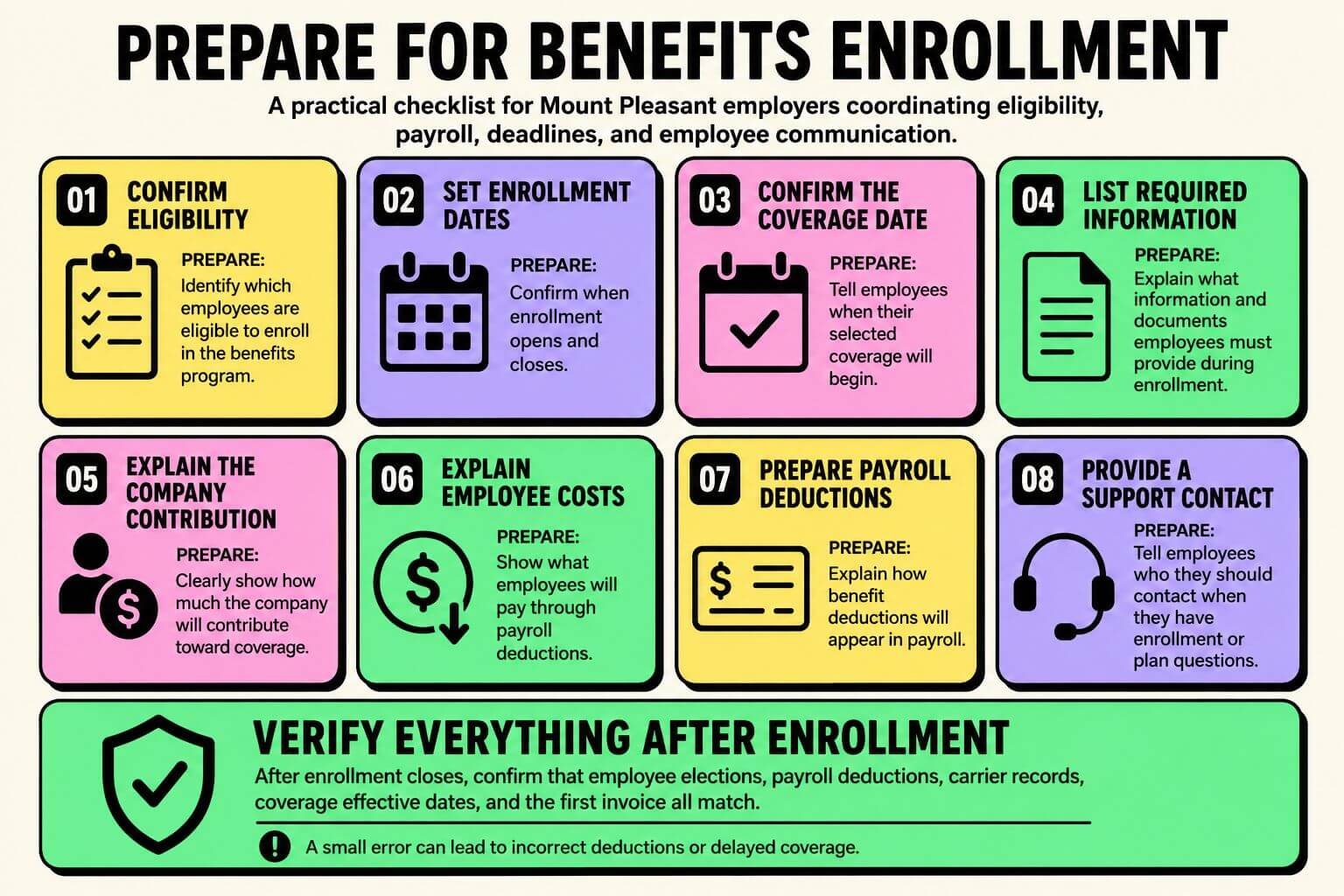
Once you select the benefits, you still need to prepare for enrollment. Start by confirming:
- Which employees are eligible
- When enrollment opens and closes
- When coverage will begin
- What information employees must provide
- How much the company will contribute
- What employees will pay
- How deductions will appear in payroll
- Who employees should contact with questions
Employees need enough information to make informed choices. Provide clear plan comparisons rather than sending a large packet of insurance documents without explanation. Show employees how the plans differ in areas such as:
- Monthly payroll deductions
- Deductibles
- Copays
- Provider networks
- Prescription costs
- Out-of-pocket limits
- Dependent coverage
After enrollment closes, verify that employee elections were submitted correctly. Payroll deductions, carrier records, effective dates, and the first invoice should all match. A small error at this stage can lead to incorrect deductions or delays in coverage, so review the information before assuming the process is complete.
Review the Benefits Program After It Starts
Employee benefits require attention throughout the year. New employees may become eligible. Existing employees may leave the company. Others may experience marriage, divorce, birth, adoption, or another qualifying event that affects their coverage. Your ongoing process should include:
- Adding eligible new hires
- Removing former employees
- Processing qualifying life events
- Updating dependent information
- Answering employee questions
- Checking payroll deductions
- Comparing deductions with carrier bills
- Reviewing participation
- Preparing for renewal
Compare payroll records and carrier invoices regularly. This can help identify employees who were billed incorrectly, deductions that were missed, or coverage that should have ended. Do not wait until renewal to review the program. Employee questions, billing issues, and participation trends can show what needs improvement long before new plans are selected.
Common Mistakes Mount Pleasant Employers Should Avoid
Many benefits problems begin before enrollment. One common mistake is requesting quotes without knowing how much the employer can contribute. This can produce options that look good on paper but do not fit the company’s budget. Other mistakes include:
- Choosing the lowest premium without checking the provider network
- Using eligibility rules that employees do not understand
- Waiting too long to prepare payroll
- Failing to explain deductibles and out-of-pocket costs
- Adding too many voluntary products at once
- Missing enrollment deadlines
- Assuming carrier bills are always correct
- Waiting until renewal to address employee concerns
Clear planning reduces these problems. Before selecting benefits, document the company’s budget, eligibility rules, preferred effective date, and employee priorities.
Review Your Options Before Requesting Plans
Before requesting plans, gather the basic details that will shape your options. This usually includes your eligible employee count, employee ZIP codes, desired effective date, contribution budget, payroll schedule, and any current plan documents.
It also helps to identify what matters most to the team. Employees may care about access to local doctors, prescription coverage, lower deductions, dental and vision coverage, or income protection. Clear priorities make it easier to compare plans without getting distracted by options that do not fit.
Benni Agency can help employers review these details, compare suitable benefit structures, and understand what will be required during enrollment and ongoing administration. Employers seeking Mount Pleasant benefits guidance can review the local support available before making a final decision.
A brief review of your workforce and budget can help narrow the choices before you request formal plan options.