A $0 deductible health insurance plan means an employee does not have to meet an annual deductible before the plan begins applying its cost-sharing rules for covered care. This can make healthcare expenses easier to anticipate at the start of the plan year. However, a $0 deductible does not mean medical care is free. Employees may still pay monthly premiums, copays, coinsurance, prescription costs, and charges for out-of-network or non-covered care. In this guide, we’ll explain how no-deductible health plans work, what employees may still pay, and what employers should compare before offering one.
Key Takeaways
- A $0 deductible means the plan shares covered-care costs without requiring employees to first meet an annual deductible.
- Medical care is not automatically free. Employees may still pay premiums, copays, coinsurance, prescription costs, and out-of-network charges.
- No-deductible plans often have higher monthly premiums, so compare total annual costs instead of focusing on the deductible alone.
- Employers should review contributions, provider networks, prescription coverage, and out-of-pocket maximums before selecting a plan.
- Offering a $0 deductible plan alongside another option can give employees a clearer choice based on their budget and expected healthcare use.
Understanding $0 Deductible Health Insurance
A deductible is the amount a person normally pays for covered healthcare services before the plan starts to pay. With a $0 deductible, there is no annual deductible amount to meet before the plan applies its cost-sharing rules. With a higher-deductible plan, employees may need to pay more out of pocket for certain services before the plan begins sharing costs.
With a no-deductible plan, the employee’s cost for covered in-network care follows the plan’s rules from the first visit or bill. For example, they may owe a fixed copay for a doctor visit or a percentage of the allowed cost for a test or procedure. The deductible is only one part of the plan. Employees should also look at the monthly payroll deduction, provider network, prescription coverage, copays, coinsurance, and out-of-pocket maximum before deciding whether a plan fits their needs.
How Does a No-Deductible Health Plan Work?
A no-deductible health plan starts sharing the cost of covered care right away. The exact amount an employee pays depends on the service and the plan design. For example, an employee with a $2,000 deductible may pay the full allowed cost of many nonpreventive services until they reach that amount. An employee with a $0 deductible plan may instead pay a copay for an office visit, a set prescription amount, or coinsurance for certain services.
This can make costs easier to understand before an employee schedules care. Still, they need to review the Summary of Benefits and Coverage carefully. A plan may treat primary care, specialists, urgent care, imaging, prescriptions, and hospital services differently.
Copays and Coinsurance Can Still Apply
A copay and coinsurance can still apply with a $0 deductible plan. A copay is a fixed amount for a covered service, while coinsurance is a percentage of the allowed cost. A $0 deductible plan can include either or both. For example, an employee might pay a copay for a routine office visit but coinsurance for a hospital procedure. The absence of a deductible does not remove these costs.
The Out-of-Pocket Maximum Still Matters
The out-of-pocket maximum is the most an employee generally pays for covered in-network care during a plan year through deductibles, copays, and coinsurance. After that limit is reached, the plan pays 100% of covered in-network benefits for the rest of the year. Monthly premiums, non-covered services, and out-of-network care generally do not count toward the limit. Employees should compare the individual and family out-of-pocket maximum when reviewing options.
$0 Deductible vs. High-Deductible Health Plans
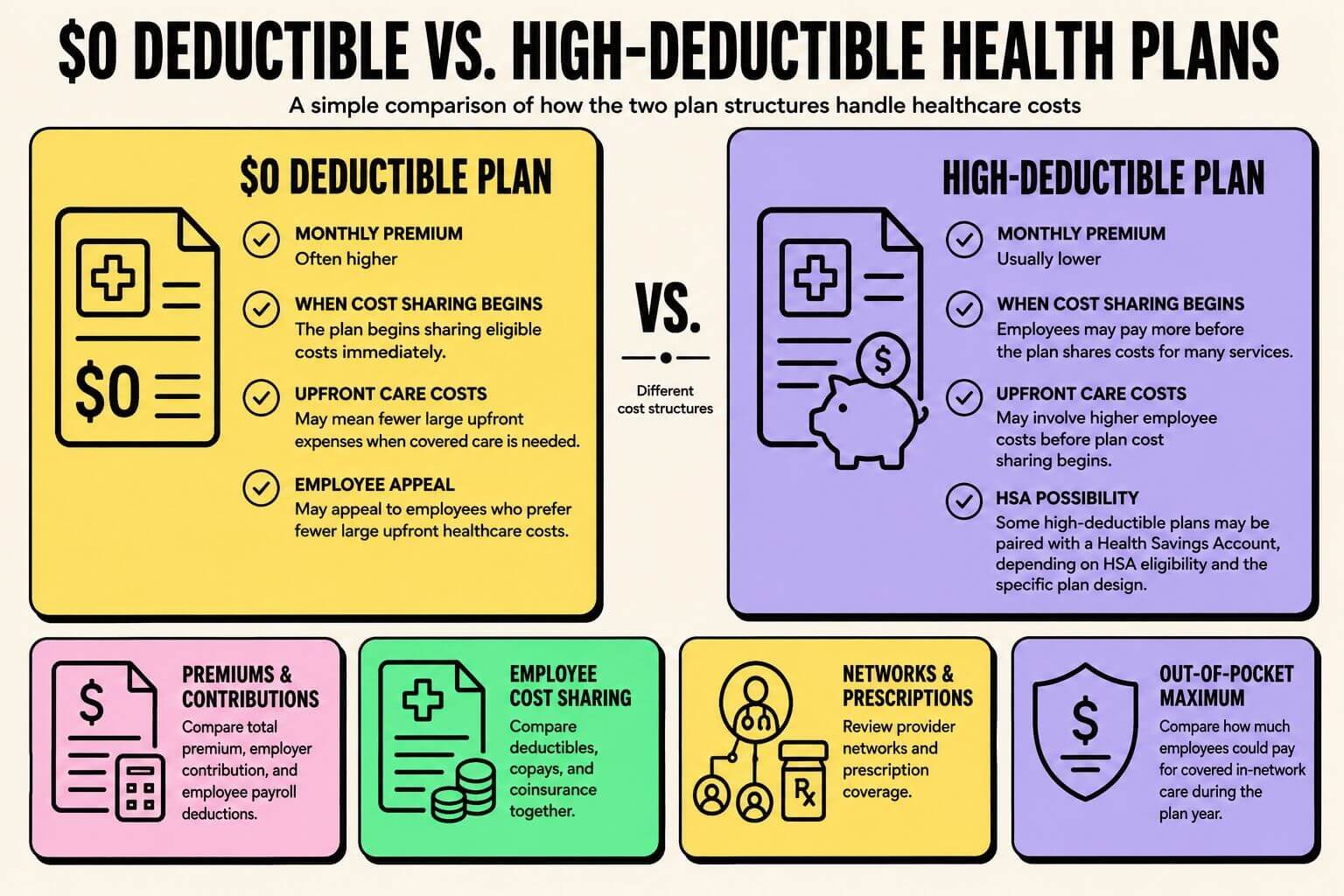
A $0 deductible plan and a high-deductible health plan handle costs differently. One is not automatically better. The right choice depends on the employer’s budget, contribution strategy, available plan designs, and the needs of the workforce. A $0 deductible plan often has higher monthly premiums because the plan begins sharing eligible costs immediately. It may appeal to employees who want fewer large upfront costs when they need care.
A high-deductible health plan usually has a lower monthly premium, but employees may pay more before the plan shares costs for many services. Some high-deductible plans can also be paired with a Health Savings Account, depending on Health Savings Account eligibility and the specific plan design. For employers comparing group major medical plans, the useful comparison is not just the deductible amount. Compare the total premium, employer contribution, employee payroll deduction, copays, coinsurance, provider network, prescription coverage, and out-of-pocket maximum together.
What Does a No-Deductible Health Plan Cost?
A $0 deductible health plan often has a higher monthly premium than a plan with a higher deductible. The employee or employer pays more through regular premium contributions in exchange for lower upfront costs when covered care is needed.
Still, the deductible alone does not show the full cost. Employers should compare the total annual premium, employer health insurance contributions, employee payroll deductions, copays, coinsurance, prescription coverage, and out-of-pocket maximum. Network access matters too. A lower-cost plan is not useful if employees cannot reasonably access the doctors, hospitals, or prescriptions they need. The right comparison looks at total annual costs, including premiums, deductibles, copays, coinsurance, and expected healthcare use, rather than the deductible alone.
Pros and Cons of $0 Deductible Health Insurance
A no-deductible plan can make covered care easier to budget for, but it also changes how costs are paid. Employers and employees should weigh the monthly premium against the likely use of healthcare services.
Potential Advantages
A $0 deductible can reduce the concern of having to pay a large amount before the plan begins sharing costs. Employees may know in advance that an office visit has a set copay or that certain services are covered under the plan’s coinsurance rules. This can be helpful for employees who expect regular care, use ongoing prescriptions, or prefer more predictable expenses. It may also make plan options easier to explain during enrollment because employees do not need to estimate how quickly they might meet a deductible.
Potential Drawbacks
The main tradeoff is usually a higher premium. Employers may need to contribute more to keep the plan affordable, or employees may see higher payroll deductions. A $0 deductible also does not eliminate every cost. Copays, coinsurance, prescription costs, and out-of-network charges may still apply. For employees who rarely use nonpreventive care, paying more each month for a no-deductible option may not provide the best overall value. Plan availability can also vary by carrier, service area, provider network, and group size.
When Might a $0 Deductible Plan Make Sense for Employees?
A no-deductible plan may be worth considering for employees who expect to use covered medical care regularly and want fewer large expenses at the time of service. This could include employees who see doctors or specialists often, fill ongoing prescriptions, or expect planned care during the year.
It can also appeal to households that value predictable healthcare costs over a lower monthly premium. However, each employee should compare the plan’s payroll deduction, copays, coinsurance, prescription coverage, provider network, and out-of-pocket maximum. A $0 deductible plan is not automatically the best choice for every person. The better fit depends on expected care needs, budget, and the specific benefits listed in the plan materials.
When Should an Employer Offer a No-Deductible Health Plan?
A no-deductible plan can make sense when it fits the company’s budget and gives employees a useful choice. Some employers offer it alongside a higher-deductible option so employees can select the cost structure that works best for them.
It may be worth considering when employees value predictable care costs, regularly ask about large upfront medical bills, or need clearer plan options during enrollment. However, employers should not choose it based on the deductible alone. Higher premiums can affect both the company contribution and employee payroll deductions. The goal is to offer plan choices employees can understand and afford while keeping the employer’s contribution strategy sustainable.
What Should Employers Compare Before Choosing a $0 Deductible Plan?
Before offering a $0 deductible health plan, compare the full plan design instead of focusing only on the deductible. A plan with no deductible may still have higher payroll deductions, copays, coinsurance, or prescription costs. Review:
- Total annual premium for the employer and employees
- Employer contribution amounts
- Employee payroll deductions for individual and family coverage
- Copays, coinsurance, and prescription drug tiers
- Individual and family out-of-pocket maximums
- In-network doctors, hospitals, and pharmacies
- Out-of-network coverage rules
- Available plan choices and employee communication needs
This comparison helps employers see whether the plan provides meaningful value at a cost the business and employees can manage.
“One customer described Benni Agency as knowledgeable, responsive, and genuinely invested in finding the right solutions. They said the team made an overwhelming process feel smooth and manageable while providing support throughout the process.”

How to Explain a No-Deductible Health Plan During Open Enrollment
Employees need a simple explanation of what a $0 deductible does and does not mean. Avoid describing it as free healthcare. Instead, explain that the plan begins sharing the cost of covered care without requiring the employee to first meet an annual deductible.
A side-by-side plan comparison can help employees review payroll deductions, doctor-visit copays, prescription costs, coinsurance, provider networks, and out-of-pocket maximums. Use a few common care examples, such as a primary-care visit, specialist visit, urgent-care visit, or prescription refill. Employees should also receive the Summary of Benefits and Coverage so they can review covered benefits, cost-sharing rules, limitations, and exceptions before making their election.
Is a $0 Deductible Health Plan Right for Your Business?
A $0 deductible health plan may be a good option when your company wants to give employees more predictable costs for covered care. It can be especially useful as one choice alongside a higher-deductible plan, allowing employees to select the cost structure that fits their situation.
“Another employer shared that Benni Agency made the benefits process seamless for their staff. They appreciated the team taking time to explain everything clearly in a way that was easy to understand.”

The right decision depends on total premiums, employer contributions, payroll deductions, provider access, and the needs of your workforce. Benni Agency can help employers compare plan designs and explain the tradeoffs before renewal or open enrollment.