Are slow responses, enrollment mistakes, poor renewal planning, or repeated employee complaints making you question your current benefits provider? Greenville employers can change brokers, carriers, administrators, or PEOs, but each change requires a different process. A broker change may let you keep your current insurance plans, yet a carrier or platform change can involve more setup. This article is for business owners and HR teams who need to identify the real problem, compare new providers, and protect employees during the transition.
Key Takeaways
- Identify what needs to change. The issue may involve your broker, carrier, administrator, PEO, or benefits plan.
- A broker change may leave current plans in place. Confirm carrier procedures and contract terms first.
- Review contracts before giving notice. Check renewal dates, fees, data access, and open service issues.
- Compare more than price. Review the service team, technology, employee support, reporting, and transition plan.
- Plan employee communication early. Explain what is changing, what is staying the same, and what employees must do.
- Check the first 90 days. Review enrollment, deductions, invoices, employee access, and unresolved claims.
First, Identify What Needs to Change
The term “employee benefits provider” can refer to several different companies. Before requesting proposals or ending a relationship, identify which part of the current arrangement is causing the problem. Changing the wrong provider may create extra work without fixing the issue.
Benefits Broker or Consultant
Your broker or consultant usually helps with plan comparisons, carrier discussions, renewal preparation, employee communication, and ongoing service. The broker may need to change when you see problems such as:
- Slow or unclear responses
- Little preparation before renewal
- Few plan options or recommendations
- Weak support with employee questions
- Repeated billing or enrollment issues that are not followed through
- Unclear commissions or service fees
- No written service calendar
Before replacing the broker, confirm whether the problem comes from the broker’s team or from another vendor.
Insurance Carrier or Benefits Plan
The insurance carrier provides the coverage. The plan sets details such as deductibles, copays, networks, covered services, and employee costs. A carrier or plan review may make sense when employees face:
- Limited access to preferred doctors or facilities
- Plan options that do not fit how they use care
- Contribution levels that have become difficult for the company or employees
- Coverage gaps
- Repeated carrier service problems
- Plan designs that no longer match the workforce
A carrier change can require new enrollment, new identification cards, payroll updates, and more employee communication.
Administrator, Technology Platform, or PEO
Some employers use a benefits administration platform, third-party administrator, payroll provider, or professional employer organization. These relationships may need review when the company deals with:
- Incorrect eligibility information
- Payroll deduction errors
- Delayed enrollment changes
- Poor data access
- Systems that do not connect properly
- Limited reporting
- Confusion over who handles employee questions
- Bundled HR services that no longer fit the company
Leaving a PEO is usually a larger project than appointing a new broker. Payroll, HR administration, taxes, benefits, and compliance support may all need separate replacements.
Can You Change Providers Without Changing Your Benefits Plan?
In many cases, an employer can appoint a new benefits broker and keep the same insurance carrier and current plans. The new broker may submit a Broker of Record form to the carrier. This document tells the carrier that the new broker is authorized to represent the employer and service the account.
The exact process can depend on:
- The carrier’s rules
- The employer’s broker agreement
- Renewal timing
- Existing service or consulting contracts
- Open claims or unresolved account issues
Changing the Broker
A broker-only change may leave coverage, networks, deductibles, and employee contributions unchanged. The employer still needs a written transition plan. It should explain who will receive account records, handle open service cases, communicate with the carrier, and answer employee questions. The current broker does not usually select or approve the replacement, but the employer should review any existing agreement before giving notice.
Changing the Carrier, PEO, or Plan Structure
A carrier, PEO, or plan-structure change needs more preparation. The process may involve:
- Comparing coverage and provider networks
- Rebuilding enrollment files
- Updating payroll deductions
- Transferring employee and dependent data
- Preparing notices and enrollment materials
- Setting up new online accounts
- Confirming effective dates
- Reviewing bills after launch
Options such as an ICHRA, level-funded plan, or different contribution strategy may come up during the review. They should be considered only when they fit the employer’s workforce, budget, and administrative capacity.
Review Contracts, Dates, and Current Records
Do not give notice to the current provider before reviewing the agreements connected to the benefits program. A contract review can reveal deadlines, fees, renewal terms, and responsibilities that affect the transition.
Check Contract and Renewal Terms
Review documents connected to the broker, carrier, administrator, technology platform, payroll system, and PEO. Look for:
- Renewal and termination dates
- Notice requirements
- Automatic renewal language
- Service fees
- Commission arrangements
- Early termination costs
- Data ownership and export rights
- Access to historical records
- Responsibility for unresolved claims or billing issues
- Rules for transferring the account
There is no single timeline that fits every provider change. A broker-only change may require less setup than a carrier, PEO, or administration-platform change.
Gather the Information New Providers Will Need
New providers need accurate company information before they can prepare useful recommendations. Gather:
- Current plan summaries
- Recent renewal information
- Employer and employee contribution amounts
- Enrollment counts
- Employee and dependent eligibility files
- Current carrier and vendor agreements
- Broker or consulting agreements
- Payroll and HR system information
- Billing records
- Common employee questions
- Current administration problems
- Open claims or unresolved service cases
- Hiring plans and workforce changes
- The company’s main benefits priorities
This step helps new providers review the actual arrangement instead of making broad recommendations based on limited information.
Compare New Providers Using the Same Criteria
Price matters, but it should not be the only comparison point. A lower-cost proposal can create new problems when the provider has a weak service team, poor implementation support, limited reporting, or technology that does not work with the employer’s systems.
Greenville companies operate within a large regional labor market. The University of South Carolina Upstate reports that the ten-county Upstate region has about 1.59 million residents and a labor force of 751,948. A provider should understand the workforce, employee communication needs, and administrative demands connected to the employer’s location and industry.
Service Team and Response Process
Ask who will manage the account after the sale. Review:
- The assigned account team
- Each person’s role
- Response-time expectations
- Escalation procedures
- Support for employee questions
- Claims and billing help
- Availability during renewal and enrollment
A strong presentation from a sales representative does not tell you who will handle daily service.
Renewal Planning and Employee Support
Ask each provider to explain its renewal process. A useful response should cover:
- When renewal planning begins
- How current plan performance is reviewed
- How carrier proposals are compared
- How employee feedback is considered
- Who prepares employee materials
- Who supports enrollment
- What happens after enrollment ends
- Which services continue throughout the year
Request a sample service calendar. It can show whether the provider has a planned process or reacts only when renewal approaches.
Technology, Fees, and Reporting
Review how the provider’s systems fit with your payroll, HR, and enrollment process. Ask about:
- Data imports and exports
- Payroll connections
- Employee self-service
- Eligibility changes
- Reporting access
- Security procedures
- Implementation costs
- Ongoing platform fees
- Broker commissions
- Consulting fees
- Fees charged by outside vendors
Pricing should be clear enough for your team to understand what is included and what may cost extra.
Plan the Change Before Notifying Employees
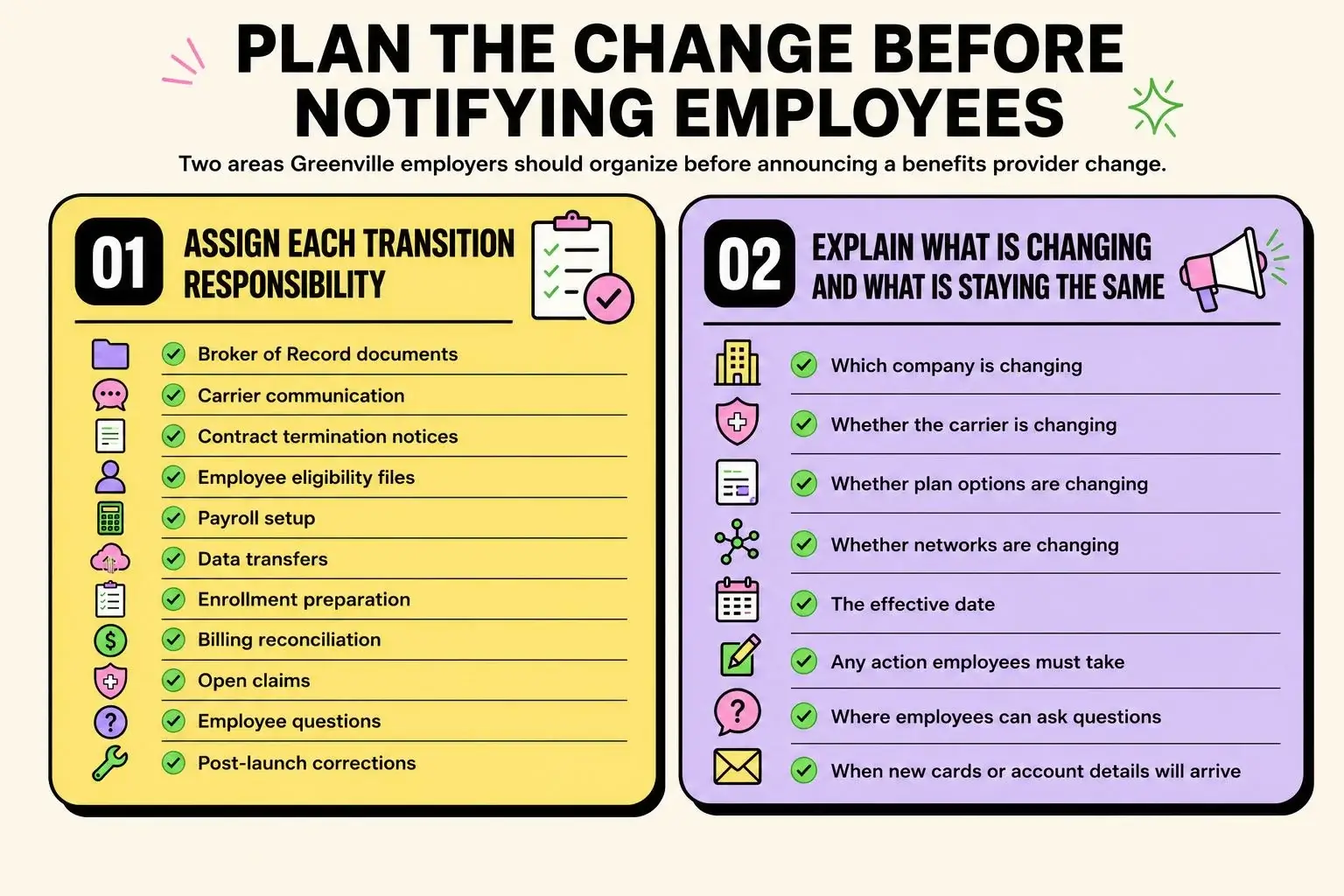
Selecting a new provider is one part of the process. The transition still needs owners, dates, and written responsibilities. Create a transition calendar before announcing the change.
Assign Each Transition Responsibility
The calendar should identify who handles:
- Broker of Record documents
- Carrier communication
- Contract termination notices
- Employee eligibility files
- Payroll setup
- Data transfers
- Enrollment preparation
- Employee notices
- Identification cards
- Billing reconciliation
- Open claims
- Employee questions
- Post-launch corrections
Do not assume the new provider will handle every task. Ask for each responsibility in writing. Your internal team should know who approves files, checks deductions, reviews invoices, and reports problems.
Explain What Is Changing and What Is Staying the Same
Employees may hear “new provider” and assume their doctors, coverage, or costs will change. Your communication should explain:
- Which company is changing
- Whether the carrier is changing
- Whether plan options are changing
- Whether networks are changing
- The effective date
- Any action employees must take
- Where employees can ask questions
- When new cards or account details will arrive
Send information early enough for employees to review it. Keep the language simple and use the same dates across emails, meetings, enrollment materials, and payroll notices.
Check the First 90 Days After the Change
A provider change is not finished on the effective date. Errors may appear when enrollment, payroll, carrier, and administration systems begin exchanging information. Review the account closely during the first 30 to 90 days.
Check:
- Employee and dependent eligibility
- Identification cards
- Online account access
- Payroll deductions
- Employer contributions
- Carrier invoices
- Pending claims
- New-hire enrollment
- Terminated employee records
- Vendor connections
- Employee questions
- Provider response times
Create a list of issues, assign each one to a person, and set a correction date. The first review can happen after the initial payroll and carrier invoice. A second review near the end of the first 90 days can confirm whether the new service process is working as promised.
Review Your Greenville Benefits Transition Before Deciding
Changing an employee benefits provider should begin with a clear review of what is not working. The problem may be slow broker support, an unsuitable carrier or plan, administration errors, limited technology, or a PEO arrangement that no longer fits the company. Before making a decision, review your agreements, renewal dates, contribution amounts, employee questions, unresolved issues, and available records. Confirm which plans can remain, which vendors may change, who will transfer the data, and who will support employees during the transition.
Employers who need local context can review Benni’s Greenville benefits support before deciding which parts of the current arrangement should change. A structured review can help your team compare providers using the same criteria and prepare a transition calendar before notice is given. Looking For Solutions? Let’s Talk about the current arrangement and the questions your team should answer before making a change.