Small businesses often want to offer better benefits but face a common challenge: how can they add more employee value without taking on unnecessary costs? Voluntary supplemental health benefits can help SMBs expand their benefits options by giving employees access to additional protection while allowing employers more flexibility in plan design and contributions.
This guide is for small business owners, HR teams, and employers who want to understand how supplemental benefits work, where they fit alongside health insurance, and how to choose options that support their workforce.
Key Takeaways
- Voluntary supplemental health benefits give SMBs more flexibility when building an employee benefits package.
- Accident, hospital indemnity, and critical illness plans can help employees manage certain unexpected healthcare expenses.
- Supplemental benefits work alongside major medical insurance and do not replace traditional health coverage.
- Employers can choose options based on workforce needs, budget, and employee preferences.
- Clear communication and simple enrollment processes are essential for making voluntary benefits valuable.
What Are Voluntary Supplemental Health Benefits?
Voluntary supplemental health benefits are additional insurance options that help employees manage specific healthcare-related expenses. They are usually offered through an employer but are separate from the company’s primary health insurance plan. Common examples include:
- Accident insurance: Provides benefits after covered injuries or accidents.
- Hospital indemnity insurance: Helps provide fixed payments after qualifying hospital stays.
- Critical illness insurance: Provides financial support after certain serious health diagnoses.
These benefits are designed to fill specific gaps. They can help employees handle expenses that may come with deductibles, medical bills, transportation costs, childcare needs, or other financial pressures after a covered event. For SMBs, the appeal is flexibility. Employers can offer additional benefit choices without needing to create a large, complicated benefits program.
Why Are Voluntary Supplemental Health Benefits Good for SMBs?
Voluntary supplemental health benefits can be a strong option for small and midsize businesses because they allow employers to offer more choices while keeping control over their benefits strategy. Many SMBs compete with larger companies for employees but may not have the same resources for employer-paid benefits. Supplemental options give employees access to additional coverage that may fit their personal situations. For example, one employee may value accident coverage because they have active hobbies or children involved in sports. Another employee may prefer critical illness coverage because they want additional financial protection for unexpected health events.
The key advantage is choice. Instead of assuming every employee needs the same coverage, employers can offer options that employees can evaluate based on their own needs. According to the Kaiser Family Foundation, workers at smaller firms often face higher deductibles compared with workers at larger organizations. In 2025, employees at firms with 10 to 199 workers had an average deductible of $2,631 among plans with a general annual deductible. That makes supplemental benefits worth considering as part of a broader strategy to help employees handle certain out-of-pocket expenses.
They Help Employees Handle Unexpected Healthcare Expenses
Health insurance covers many important medical costs, but employees can still face expenses after an illness, injury, or hospital visit. Supplemental benefits may provide additional financial support when specific covered events occur. The money from these plans can often be used for expenses beyond medical bills, depending on the policy terms. For employees, this can provide another layer of financial protection.
For employers, offering these options can show that the company understands employees have different needs outside of standard medical coverage. However, employers should clearly explain what these benefits do and do not cover. Supplemental health benefits are designed to support major medical insurance, not replace it.
They Give SMBs More Benefit Flexibility
One reason voluntary benefits appeal to SMBs is the ability to create a benefits package that fits the company’s budget and employees’ expectations. Some employers contribute toward voluntary benefits, while others offer employee-paid options through payroll deductions. The right approach depends on the employer’s goals and workforce. Before adding supplemental benefits, employers should consider:
- What employees are asking for.
- Whether current benefits leave important gaps.
- How much administration is required.
- How the benefits will be explained during enrollment.
A smaller company does not need to offer every available benefit. The goal is to choose options that employees understand and are likely to value.
What Types of Supplemental Health Benefits Do SMBs Offer?
The best options depend on the workforce, but many employers consider benefits that address common financial concerns.
Accident Insurance
Accident insurance may provide benefits after covered injuries. It can be useful for employees who want additional protection from unexpected medical-related expenses.
Hospital Indemnity Insurance
Hospital indemnity plans can provide fixed payments after qualifying hospital stays. Employees may use these benefits for eligible expenses based on the policy terms.
Critical Illness Insurance
Critical illness coverage can provide financial support after certain serious health conditions. It may help employees manage costs that extend beyond direct medical care. Each benefit has different coverage rules, exclusions, and payment structures. Employers should focus on explaining the value and limitations of each option.
Do Supplemental Health Benefits Replace Traditional Health Insurance?
No. Supplemental health benefits are not a replacement for major medical insurance. Traditional health insurance is designed to cover a broad range of healthcare services, including doctor visits, prescriptions, preventive care, and hospital treatment. Supplemental benefits focus on specific situations and provide additional financial support based on covered events.
For example, an employee may have a medical plan with a high deductible. A hospital indemnity policy may provide additional benefits after a qualifying hospital stay, helping the employee manage some related costs. The best approach is to view supplemental benefits as an addition to a complete employee benefits strategy.
How Should Small Businesses Choose Supplemental Benefits?
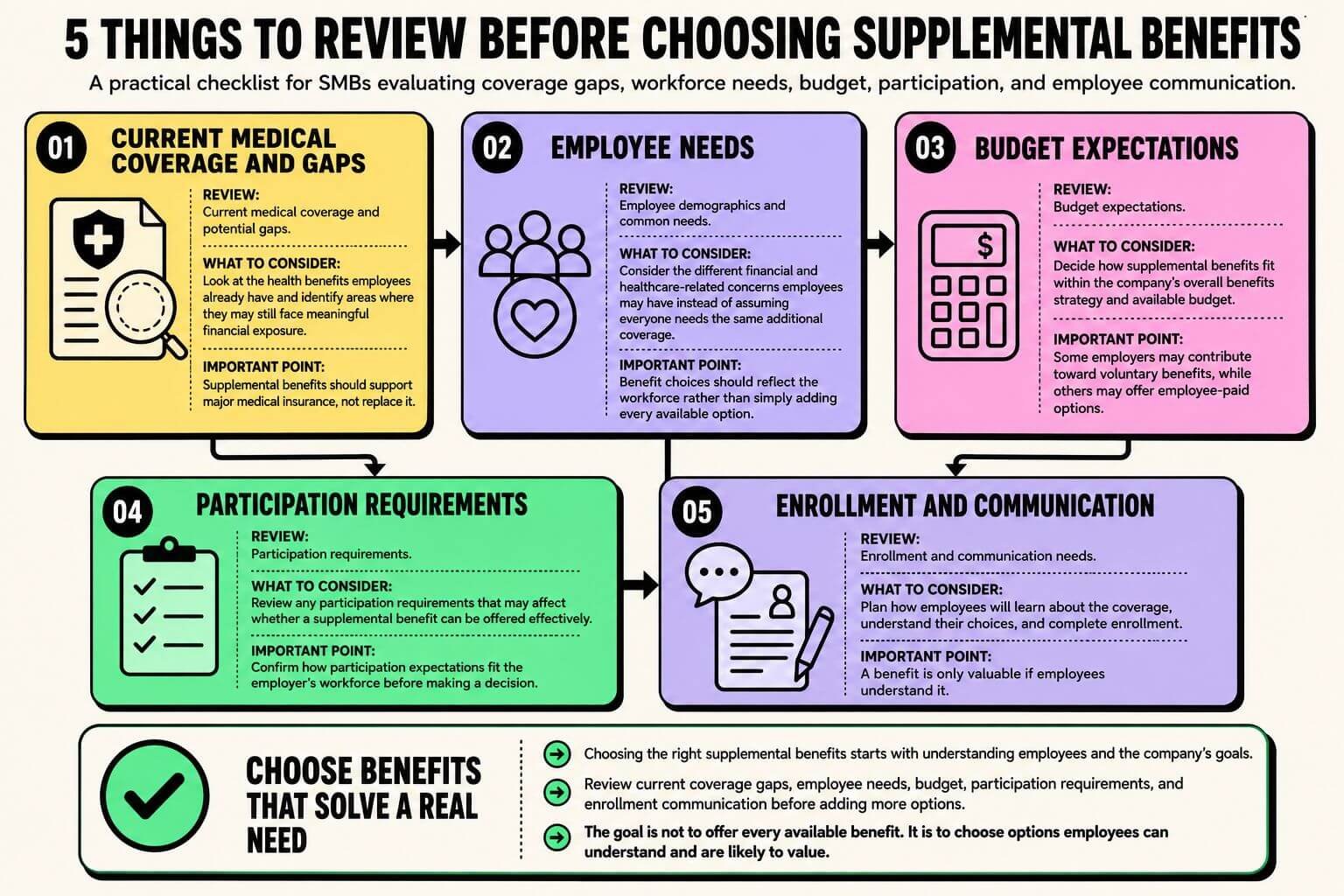
Choosing the right benefits starts with understanding employees and the company’s goals. Employers should review:
- Current medical coverage and potential gaps.
- Employee demographics and common needs.
- Budget expectations.
- Participation requirements.
- Enrollment and communication needs.
A benefit is only valuable if employees understand it. Clear education during enrollment can help employees make better decisions and avoid confusion about coverage. Technology can also make ongoing management easier. Tools that simplify enrollment, employee communication, and administration can help employers manage benefits more efficiently through solutions such as benefits administration technology.
How Voluntary Benefits Fit Into South Carolina SMB Benefits Planning
Small businesses make up a major part of South Carolina’s business community. The South Carolina Department of Employment and Workforce reports that most establishments in the state have fewer than five employees, showing how important practical benefits strategies are for smaller employers. For these companies, offering every traditional benefit option may not always be realistic. Voluntary supplemental benefits can provide another way to give employees more choices while keeping the overall benefits approach manageable.
Making Supplemental Benefits Easier to Evaluate for Your Team
Choosing supplemental benefits is not only about adding more options. Employers also need to consider what employees actually need, how coverage fits with existing plans, and how benefits will be explained. A thoughtful review can help businesses avoid offering benefits that employees do not understand or use. It can also make enrollment easier for both employers and employees.
Benni Agency helps businesses review employee benefit options, compare coverage choices, and create a benefits approach that fits their workforce. Employers looking at supplemental benefits may also want to consider how administration and employee communication will be handled before making a decision. The right next step is usually a clear conversation about employee needs, available options, and how each benefit fits into the bigger picture.