Children’s prescriptions can create surprise costs for working families, especially when a child needs antibiotics, allergy medicine, asthma medication, or a recurring refill. Families in Summerville can often save by comparing pharmacy prices, asking about generic options, checking discount programs, and understanding what their benefits actually cover. For employers and HR teams, this topic matters because unclear prescription benefits can quickly become an employee stress point.
This guide is for Summerville business owners who want to help families lower medication costs, explain benefits clearly, and avoid last-minute confusion at the pharmacy.
Key Takeaways
- Children’s prescriptions can cost more than expected, especially when a drug is not covered or needs regular refills.
- Pharmacy prices can vary, so checking more than one option before pickup can help families avoid overpaying.
- Generic medications, discount programs, and pharmacy savings tools can lower costs when used the right way.
- Summerville employers can help working families by making prescription benefits easier to understand.
- A better benefits setup can reduce confusion before employees reach the pharmacy counter.
Why Children’s Prescription Costs Matter for Summerville Families
A child’s prescription may seem like a small healthcare expense until it happens more than once. One ear infection, allergy flare-up, inhaler refill, or medication change can leave a parent comparing prices at the pharmacy while trying to get their child treated quickly. For families without strong coverage, the cost can feel even heavier.
Local data supports why this matters. The U.S. Census Bureau QuickFacts lists Summerville’s under-65 uninsured rate at 12.0%. That does not include every family struggling with copays or deductibles, but it does show that prescription affordability is a real local issue.
For employers, this is worth paying attention to. Employees may not always ask HR about prescription costs, but they feel the pressure when a child’s medication is expensive, confusing, or hard to access.
Why Prices Can Change From One Pharmacy to Another
Many parents are surprised to learn that the same children’s medication can cost different amounts at different pharmacies. That can happen because pharmacies use different pricing agreements, discount networks, and cash-price structures. A prescription that seems expensive at one location may cost less somewhere else nearby.
Before paying, families can check:
- The plan’s pharmacy tool
- Cash prices at nearby pharmacies
- Prescription discount program prices
- Mail-order or preferred pharmacy options
- Whether the medication is covered under the plan’s formulary
This is where employers can help without giving medical advice. HR teams can remind employees where to find pharmacy tools, how to check covered medications, and who to contact when a prescription price looks wrong. A simple benefits reminder can save an employee from paying more than necessary.
Ask About Generic and Lower-Cost Medication Options
Generic medications are often one of the easiest ways to reduce prescription costs. A generic drug has the same active ingredient as the brand-name version and must meet FDA standards for safety, quality, and effectiveness. For many common pediatric prescriptions, a generic option may be available at a much lower price.
Parents can ask the doctor or pharmacist:
- Is there a generic version?
- Is there a lower-cost alternative?
- Is this medication covered by the current plan?
- Would a different dosage or form cost less?
- Is there a manufacturer coupon or assistance option?
The key is to ask before assuming the first price is the only price. For employers, this is a communication issue as much as a benefits issue. Employees do not need a long explanation of pharmacy rules. They need clear reminders that they can ask questions before paying full price.
Use Prescription Discount Programs Carefully
Prescription discount programs can help families save, especially when a child’s medication is not covered, the family is uninsured, or the cash price is lower than the insurance price. These programs are usually simple to use. A parent searches for the medication, compares prices, and shows the discount information at a participating pharmacy. Benni has also explained how prescription savings programs can support employers that want to reduce healthcare-related financial stress for employees.
But these tools should be used carefully. A discount price may be lower than the insurance copay, but purchases made through a discount program may not always count toward a deductible or out-of-pocket maximum. That matters for families managing larger healthcare costs throughout the year. A practical rule is simple: Compare the discount price with the insurance price before paying. Employers can help by explaining that prescription savings tools are not a replacement for health insurance. They are another option employees can check when a medication cost seems too high.
Check Assistance Programs and Coverage Options for Children
Some families may qualify for support beyond pharmacy discounts. Depending on income, household size, and coverage status, children may be eligible for Medicaid or the Children’s Health Insurance Program, often called CHIP. HealthCare.gov explains that Medicaid and CHIP provide free or low-cost health coverage to eligible families and children. Manufacturer assistance programs may also help when a child needs an expensive medication for asthma, allergies, chronic conditions, or other ongoing treatment needs.
Families can look into:
- Medicaid or CHIP eligibility
- Manufacturer assistance programs
- Nonprofit prescription support programs
- Pharmacy-based savings programs
- Plan-specific prescription support
For employers, the goal is not to manage an employee’s personal healthcare decisions. The goal is to make sure employees know where to start when a prescription becomes unaffordable.
Consider 90-Day Fills and Mail-Order Options
For one-time medications, a 90-day fill usually will not apply. But for recurring prescriptions, it can make a difference. Some children need regular medication for allergies, asthma, ADHD, or another ongoing condition. If the medication is stable and the doctor approves a longer supply, families may be able to reduce refill trips and sometimes lower the per-fill cost. Mail-order pharmacy options may also help when a child takes the same medication every month.
Before switching, families should compare:
- Retail pharmacy price
- Preferred pharmacy price
- 90-day supply price
- Mail-order price
- Shipping time and refill rules
The lowest price is helpful only if the medication arrives on time and fits the child’s treatment plan.
How Employers Can Make Prescription Savings Easier to Understand
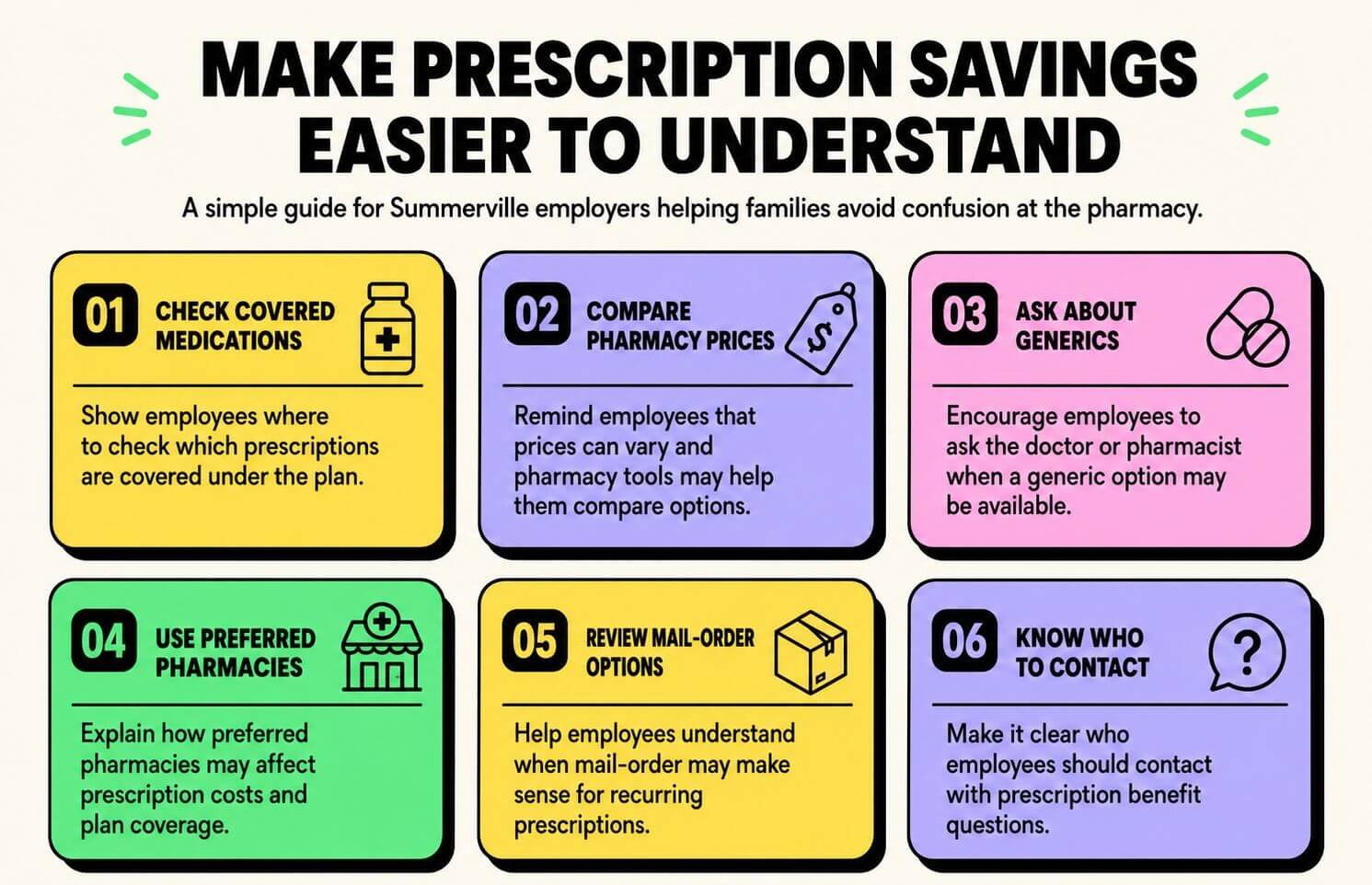
Prescription savings should not be explained only after an employee has a problem. During onboarding, open enrollment, or renewal season, employers can give employees simple guidance about how their pharmacy benefits work. This does not need to be complicated.
Helpful reminders may include:
- Where to check covered medications
- How to compare pharmacy prices
- When to ask about generics
- How to use a preferred pharmacy
- When mail-order may make sense
- Who to contact with prescription benefit questions
For Summerville businesses, this kind of communication can make benefits feel more useful in real life. It also helps employees see value beyond the monthly premium.
This is also where the right benefits administration technology can help. When employees have easier access to plan details, pharmacy tools, and enrollment information, they are less likely to feel lost when a prescription cost comes up. Benni’s Summerville benefits support includes options such as health benefits, wellness tools, and prescription drug programs that can help employers make everyday healthcare costs easier for employees to understand.
A Practical Example for a Summerville Workplace
Picture a parent working for a local Summerville company. Their child needs a recurring allergy prescription, and the first refill feels more expensive than expected. At first, the parent assumes that is just the cost. Then HR reminds employees where to check the plan’s pharmacy tool and how to compare prices. The parent asks the doctor whether a generic option is available and checks the price at a preferred pharmacy.
The final cost is lower, and the parent now knows what to check before the next refill. Nothing about that process required HR to give medical advice. It only required clear benefits communication. That is the bigger lesson for employers. Employees often do not need more paperwork. They need practical guidance before a small healthcare cost becomes a bigger source of stress.
Better Benefits Conversations Can Lower Prescription Stress
Prescription savings are easier for employees to use when they understand their options before they need them. If a parent is standing at the pharmacy counter with a sick child and a high prescription price, that is not the best time to explain formularies, generic options, discount tools, or mail-order choices.
That is why employers should treat prescription support as part of a larger benefits conversation. Benni’s employee benefits services include support for group health, prescription drug coverage, employee communication, and benefits administration. A simple explanation during onboarding, open enrollment, or renewal season can help employees know:
- Where to compare prices
- When to ask about generics
- How to check savings tools
- Who to ask for benefit questions
Benni helps local employers look at benefits from the employee’s point of view, including the everyday costs families actually notice. If your team is asking more questions about healthcare costs, it may be a good time to review how clearly your prescription benefits are being explained.