Insurance for a lawn care business may cost hundreds of dollars annually for basic liability protection, while businesses needing several policies can spend thousands. The actual cost depends on the services provided, employee payroll, vehicles, equipment, and coverage limits.
For lawn care business owners, insurance is an operating expense that deserves careful planning. A mowing accident, damaged customer property, or employee injury can create unexpected costs. Understanding how policies are priced helps owners estimate their insurance budget, identify relevant coverage, and compare quotes before making a decision.
Key Takeaways
- Insurance costs vary by operation. A lawn care business’s premiums depend on its services, workforce, vehicles, equipment, and coverage selections.
- Liability insurance covers specific third-party risks. General liability can help address covered customer injuries and property damage.
- Employee coverage affects total costs. Workers’ compensation premiums depend on factors including payroll, job classifications, and claims experience.
- Coverage requirements vary by state. Business owners should review applicable insurance laws and contractual obligations before purchasing policies.
- Compare complete quotes. Review policy limits, deductibles, exclusions, and included coverage rather than choosing solely by price.
How Much Does Lawn Care Business Insurance Cost?
Lawn care business insurance costs vary based on the policies purchased and the company’s operations. A solo operator who only needs general liability coverage may pay considerably less than an employer insuring several crews, work trucks, and expensive equipment.
There is no single verified national average that applies to every lawn care operation. For example, the following figures show how different annual premiums translate into monthly budgeting amounts. These are calculation examples, not market averages or insurance quotes.
| Illustrative annual premium | Monthly equivalent |
| $600 | $50 |
| $1,200 | $100 |
| $2,400 | $200 |
| $4,800 | $400 |
| $6,000 | $500 |
A company paying $1,200 annually would budget $100 per month before any installment fees. Its actual premium could be higher or lower.
Businesses with employees may also need workers’ compensation, while those using company trucks generally need appropriate vehicle coverage. Equipment protection adds another expense.
When comparing prices, check which policies are included. For example, a lawn care business in North Charleston can consult an insurance broker in North Charleston, SC to review whether its quote accounts for liability, vehicles, employees, and equipment. The same applies to businesses anywhere in the country: a useful cost comparison starts with understanding what each policy covers.
How Much Do Different Types of Lawn Care Insurance Cost?
Each type of lawn care business insurance has a separate pricing structure. General liability premiums depend partly on business operations and coverage limits, while workers’ compensation costs are closely connected to payroll and job classifications.
The table below summarizes the main factors insurers consider.
| Insurance type | Main pricing factors |
| General liability | Operations, revenue, claims history, coverage limits |
| Workers’ compensation | Payroll, employee classifications, claims experience |
| Commercial auto | Vehicles, drivers, usage, location |
| Tools and equipment | Equipment value, storage, deductibles, covered risks |
These are different insurance products, so there is no dependable fixed amount that can be assigned to every lawn care business.
General Liability Insurance
General liability insurance covers certain third-party bodily injury and property damage claims. For example, it may respond if a mower throws a rock through a customer’s window.
Premiums depend on business activities, revenue, coverage limits, and claims history. Lawn care businesses can explore commercial insurance coverage options to understand how liability protection fits their operations.
Workers’ Compensation Insurance
Workers’ compensation insurance provides eligible benefits for employees who experience work-related injuries or illnesses.
Its cost generally depends on employee payroll, job classifications, location, and claims experience. Lawn maintenance can involve machinery injuries, lifting strains, and heat exposure. The Occupational Safety and Health Administration (OSHA) identifies these among the hazards associated with landscaping work.
Commercial Auto Insurance
Commercial auto insurance helps cover specified liabilities and losses involving insured business vehicles. Lawn care companies often use trucks or vans to transport workers and equipment between properties.
Premiums vary according to vehicle type, usage, driving history, location, and coverage limits. Businesses should also check whether trailers and transported equipment need separate protection.
Tools and Equipment Insurance
Tools and equipment insurance helps protect lawnmowers, trimmers, blowers, and other machinery against covered losses.
Premiums depend on equipment values, storage arrangements, deductibles, and selected coverage. Inland marine insurance can protect qualifying equipment while it moves between job sites. Business owners should check theft provisions, location restrictions, and exclusions before purchasing a policy.
What Factors Affect Lawn Care Business Insurance Costs?
Insurance costs depend on the risks associated with a lawn care company’s operations. Businesses performing basic residential mowing may have different coverage needs from contractors providing chemical treatments or extensive commercial property maintenance.
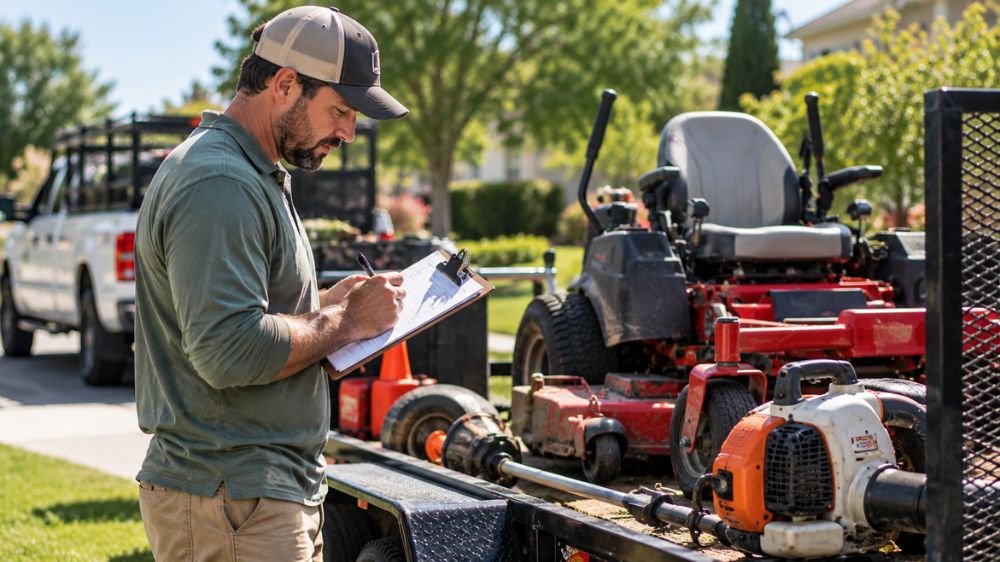
Several factors can influence premiums:
- Services performed: Mowing, trimming, pesticide application, and specialized work present different exposures.
- Employees and payroll: Worker classifications and payroll influence workers’ compensation pricing.
- Business location: Insurance regulations and local claims conditions vary.
- Revenue: Business activity can affect liability insurance pricing.
- Vehicles and equipment: More vehicles or higher-value machinery can increase insured exposures.
- Claims history: Previous losses may influence underwriting decisions.
- Policy terms: Higher limits, deductibles, and additional coverage affect premiums.
Owners should describe their operations accurately when requesting quotes. Missing or incorrect information can lead to coverage questions, premium adjustments, or complications when reporting claims.
What Insurance Does a Lawn Care Business Need?
A lawn care business may need general liability, workers’ compensation, commercial auto, and equipment coverage, depending on its operations and legal obligations.
General liability is commonly purchased to address third-party injury and property damage claims. Workers’ compensation requirements depend on state law, while business vehicles must meet applicable insurance requirements.
In South Carolina, the Workers’ Compensation Commission generally requires coverage when a business regularly employs four or more workers, including part-time employees, subject to statutory exceptions.
Some businesses may qualify for a Business Owner’s Policy (BOP), which commonly combines liability and business property coverage. The National Association of Insurance Commissioners (NAIC) explains that these policies generally exclude commercial auto and workers’ compensation.
Customers or contracts may impose further insurance requirements beyond state law.
How Can Lawn Care Businesses Reduce Insurance Costs?
Lawn care businesses can manage insurance expenses by choosing coverage that matches their operations and comparing policies carefully. The lowest premium is not necessarily the most suitable option if important risks are excluded.
Consider these steps:
- Compare quotes with similar coverage limits and deductibles.
- Ask whether combining eligible policies makes financial sense.
- Maintain lawnmowers, vehicles, and other equipment regularly.
- Train employees in safe equipment operation and injury prevention.
- Keep accurate payroll, revenue, and claims records.
- Review coverage when adding employees, vehicles, or new services.
Choosing a higher deductible may reduce the premium, but it can increase the amount paid when a covered loss occurs.
Regular insurance reviews can help owners identify unnecessary coverage, gaps in protection, and changes that affect pricing.
How Do You Get an Accurate Lawn Care Insurance Quote?
Getting an accurate lawn care insurance quote starts with providing complete information about the business. Insurers use operational details to determine coverage eligibility, policy terms, and premiums.

Before requesting a quote, prepare:
- A description of lawn care and related services offered.
- Estimated annual revenue and employee payroll.
- Vehicle details and driving information.
- Equipment inventory and estimated insured values.
- Previous insurance claims.
- Requested coverage limits and deductibles.
Disclose specialized work, including pesticide application, tree services, or subcontracted operations.
Working with an experienced commercial insurance broker can help business owners review available policies and understand differences between quotes.
Compare exclusions, coverage limits, deductibles, and payment arrangements before selecting a policy. Accurate information helps produce quotes that reflect the business’s operations.