A workers’ compensation prevention plan works best when it matches the work employees actually perform. For North Charleston employers, that may mean controlling material-handling, machinery, vehicle, ergonomic, slip-and-fall, or office risks. The goal is not to promise zero injuries. It is to identify hazards earlier, reduce preventable incidents, respond consistently when an injury occurs, and keep accurate records for the carrier and claims process. This guide provides general educational information, not individualized legal, safety, or insurance advice.
Key Takeaways
- South Carolina generally requires workers’ compensation coverage for businesses that regularly employ four or more people, subject to statutory exemptions.
- Prevention should begin with actual job tasks, loss history, near misses, equipment, and work areas rather than a generic safety checklist.
- Job-specific training, ergonomic controls, maintenance, and appropriate personal protective equipment can address common injury pathways.
- A written reporting process helps supervisors arrange care, notify the carrier, preserve facts, and meet applicable state requirements.
- Modified-duty planning should happen before an injury and must follow the employee’s current medical restrictions.
Why Claims Prevention Needs to Match the Work
North Charleston’s business base includes manufacturing, aerospace, logistics, transportation, health care, construction, hospitality, and office operations. Those employers do not share the same injury exposures. A warehouse may focus on powered industrial trucks, loading docks, and repetitive lifting. A manufacturer may need machine guarding, lockout procedures, ergonomics, and material-handling controls. An office may see more slip, trip, and workstation issues.
Employers should start with their own operations and records. Benni Agency’s North Charleston manufacturing insurance guide explains how workforce classifications and employee exposures fit within a broader commercial insurance review.
South Carolina Workers’ Comp Requirements
The South Carolina Workers’ Compensation Commission states that businesses regularly employing four or more people generally must maintain workers’ compensation coverage. Part-time workers and family members count toward that total. The Commission also lists exemptions, including businesses with fewer than four employees, businesses with annual payroll below $3,000, certain casual and agricultural employees, and other specific categories.
Employee count is not the only issue. Paying a worker through Form 1099 does not automatically establish independent-contractor status. The Commission treats classification as fact-specific and considers factors such as control, equipment, payment method, and the right to fire. Employers with questions about an exemption, contractor relationship, or coverage obligation should confirm the answer with the Commission, legal counsel, or a licensed insurance professional.
How Claims Can Affect Insurance and Operations
A workplace injury may create costs beyond covered medical care and wage-replacement benefits. Supervisors may spend time investigating the incident, production may slow, equipment may be unavailable, and another employee may need overtime or training to cover the work.
Claim history can also affect future workers’ compensation pricing. When experience rating applies, an experience modification factor compares an employer’s loss experience with the expected experience for similar operations. The calculation is more detailed than simply counting claims, and eligibility and impact depend on applicable rating rules. Employers should review loss runs, open reserves, payroll, and classifications with their carrier or insurance professional instead of assuming every claim will affect premium the same way.
Build a Practical Claims Prevention Program
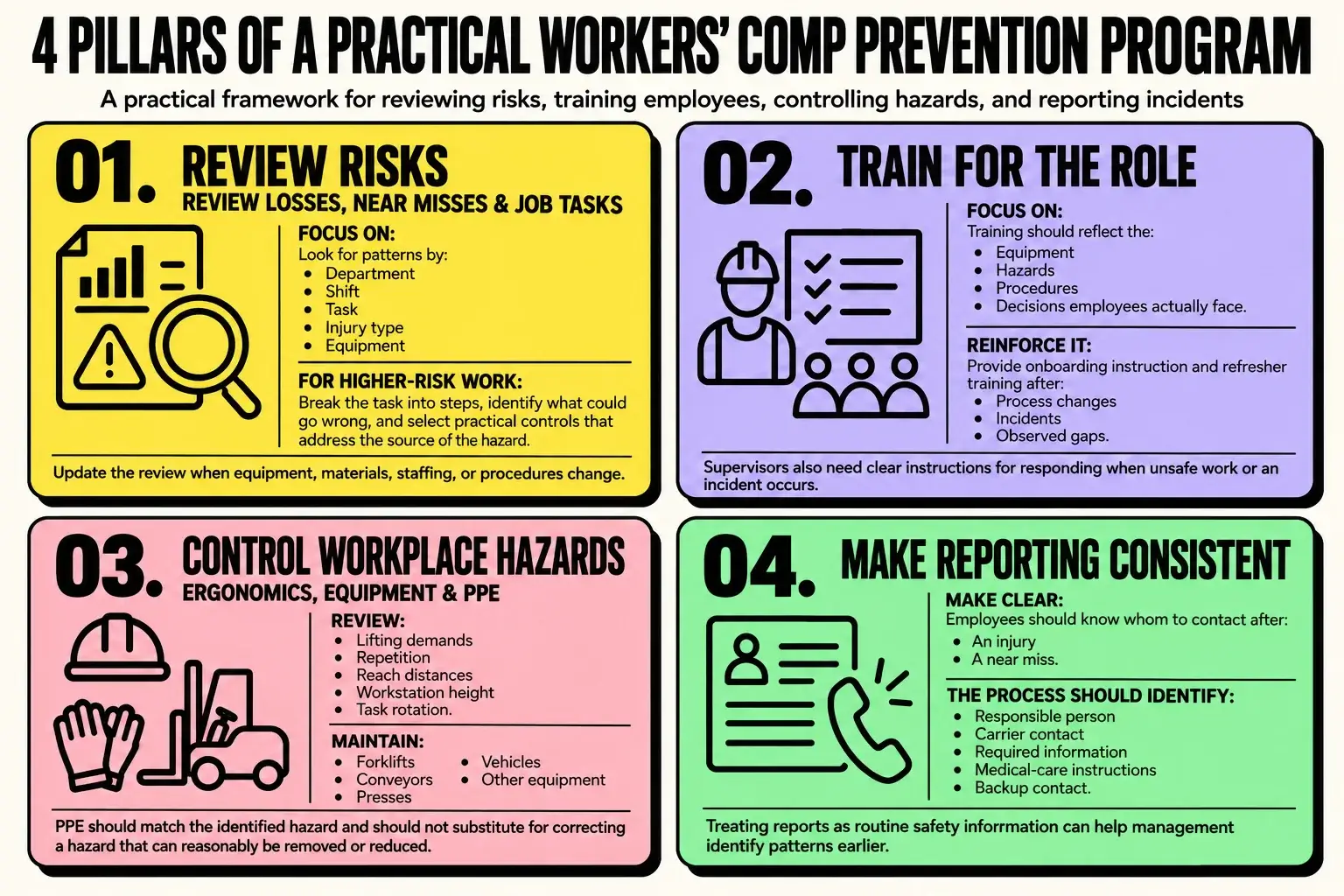
Review Losses, Near Misses, and Job Tasks
Look for patterns by department, shift, task, injury type, and equipment. A series of minor strains in one role may point to a workstation or lifting problem. Repeated near misses around a loading area may reveal a traffic-control issue before someone is injured.
For higher-risk work, document a job hazard analysis. Break the task into steps, identify what could go wrong at each step, and select controls that address the source of the hazard where practical. Update the analysis when equipment, materials, staffing, or procedures change.
Train for the Actual Role
Training should reflect the equipment, hazards, and decisions an employee faces. Cover required procedures during onboarding, verify understanding, and provide refresher training after process changes, incidents, or observed gaps. Supervisors also need clear instructions on stopping unsafe work, documenting an event, arranging care, and notifying the designated claims contact.
Address Ergonomics, Equipment, and PPE
Review lifting demands, repetition, reach distances, workstation height, and task rotation. Maintain forklifts, conveyors, presses, vehicles, and other equipment according to a documented schedule. Personal protective equipment should match the identified hazard, fit the employee, and be inspected and replaced as needed. PPE is one control, not a substitute for correcting a hazard that can reasonably be removed or reduced.
Make Reporting Easy and Consistent
Employees should know whom to contact after an injury or near miss, including when the usual supervisor is unavailable. A practical reporting process identifies the responsible person, carrier contact, required information, medical-care instructions, and backup contact. Treating reports as routine safety information can help management see patterns earlier.
What to Do When an Injury Happens
Even a careful employer needs a response plan. The first priority is appropriate care, including emergency services when needed. After that, the employer should:
- Notify the designated internal contact and workers’ compensation carrier promptly.
- Record the time, location, task, equipment, witnesses, and immediate conditions without assigning blame.
- Preserve relevant photographs, training records, maintenance logs, and witness statements.
- Give the employee clear carrier and claims-contact information.
- Coordinate any modified duty with the carrier, treating provider, and current written restrictions.
South Carolina law requires employers to keep records of work injuries. Under S.C. Code § 42-19-10, injuries involving compensable lost time, medical attention above the Commission’s regulatory limit, or possible permanency must generally be reported within 10 business days after the occurrence and the employer’s knowledge. Other injuries may follow different reporting rules, so employers should use current Commission and carrier instructions rather than relying on a single internal threshold.
Accurate payroll and classification records matter after the incident and at policy audit. The workers’ comp payroll audit checklist explains which payroll, job-duty, and contractor records employers may need to organize.
Quick Prevention Checklist
- Review claims and near misses by task, shift, department, and equipment.
- Update job hazard analyses after operational changes.
- Match training to actual duties and verify understanding.
- Keep maintenance, inspection, and PPE records current.
- Assign a primary and backup injury-reporting contact.
- Identify realistic modified-duty tasks in advance.
- Review payroll and job classifications before renewal and audit.
How Benni Agency Supports the Insurance Review
Claims prevention is an operational responsibility involving management, supervisors, employees, safety professionals, and appropriate medical or legal guidance. Insurance review is a related but separate task. Benni Agency can help employers compare workers’ compensation and other commercial insurance options, review classifications and stated operations, and discuss available carrier resources. North Charleston employers can use the local business insurance and employee benefits page or review Benni Agency’s Business & Commercial Insurance services for the appropriate service path. Coverage remains subject to insurer underwriting and policy terms.