Health insurance can feel frustrating for employers when premiums keep rising but it is difficult to see exactly where the money goes. Partially self-funded insurance offers a different approach by allowing employers to fund employee healthcare claims while using insurance protection to limit exposure to unusually high costs.
This structure can provide greater flexibility, cost visibility, and control, but it also gives the employer more financial and administrative responsibility than a traditional fully insured plan. This guide is for business owners and HR teams considering whether partial self-funding could fit their workforce, budget, and benefits strategy.
Key Takeaways
- Partially self-funded insurance allows employers to fund employee claims directly while using stop-loss insurance to limit certain high-cost risks.
- Costs include fixed expenses and variable claims costs, giving employers greater visibility into healthcare spending.
- Savings are possible but not guaranteed and depend on claims, administration, stop-loss pricing, and plan design.
- Employers take on more financial and administrative responsibility than with fully insured coverage.
- Strong candidates typically have stable finances, useful claims data, reliable support, and a clear understanding of potential risk.
What Is Partially Self-Funded Insurance?
Partially self-funded insurance is a health plan arrangement in which an employer funds covered employee medical claims while purchasing stop-loss insurance to help protect against unexpectedly high claim costs. Instead of paying one bundled premium to an insurance carrier that assumes most of the claims risk, the employer takes responsibility for funding eligible claims under the plan. A third-party administrator, carrier, or other service provider may still handle enrollment, claims processing, provider networks, and customer service.
HealthCare.gov explains self-insured plans as arrangements where employers take responsibility for paying employees’ and dependents’ medical claims while administrative services may be managed internally or through another organization. For employers, understanding this distinction can reduce some of the uncertainty that comes with leaving a familiar fully insured model.
How Does Partially Self-Funded Health Insurance Work?
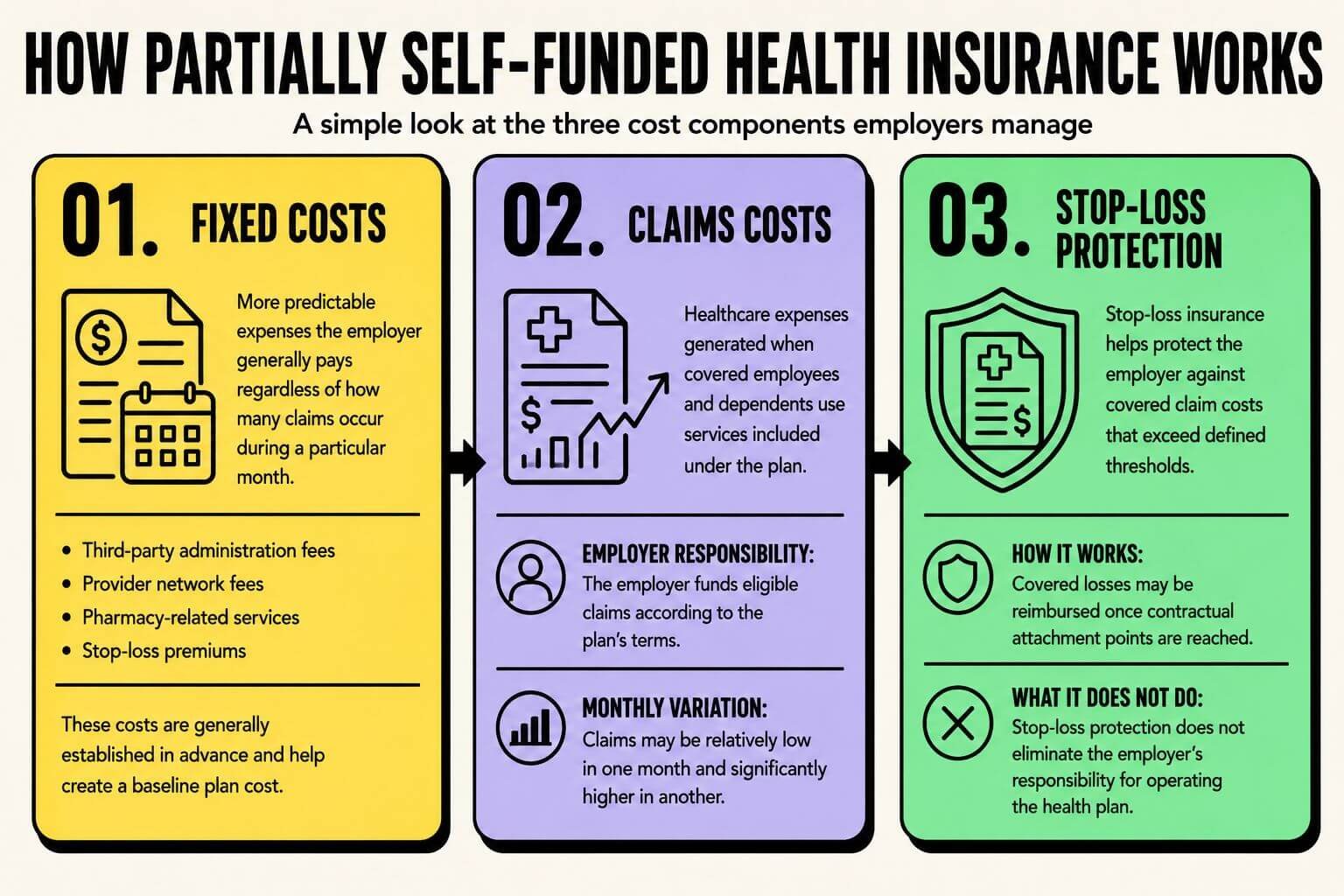
A partially self-funded plan separates health plan expenses into several components rather than placing everything inside one traditional insurance premium. Employers generally pay fixed administrative expenses and stop-loss premiums while also funding healthcare claims incurred by enrolled employees and dependents. Claims can vary from month to month, so employers must consider expected healthcare spending and the possibility of unusually expensive claims.
Fixed Costs
Fixed costs are the more predictable expenses an employer pays regardless of how many claims occur during a particular month. These may include third-party administration fees, provider network fees, pharmacy-related services, and stop-loss premiums. Because these costs are generally established in advance, employers can use them to estimate the baseline cost of maintaining the plan.
Claims Costs
Claims costs are the medical expenses generated when employees and covered dependents use healthcare services included under the plan. Instead of transferring primary claims-funding responsibility to a fully insured carrier, the employer funds eligible claims according to the plan’s terms. Claims may be relatively low during one month and significantly higher during another, making cash-flow planning especially important.
Stop-Loss Insurance
Stop-loss insurance helps protect the employer against claim costs that exceed defined thresholds. It does not eliminate the employer’s responsibility for operating the health plan. Instead, it may reimburse covered losses once contractual attachment points are reached. For employers worried that one serious medical event could create a large financial shock, stop-loss coverage can make partial self-funding easier to consider.
What Is Stop-Loss Insurance in a Partially Self-Funded Plan?
Stop-loss insurance is designed to protect a self-funded employer from claims that exceed agreed financial limits. The employer generally pays claims up to a specified attachment point. Once eligible claims exceed that amount, the stop-loss insurer may reimburse covered expenses according to the contract. This protection typically comes in two forms.
Specific Stop-Loss Coverage
Specific stop-loss, sometimes called individual stop-loss, protects against unusually high claims connected to one covered employee or dependent. For example, if the attachment point is $75,000 and an eligible participant generates $150,000 in covered claims, the employer may be responsible for costs up to the attachment point. The stop-loss carrier may reimburse qualifying costs above that amount.
Aggregate Stop-Loss Coverage
Aggregate stop-loss focuses on the total eligible claims generated by the entire covered group during a specified period. If overall eligible claims exceed the aggregate limit established in the contract, the coverage may reimburse qualifying excess expenses. This helps protect employers when many employees have higher-than-expected healthcare costs during the same plan year.
Partially Self-Funded vs. Fully Insured Health Plans
The biggest difference between partially self-funded and fully insured plans is who assumes responsibility for employee claims. With a fully insured plan, the employer pays a fixed premium to an insurance carrier. The carrier generally assumes the claims risk and pays covered medical expenses according to the policy.
With partial self-funding, the employer funds eligible claims while paying separately for administration and stop-loss protection. If claims are lower than expected, the employer may benefit financially, depending on the arrangement. The tradeoff is increased exposure to claims fluctuations and greater plan-management responsibility. Employers should therefore compare claims risk, cash flow, contract terms, administrative support, and long-term cost predictability, not simply the monthly price.
Partially Self-Funded vs. Self-Funded Health Plans
Partially self-funded and self-funded plans share the same basic principle: the employer assumes responsibility for funding covered healthcare claims rather than transferring all risk to a fully insured carrier. The distinction often comes down to how the arrangement is structured and how much risk the employer retains.
Traditional self-funded plans can also include stop-loss insurance, so terminology is not always used consistently among carriers, brokers, and administrators. Employers should focus on the actual contract. They need to understand how claims are funded, what attachment points apply, what the stop-loss policy covers, when reimbursement occurs, and what maximum exposure may look like.
Partially Self-Funded vs. Level-Funded Health Plans
A level-funded health plan is a form of self-funded arrangement designed to make monthly payments more predictable. Instead of paying claims only as they occur, an employer generally makes a consistent monthly payment combining expected claims funding, administrative expenses, and stop-loss protection.
Partial self-funding may involve more direct month-to-month claims variation, depending on the structure. Employers should carefully compare surplus provisions, maximum liability, stop-loss terms, run-out claims, renewal conditions, and administrative fees rather than assuming every level-funded or partially self-funded arrangement works the same way.
What Are the Benefits of Partially Self-Funded Insurance?
For the right employer, partial self-funding may provide several advantages.
Potential Cost Savings
One reason employers consider partial self-funding is the possibility of reducing healthcare spending. When actual claims are lower than expected, employers may spend less than under another funding arrangement. However, savings are never guaranteed. Stop-loss premiums, administrative fees, prescription spending, employee utilization, and large claims can all affect the final result. Employers should compare total expected costs and maximum potential costs, not simply choose the lowest initial estimate.
Greater Plan Design Flexibility
Partially self-funded plans may give employers more flexibility when deciding how benefits are structured. Depending on the arrangement, employers may have more ability to evaluate provider networks, pharmacy programs, deductibles, copays, wellness initiatives, and other plan features. That flexibility can be useful, but employers should consider how changes affect employees rather than focusing only on cost reduction.
More Claims Data and Transparency
Greater access to healthcare utilization information can help employers understand where health plan dollars are going and what may be driving increases. Reports may show overall claim trends, prescription spending, major cost categories, and other aggregated information. This can help employers make more informed decisions at renewal instead of relying only on broad pricing changes.
Ability to Retain Unused Claims Funds
Depending on the arrangement, employers may benefit when actual claims are lower than projected. Money budgeted for claims but not used may remain with the employer instead of automatically becoming carrier revenue. However, surplus treatment varies by contract, so employers should understand exactly what happens to unused claims dollars at year-end.
More Control Over Health Plan Spending
Partial self-funding can create a clearer connection between healthcare use and what the organization actually spends. That visibility may support better decisions around provider networks, employee education, pharmacy strategies, and preventive care. It can also feel unfamiliar at first. Employers may worry about whether they are interpreting plan information correctly or taking on more risk than they expected.
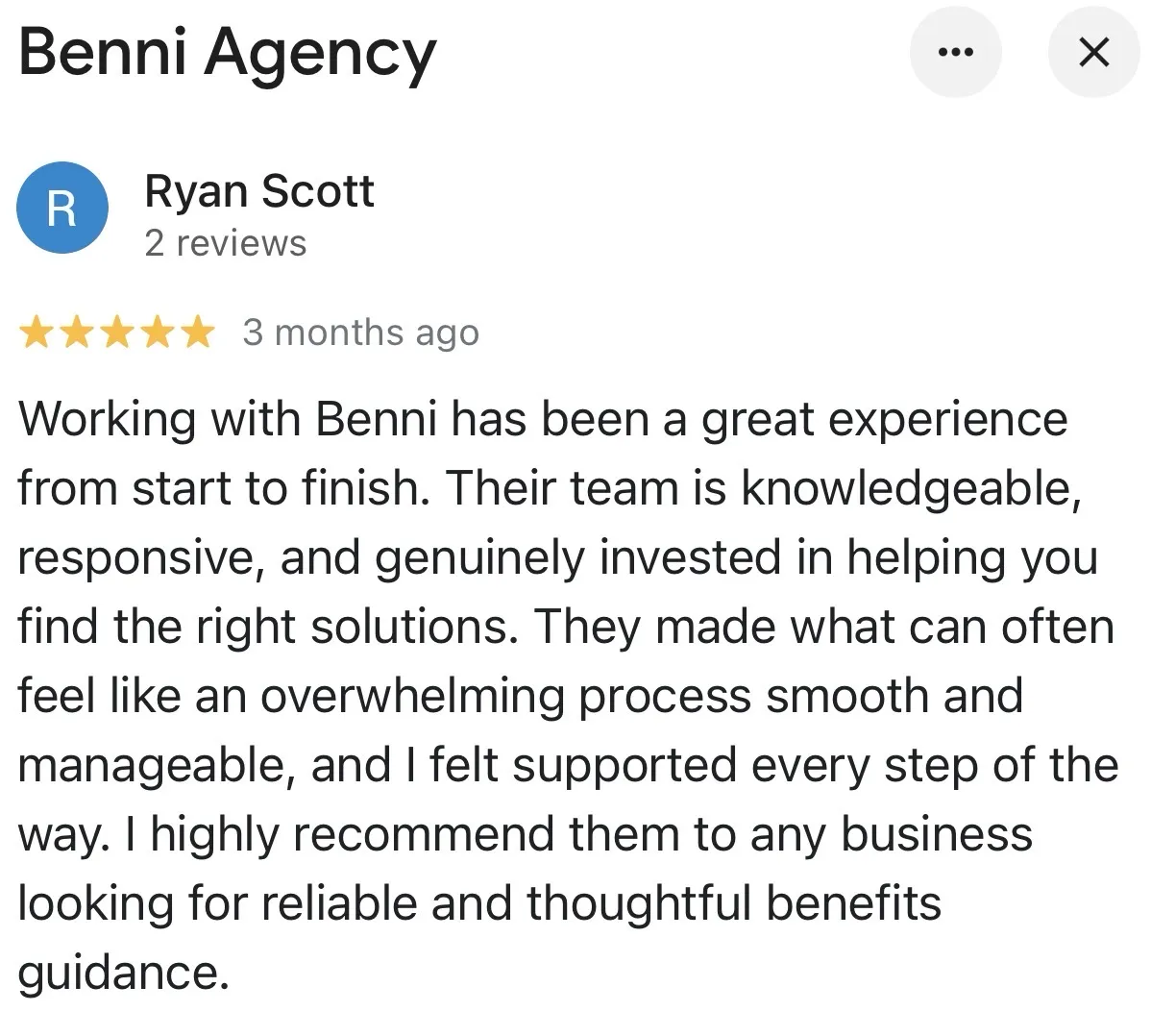
“One customer described Benni Agency as knowledgeable and responsive, sharing that the team stayed involved throughout the process and helped turn an overwhelming benefits decision into a smoother, more manageable experience.”
Greater control works best when employers have reliable reporting, clear explanations, and experienced support.
What Are the Risks of Partially Self-Funded Insurance?
Partial self-funding also brings important risks.
Higher Financial Risk
The biggest concern is that healthcare claims may be higher than expected. Several hospitalizations, specialty medications, surgeries, or serious diagnoses can create significant costs within a short period. Stop-loss insurance can reduce certain losses, but employers still need enough financial capacity to handle claims below applicable attachment points.
Unpredictable Monthly Claims
Claims do not arrive evenly every month. A business may have several quiet months followed by a period with much higher healthcare expenses. That variation can create cash-flow pressure, especially for employers operating with tight margins or limited reserves.
Greater Administrative Responsibility
Partially self-funded plans can require more oversight than traditional fully insured coverage. Employers may need to coordinate with a TPA, stop-loss carrier, pharmacy benefit manager, provider network, broker, and other vendors.
For HR teams already balancing payroll, enrollment, employee questions, and everyday operations, another layer of plan management can feel overwhelming. The right benefits administration technology can help organize enrollment, benefits information, communication, and administrative processes. Clear vendor roles and dependable support can reduce confusion and prevent important tasks from being overlooked.
Stop-Loss Coverage Limitations
Stop-loss insurance does not automatically cover every expense above a certain amount. Employers should review attachment points, exclusions, reimbursement procedures, eligible claims, contract periods, renewal provisions, and claim-submission deadlines. Understanding what remains the employer’s responsibility can prevent unpleasant surprises after a large claim occurs.
What Does Partially Self-Funded Insurance Cost?
There is no single price because costs depend on the employer, workforce, plan design, and claims experience. Expenses may include medical claims, administrative fees, provider-network costs, pharmacy expenses, stop-loss premiums, and other plan-management charges. An employer may spend less when claims perform favorably, but costs may also rise during a high-utilization year. The more useful question is: What could the plan realistically cost during the year, and what is the employer’s maximum potential exposure?
What Compliance Responsibilities Do Employers Have?
Partial self-funding gives employers more control, but it also comes with compliance responsibilities. Depending on the employer and plan, obligations may involve ERISA documentation, ACA reporting, COBRA, HIPAA requirements, fiduciary duties, claims procedures, PCORI fees, and other federal requirements.
The IRS guidance for employers under the Affordable Care Act explains that employers offering self-insured coverage can have annual information-reporting responsibilities. Some tasks may be supported by TPAs, brokers, payroll providers, or other vendors, but employers should clearly understand who handles each responsibility.
Is Partially Self-Funded Insurance Good for Businesses?
Partially self-funded insurance can work well for businesses that want greater cost visibility and plan flexibility while using stop-loss coverage to limit certain risks. It is not automatically the right choice for every employer. Comparing different group health insurance options can help business owners understand how plan structure, workforce size, and funding approach may affect their choices. Employers with stable finances, adequate reserves, useful claims information, and strong administrative support may be better positioned to manage partial self-funding.
Who Is a Good Candidate for Partially Self-Funded Insurance?
Partial self-funding may be worth evaluating when a business has:
- Stable cash flow and sufficient financial reserves
- Access to useful claims or utilization information
- Leadership that wants greater cost transparency
- Access to competitive stop-loss protection
- Strong broker, TPA, and compliance support
- A willingness to review plan performance throughout the year
No single factor determines suitability. The decision should reflect the employer’s financial position, workforce, benefits goals, and tolerance for risk.
How to Decide if Partial Self-Funding Is Right for Your Business
Employers should look beyond one renewal quote and evaluate the entire funding structure.
Review Your Claims History
Review large claims, prescription costs, hospital use, chronic-condition trends, and overall claims volatility. Historical claims cannot perfectly predict future expenses, but they can provide useful context.
Evaluate Your Cash Flow
Consider how much cash the business could reasonably make available if claims rise unexpectedly. A plan that looks affordable over 12 months can still create financial pressure if the employer cannot manage short-term claims fluctuations.
Compare Stop-Loss Terms
Review the specific attachment point, aggregate attachment point, exclusions, reimbursement rules, renewal provisions, and maximum exposure. A lower-priced stop-loss policy may not always provide the strongest protection.
Consider Administrative Support
Ask who handles enrollment, claims processing, employee questions, compliance, reporting, provider access, and stop-loss coordination. Strong support can make partial self-funding much easier to manage.
Compare Total Plan Costs
Calculate expected claims, administration, stop-loss coverage, pharmacy services, network costs, and other expenses. Then compare the expected scenario with the maximum possible cost under the arrangement.
Find the Right Health Plan With Expert Support
Choosing between fully insured, partially self-funded, level-funded, and other health plan structures can feel difficult when each option uses different pricing methods, contract terms, and risk assumptions. Employers often want confidence that they understand what they are agreeing to before making a benefits decision.
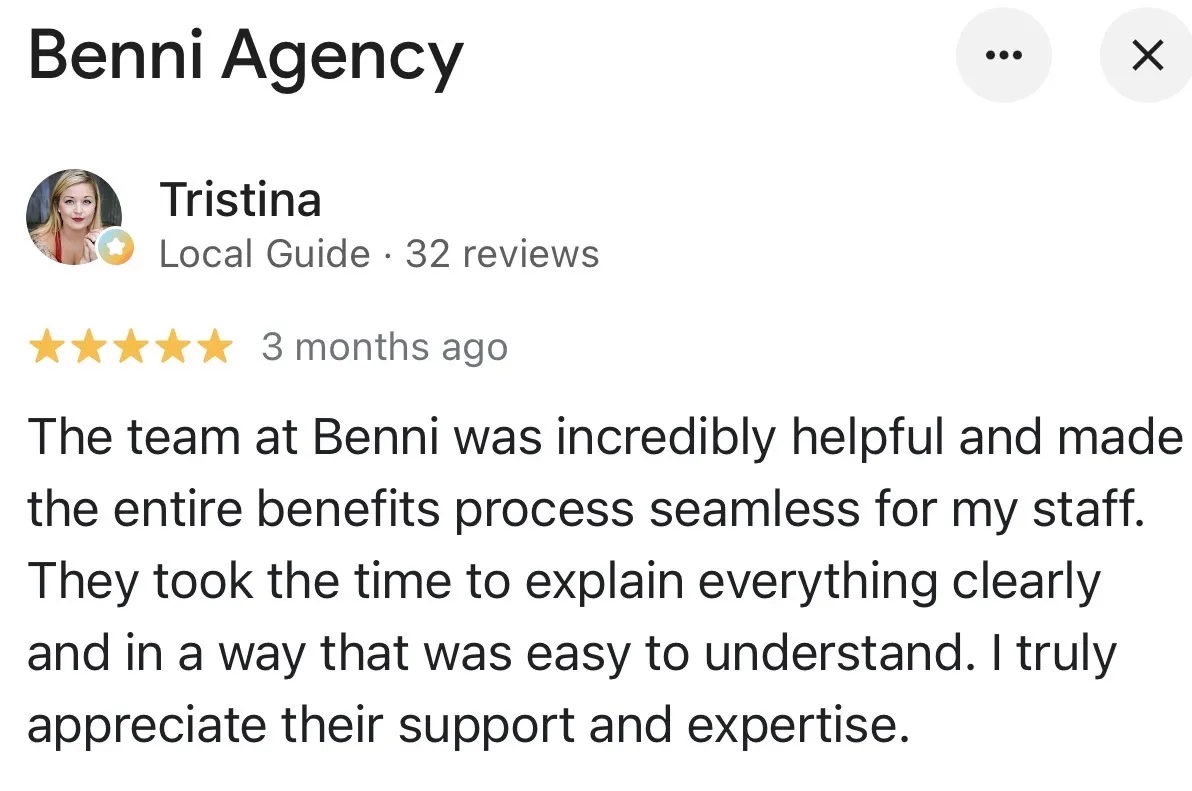
“One customer shared that Benni Agency made the benefits process feel seamless for the staff, explaining each step clearly and answering questions in a way that was easy to understand.”
Benni Agency helps employers compare employee benefit strategies based on budget, workforce needs, administrative requirements, and long-term goals. If you are considering partially self-funded insurance, the right guidance can help you compare plan design, stop-loss protection, projected costs, vendor support, and other funding options before making a decision.