Yes, a pressure washing business usually needs insurance even when every type of coverage is not required by law. If you are asking, “Do I need insurance for a pressure washing business?”, the answer depends on your location, employees, vehicles, contracts, equipment, and the services you perform.
Pressure washing creates risks involving customer property, wet surfaces, high-pressure equipment, vehicles, and cleaning chemicals. The right business insurance can address some of these financial exposures while helping business owners meet legal or contractual insurance requirements.
Key Takeaways
- Pressure washing businesses may face legal, contractual, and practical reasons for carrying insurance.
- General liability can cover certain third-party injury and property damage claims, but exclusions still matter.
- Employees, business vehicles, mobile equipment, chemicals, and roof work can create separate insurance needs.
- South Carolina businesses regularly employing four or more workers generally need workers’ compensation coverage, subject to exemptions.
- Client contracts may require proof of insurance, specific limits, or additional insured status before work begins.
Do You Need Insurance for a Pressure Washing Business?
A pressure washing business may need insurance for legal, contractual, and financial reasons. There is no single nationwide rule requiring every pressure washing company to carry the same policies.
Insurance requirements can vary by state, so location matters when determining which policies a pressure washing business may need. For example, a business owner consulting an insurance agency in North Charleston, SC would need to consider South Carolina’s workers’ compensation rules, which generally require coverage for businesses regularly employing four or more workers, including part-time employees and family members, subject to exemptions. Business owners in other states should check their own workers’ compensation and auto insurance requirements.
Customers can set separate requirements. A commercial property owner or general contractor may ask for proof of liability insurance before allowing work to begin.
Even without a legal or contractual requirement, insurance can address risks such as accidentally damaging a customer’s property or causing an injury. Business owners should base coverage decisions on their actual operations rather than assuming one policy covers every pressure washing risk.
Why Pressure Washing Businesses Face Liability Risks
Pressure washing involves direct work on property that belongs to someone else, often while using powerful equipment around people, vehicles, buildings, and landscaping.
A mistake could damage siding, concrete, windows, paint, roofing materials, or nearby property. Wet surfaces and hoses can also create slip or trip hazards.
The Occupational Safety and Health Administration (OSHA) identifies high-pressure water, uncontrolled hoses, and equipment leaks as hazards associated with high-pressure cleaning. Potential injuries include lacerations, burns, eye injuries, and serious injuries to hands or fingers.
Insurance does not prevent these incidents, but appropriate coverage can address certain financial losses when a covered claim occurs.
What Insurance Does a Pressure Washing Business Need?
There is no universal insurance package for every pressure washing company. Coverage should reflect how the business operates, where it works, what equipment it owns, whether employees are involved, and what customers require.
Common coverage considerations include general liability, commercial auto, equipment protection, and workers’ compensation. Some businesses may need other forms of commercial insurance based on their services and contractual obligations.
Policy limits, exclusions, deductibles, and definitions vary. Business owners should review what each policy actually covers rather than relying only on the policy name.
General Liability Insurance
General liability insurance can cover certain claims involving third-party bodily injury and property damage. For a pressure washing company, that could include a customer tripping over equipment or accidental damage to property.
The National Association of Insurance Commissioners describes commercial general liability coverage as protection for liabilities involving bodily injury and damage to other people’s property.
Commercial Auto Insurance
Pressure washing companies often use trucks or vans to transport workers, pressure washers, hoses, chemicals, and other equipment between jobs.
Commercial auto coverage addresses vehicle risks connected with business use. The National Association of Insurance Commissioners notes that personal auto policies commonly have restrictions involving business vehicle use, making appropriate commercial coverage worth reviewing.
Tools and Equipment Coverage
Pressure washers, surface cleaners, hoses, pumps, ladders, generators, and related tools can represent a significant investment.
Businesses should check how equipment is covered while stored, transported, or used away from their main location. Depending on the policy, inland marine or tools and equipment coverage may address certain losses involving mobile business property. Coverage terms and exclusions should be reviewed carefully.
Workers’ Compensation Insurance
Workers’ compensation can provide benefits for covered employees who experience job-related injuries or illnesses. Whether coverage is legally required depends on state law and the employer’s circumstances.
In South Carolina, businesses regularly employing four or more workers generally need workers’ compensation coverage, with listed exemptions. Part-time workers and family members are included when determining employee count.
Does General Liability Cover Damage Caused While Pressure Washing?
General liability insurance may cover certain property damage claims, but business owners should not assume that every damaged surface will qualify.
Commercial general liability insurance generally addresses covered bodily injury and property damage claims involving third parties. Policy exclusions can change how coverage applies when the business is directly working on a particular piece of property.
For example, accidentally damaging a nearby vehicle may be treated differently from damaging the exact deck, siding, roof, or concrete surface being cleaned.
Business owners should review exclusions related to property being worked on, property in their care, and completed work. An insurance broker can help explain how specific policy wording may apply.
Do Cleaning Chemicals and Soft Washing Require Additional Coverage?
Cleaning chemicals and soft-washing solutions can create exposures that basic liability coverage may not fully address.
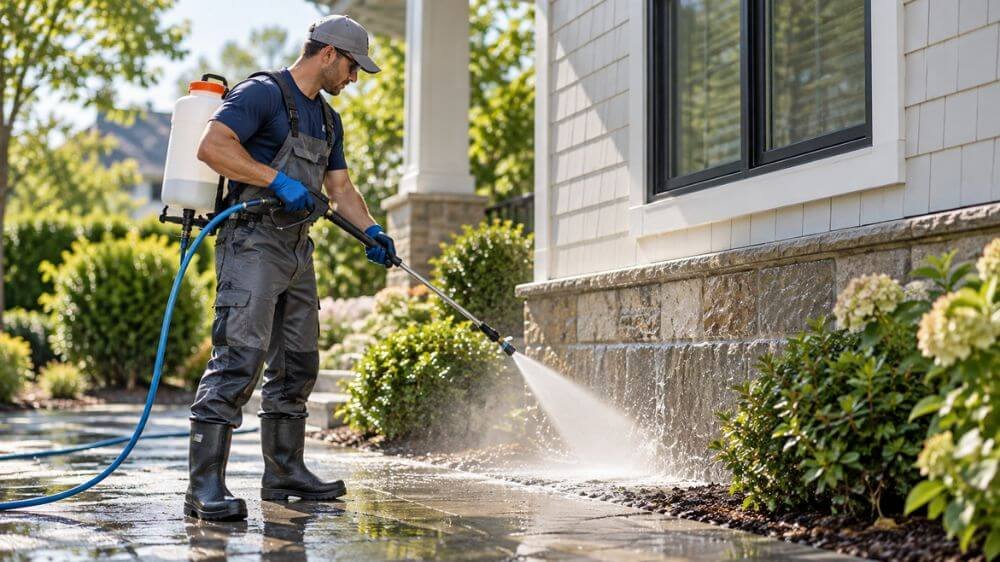
The Environmental Protection Agency (EPA) explains that runoff flowing across paved surfaces can carry chemicals and other pollutants into streams, groundwater, or stormwater systems. Pressure washing businesses should consider how wash water and cleaning products are handled at each job.
Pollution-related losses may also receive different treatment under insurance policies. The National Association of Insurance Commissioners notes that general liability and property policies commonly exclude many pollution-related losses.
Businesses using cleaning chemicals should review pollution exclusions, runoff exposure, and any available endorsements or separate coverage.
When Clients Require Proof of Insurance
A client can require insurance even when the law does not require the same policy.
Commercial property owners, general contractors, property managers, and other organizations may set insurance requirements in their contracts. A business may need to provide a Certificate of Insurance (COI) showing that specified coverage is in place.
A contract may also request particular liability limits or require the client to be listed as an additional insured under applicable coverage.
Requirements should be reviewed before signing a contract or starting work. Business owners should confirm that the policy can meet the requested terms rather than assuming an existing certificate or policy automatically satisfies every customer’s insurance conditions.
How Much Does Pressure Washing Business Insurance Cost?
Pressure washing insurance does not have one standard price. Premiums depend on the business’s operations and the amount of risk being insured.
Factors can include:
- Services performed
- Business location
- Revenue and payroll
- Number of employees
- Claims history
- Vehicles and driving exposure
- Equipment value
- Coverage limits and deductibles
- Roof or elevated work
- Chemical use
- Residential or commercial jobs
The National Association of Insurance Commissioners notes that business liability premiums can reflect factors such as operations, claims experience, sales, payroll, and perceived risk.
Comparing price without reviewing exclusions and limits can leave meaningful gaps in coverage.
What Should a Pressure Washing Business Check Before Buying Insurance?
A pressure washing business should confirm that the policy matches the work it actually performs.
Before selecting coverage, review whether the insurer knows about services such as pressure washing, soft washing, roof cleaning, chemical application, elevated work, and subcontracted jobs.
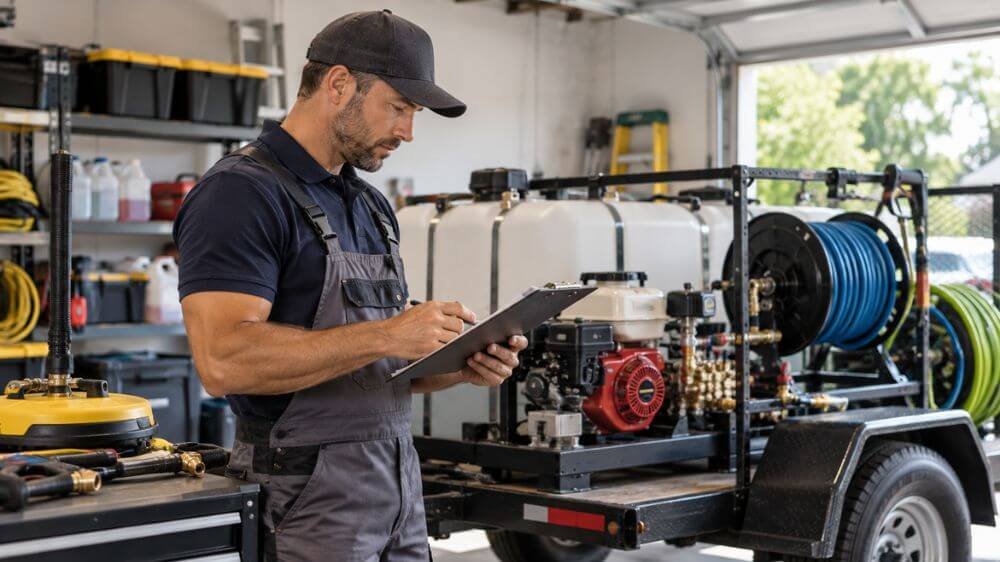
Business owners should also check:
- Liability limits and deductibles
- Property being worked on
- Tools and equipment away from the business location
- Business vehicle use
- Chemical or pollution exclusions
- Completed work
- Employee classifications
- Subcontractor requirements
- Additional insured requests
Read policy definitions and exclusions carefully. Coverage can differ between policies even when they have similar names, so decisions should be based on the actual contract rather than assumptions.
The Bottom Line
So, do you need insurance for a pressure washing business? In most cases, business owners should consider coverage even when every policy is not legally required.
General liability can address certain third-party injury and property damage claims, while commercial auto, equipment coverage, and workers’ compensation address different exposures. Companies using chemicals, cleaning roofs, hiring employees, or working under commercial contracts may have further insurance considerations.
Legal requirements vary by state, and customer contracts can impose separate conditions. Review your actual services, employees, vehicles, equipment, policy exclusions, and contract requirements before deciding which coverage and limits fit the business.