Choosing an employee benefits broker in Walterboro shouldn’t come down to who brings you the lowest renewal quote. You need to know whether the broker understands your workforce, explains your options clearly, supports employees, handles administration well, and stays involved after enrollment.
The right fit will depend on your company, budget, employees, and the problems you’re trying to solve. This guide is for Walterboro employers who want a practical way to compare brokers, ask better questions, and make a more informed choice before renewal or a broker change.
Key Takeaways
- Define what you need first. Know your budget concerns, workforce needs, enrollment problems, and service expectations before comparing brokers.
- Look for relevant experience. A broker should understand businesses similar to yours in size, workforce structure, and benefits needs.
- Compare more than premiums. Review cost strategy, plan choices, employee affordability, technology, service, and ongoing support.
- Find out who will manage your account. Ask what happens after enrollment and who handles employer and employee questions throughout the year.
- Ask direct questions before deciding. Compensation, references, technology, compliance support, and service expectations should be clear before you choose.
Start With What Your Business Actually Needs
Before interviewing brokers, get clear about what you want the relationship to improve. Maybe your renewal costs keep climbing without much explanation. Maybe enrollment takes too much of your HR team’s time. Employees may struggle to understand their choices, or payroll and eligibility changes may require too much manual work. Write down the issues that matter most to your company. That may include:
- Employer benefit costs
- Employee affordability
- Workforce size and expected growth
- Participation rates
- Enrollment problems
- Payroll coordination
- Employee education
- HR workload
- Current benefit offerings
- Renewal planning
- Support between renewals
This gives you something concrete to compare. If one broker spends time understanding these issues while another immediately starts talking about carriers and prices, that difference tells you something about how each firm approaches the job. You don’t need every available benefit or the most complicated plan. You need a broker who can connect the options to what your company and employees actually need.
Look for Experience That Matches Your Workforce
A broker can have years of experience and still be a poor fit for your company. Ask what types of employers the firm works with most often. A 15-person professional office may need a different approach than a manufacturer, contractor, medical practice, or company with employees working across several locations.
Walterboro itself has a varied employer base. The South Carolina Department of Commerce announced a $5.1 million QMP manufacturing operation in Walterboro expected to create 233 jobs. That kind of growing manufacturing workforce can have different enrollment, communication, and administration needs than a small office with mostly salaried employees. t isn’t that one type of business needs a specific benefits package. It’s that workforce structure matters. Ask prospective brokers:
- Do you work with companies around our size?
- Have you supported businesses with a workforce like ours?
- Who on your team has that experience?
- How do you handle growing employee counts?
- Can you provide references from similar employers?
Relevant experience should show up in the questions a broker asks, not just in a list of industries on a website.
Find Out How the Broker Approaches Costs and Plan Options
Every employer cares about cost. The better question is how the broker approaches it. Simply moving to a higher deductible or asking another carrier for a quote isn’t much of a strategy. A broker should be able to explain how different choices affect both the company and its employees. Depending on the business, that discussion may include:
- Employer contribution levels
- Employee payroll deductions
- Deductibles and copays
- Provider networks
- Traditional group health coverage
- Level-funded arrangements where appropriate
- ICHRA options
- Voluntary benefits that fill specific coverage gaps
You don’t need every option presented to you. You need to understand why a recommendation fits your workforce and budget. For example, reducing the employer premium may look good on paper but create a much higher cost for employees when they use care. Another change might lower the monthly premium while restricting access to providers employees already use. A useful broker should explain those trade-offs before asking you to make a decision.
Ask What Support You Get After Enrollment
A broker relationship shouldn’t disappear once employees finish enrolling. Before choosing a firm, ask who will handle the account during the rest of the year. Find out:
- Who answers your HR team’s questions?
- Who helps employees when they have benefit questions?
- Who handles new hires and eligibility changes?
- How are carrier issues escalated?
- What happens when an employee has a qualifying life event?
- Who prepares for renewal?
- How often will the broker check in?
- Will the person selling the account remain involved?
This matters because the sales presentation is only a small part of the relationship. Your team may need help months later when an eligibility issue appears, an employee doesn’t understand a benefit, or a renewal requires decisions on a tight timeline. Ask what ongoing compliance support is available too. You should understand what the broker will help with, what stays with your HR team, and when outside legal or tax advice may still be needed.
Check the Technology Before You Choose
Benefits technology can make a broker relationship much easier, but only if it solves real administrative problems. Don’t stop at asking whether the broker has an enrollment platform. Ask to see how it works. Useful questions include:
- How will employees enroll?
- Can new hires complete enrollment online?
- Can HR see elections and eligibility information?
- Does the system connect with payroll or HR tools?
- Who handles the initial setup?
- How are employee changes updated?
- What reports can HR access?
- What happens if something doesn’t sync correctly?
Good benefits administration technology should reduce duplicate entry and give employers a clearer view of enrollment and employee information. Technology can also improve employee benefits results when it removes friction from the process. Employees are more likely to make informed choices when plan information is easier to access, and enrollment is straightforward. HR teams also have more time to deal with real employee questions when they’re not repeatedly entering the same information into different systems. The software itself isn’t the deciding factor. How the broker sets it up, supports it, and uses it with your team matters more.
Questions to Ask Before Choosing a Broker
You don’t need a complicated request for proposal to have a useful broker conversation. Start with direct questions. Consider asking:
- What types of employers do you work with most often?
- Who will manage our account after we become a client?
- What happens between enrollment and renewal?
- How do you evaluate costs beyond the carrier premium?
- What benefits technology will our employees and HR team use?
- How do you help employees understand their choices?
- What compliance resources are included?
- How are you compensated?
- Can we speak with employers that have similar needs?
Pay attention to how clearly the broker answers. If you get a simple question answered with several minutes of vague insurance language, employees may have the same problem later. A good answer should help you understand what happens, who’s responsible, and what you can expect.
Watch for These Broker Red Flags
Not every warning sign means a broker is a bad company. It may simply mean the firm isn’t a good match for your business. Be cautious if a broker:
- Starts recommending plans before asking about your workforce
- Focuses almost entirely on premiums
- Gives vague answers about compensation
- Can’t clearly explain who will service the account
- Talks about enrollment but not year-round support
- Provides technology that still leaves HR doing most tasks manually
- Struggles to explain the trade-offs between plan options
- Gives nearly identical recommendations to very different businesses
- Won’t provide relevant references
One of the clearest warning signs is a conversation that jumps straight to carriers and pricing. Before recommending anything, a broker should know what you’re trying to fix.
Compare Brokers on More Than the Premium
Once you’ve talked with two or more brokers, compare them using the same criteria. This makes the decision easier than trying to remember which presentation sounded better. Look at factors such as experience, strategy, cost, service, technology, employee support, compensation, and references.
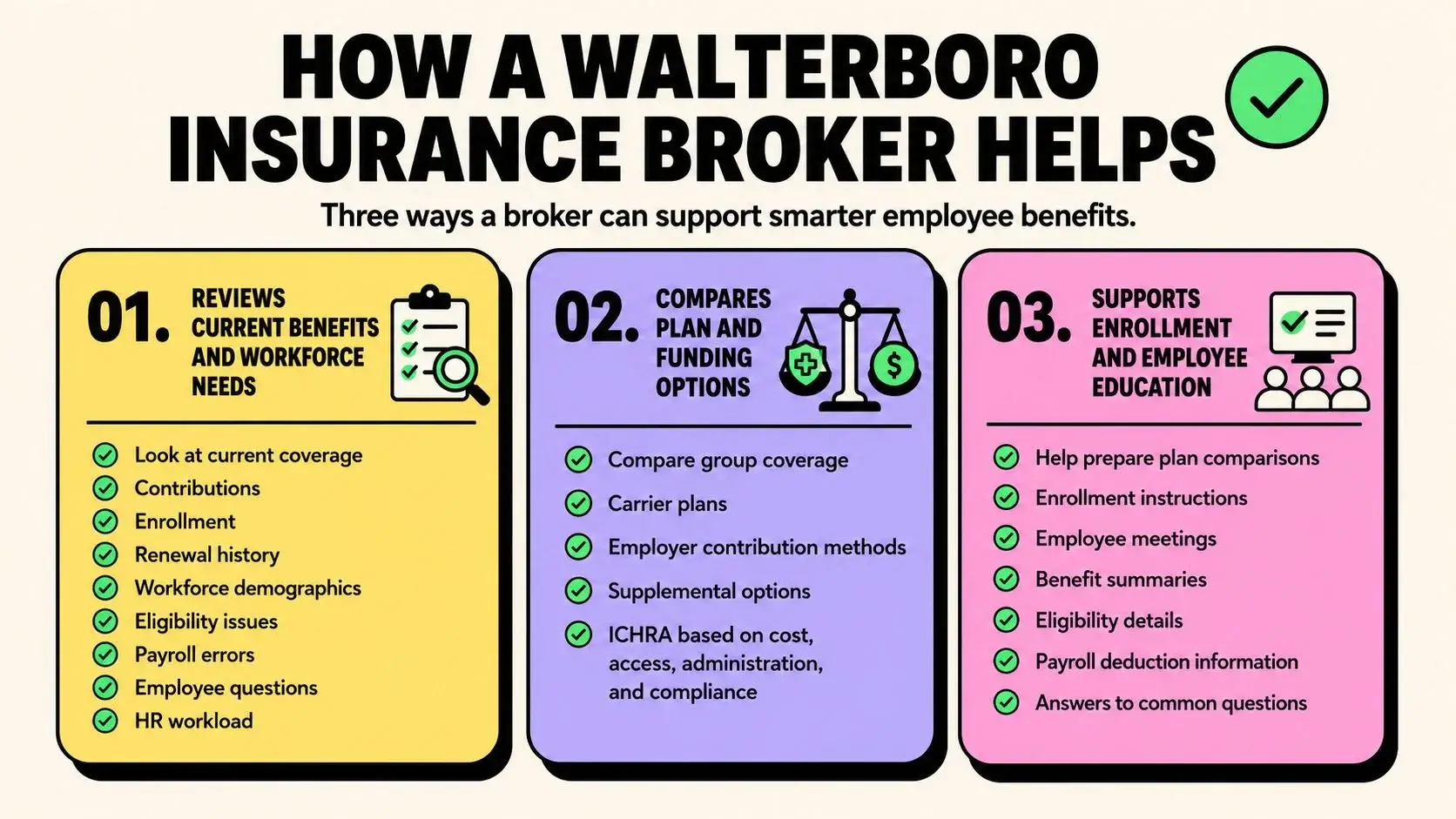
Price still matters, but it shouldn’t be the only thing you compare. A lower initial premium may not be a good result if employees can’t understand the plan, HR spends extra time correcting administrative issues, or your broker is difficult to reach when a problem comes up. The better choice is usually the broker that can clearly explain what you’ll receive, who will provide it, and how the approach fits your business.
When a Second Opinion Makes Sense
If your current broker responds quickly, explains your options clearly, supports employees, and makes benefits easier for your team to manage, changing firms may not solve anything. A second opinion can make sense when renewal is the only time you hear from your broker, HR handles most employee questions alone, administration remains heavily manual, or every year seems to bring the same recommendations with different prices.
You can compare another broker without committing to a change. Ask them to review your current benefits, employer contribution, employee costs, administrative process, technology, and service model. The goal is to find out whether there are meaningful issues or options you haven’t considered. Benni Agency works with employers that want another perspective on their current benefits setup. A useful review should leave you with clearer information, even if staying with your current arrangement turns out to be the right decision.