Voluntary benefits are optional workplace benefits that employees can choose based on their health, financial, and lifestyle needs. Common options include accident insurance, critical illness coverage, dental, vision, life insurance, disability coverage, and other services offered through payroll deductions.
For employers and HR teams, these benefits can help fill gaps left by core insurance plans, give employees more choice, and strengthen the overall package without placing the full cost on the business. In this guide, we’ll break down how voluntary benefits work, which options employers can offer, and what to review before adding them to an employee benefits package.
Key Takeaways
- Voluntary benefits give employees more choice.
- Many plans are employee-paid through payroll deductions.
- Common options include accident, life, dental, vision, and disability coverage.
- These benefits can help fill cost and coverage gaps.
- Employers should choose plans based on real workforce needs.
What Are Voluntary Benefits and How Do They Work?
Voluntary benefits are optional workplace benefits employees can choose based on their health, family, income, or lifestyle needs. Your business selects the available plans, sets eligibility rules, and offers enrollment through the employee benefits program.
Employees review the options and decide which coverage fits their situation. Premiums are often taken from each paycheck through automatic payroll deductions. Some employers contribute to the cost, though many voluntary plans are mainly employee-paid.
For example, an employee with a high-deductible health plan may choose accident insurance for extra financial support after a covered injury. Another employee may select life insurance to protect family members. This setup gives each person more choice without requiring your business to fund every option in full.
What Types of Voluntary Benefits Can Employers Offer?
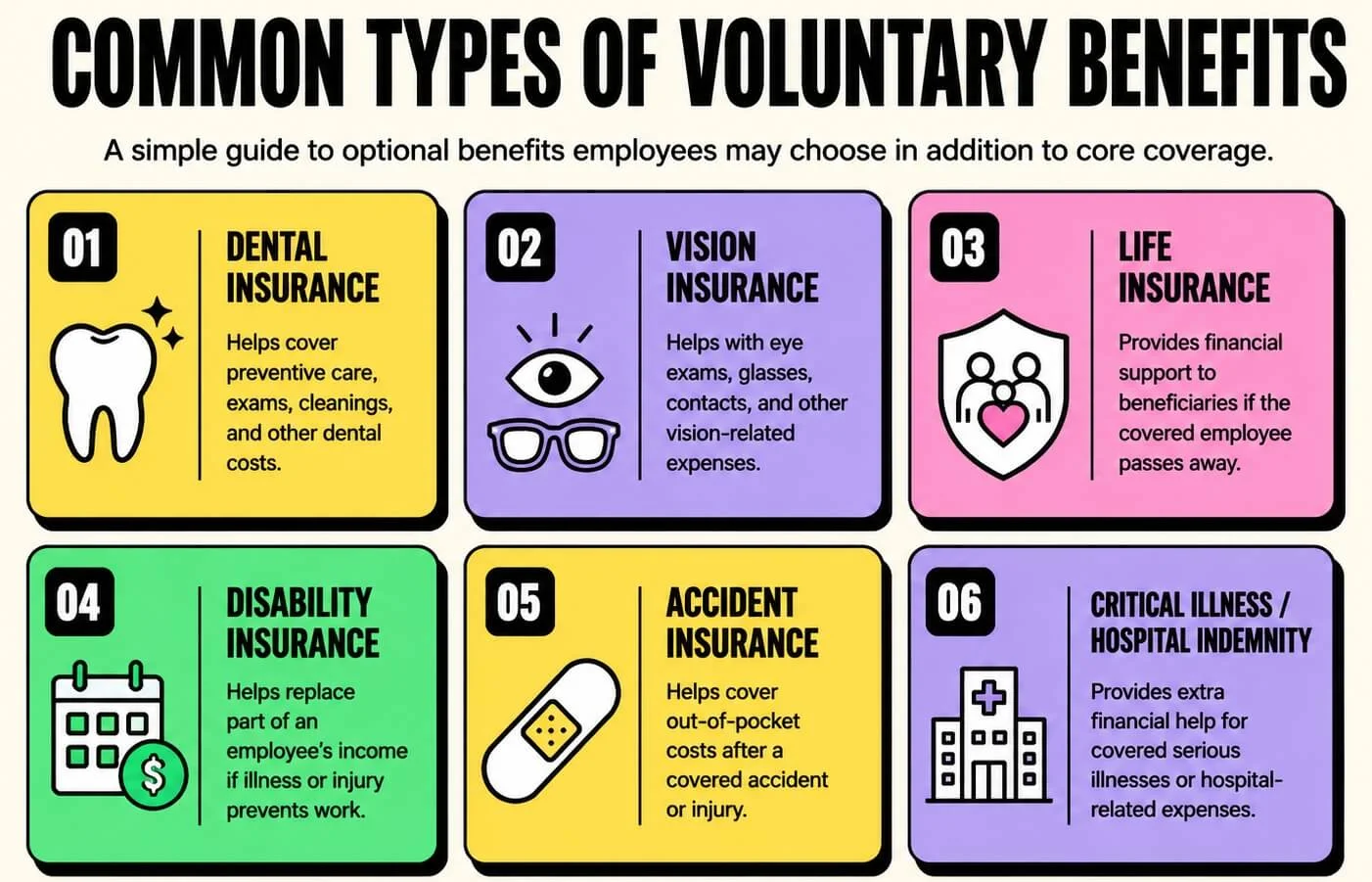
Employers can offer voluntary benefits that support medical expenses, income, family protection, and everyday needs. The best mix depends on your workforce, current benefits package, employee concerns, and administrative budget. Common options include:
- Accident insurance
- Critical illness coverage
- Hospital indemnity insurance
- Short-term and long-term disability coverage
- Dental and vision insurance
- Voluntary life insurance
- Pet and legal insurance
- Identity theft services
- Wellness and employee discount programs
Your workforce may not need every available option. A company with many young families may see stronger interest in life, disability, and hospital coverage. A team with varied ages and household needs may value a wider selection. Reviewing employee feedback can help your HR team choose benefits people are more likely to use.
Supplemental Health and Income Protection Benefits
Supplemental health benefits may pay a fixed amount after a covered accident, serious illness, or hospital stay. Accident, critical illness, and hospital indemnity plans can help employees manage deductibles, transportation, childcare, or household bills.
Disability insurance may replace part of an employee’s income when a covered health issue prevents that person from working.
Dental, Vision, and Lifestyle Benefits
Dental and vision plans may help employees pay for exams, cleanings, procedures, glasses, or contact lenses. Lifestyle choices can include pet insurance, legal support, gym programs, wellness services, and employee discounts.
These options let employees choose benefits that match their daily needs, household costs, and personal priorities beyond standard medical coverage.
Life Insurance and Financial Security Benefits
Voluntary life insurance can provide a payment to a selected beneficiary after the insured employee dies. Your plan may offer coverage for employees, spouses, or dependents based on carrier rules.
Other financial-security options may include accidental death coverage, identity theft services, financial counseling, or long-term care insurance. These benefits can help employees protect their families, savings, and future plans.
How Do Voluntary Benefits Help Cover Insurance Gaps?
Core health insurance may still leave employees responsible for deductibles, copays, lost income, travel expenses, and household bills. Voluntary benefits can provide added financial support after certain covered events.
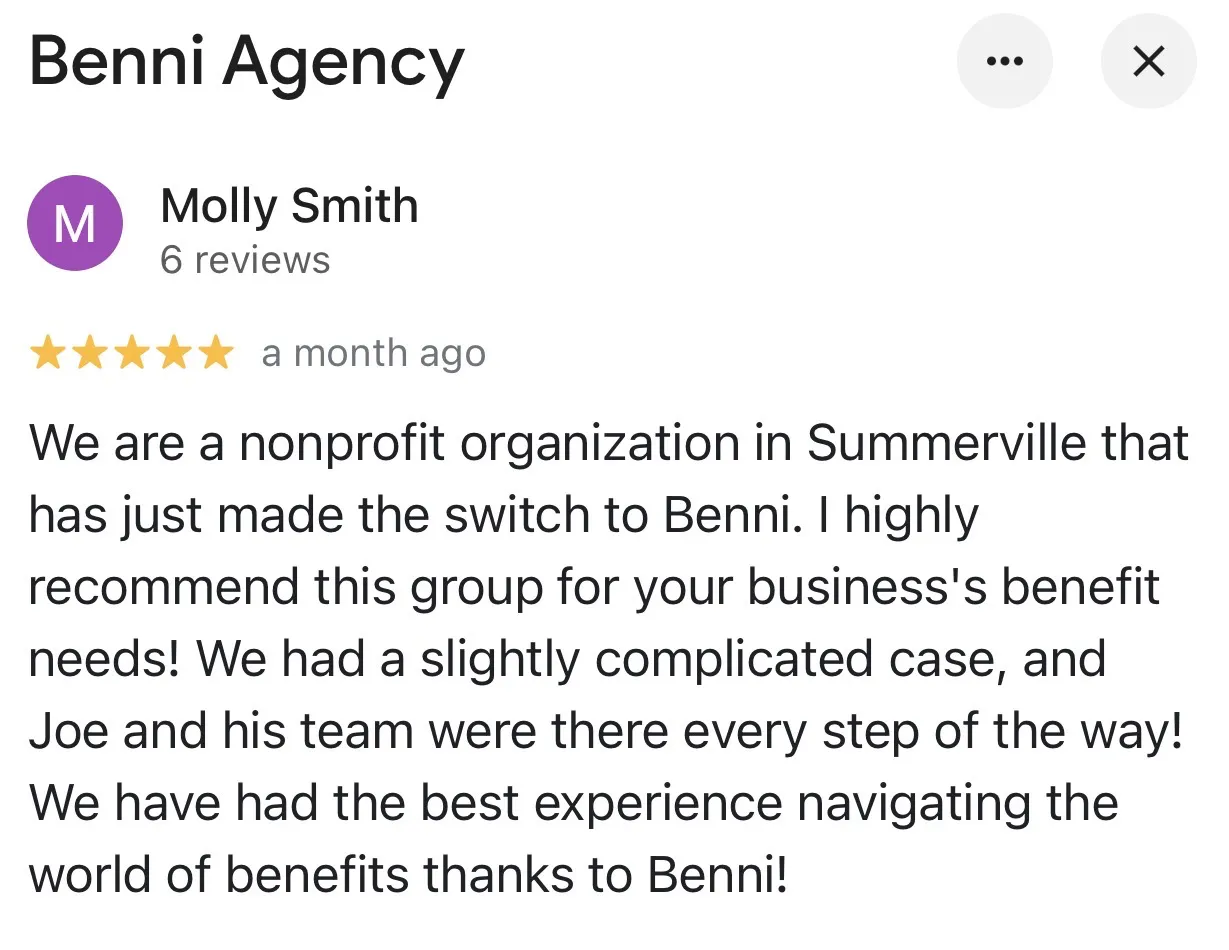
One employer shared that a complicated benefits transition became much easier because the team provided clear guidance and steady support at every step. The experience helped the organization feel more confident while reviewing its options and making decisions for employees.
Supplemental coverage does not replace major medical insurance. It supports expenses or financial risks that the main plan may not fully address. A focused voluntary benefits program can make your overall offering more useful without adding every cost to the company budget.
What Are the Benefits of Voluntary Coverage for Employees?
Voluntary coverage gives employees more choice over their workplace benefits. Each employee can select options based on personal health concerns, family responsibilities, income, and current life stage rather than receiving the same extra coverage as every coworker. Employee advantages may include:
- Convenient premiums taken through payroll
- Access to workplace or group rates
- Added support for deductibles and other expenses
- Coverage choices for spouses or dependents
- Greater control over benefit spending
- Financial support after certain covered events
For example, a new parent may value life and disability insurance. Another employee may prefer dental, vision, or pet coverage. This flexibility helps your workforce choose benefits that match real needs. It can make the full benefits package feel more useful, personal, and easier to value.
How Can Voluntary Benefits Help Employers?
Voluntary benefits can help employers offer a broader and more flexible benefits package without paying the full premium for every option. This can be useful for businesses with employees from different age groups, family situations, and financial backgrounds. A thoughtful program may help your business:
- Respond to employee benefit requests
- Support recruitment and retention efforts
- Add choices without replacing core benefits
- Address financial gaps employees may face
- Build a more competitive workplace package
These outcomes depend on selecting relevant benefits and explaining them clearly. A long list of plans has little value when employees cannot tell which options fit their needs. Your HR team should review workforce feedback, current coverage gaps, participation levels, and administrative demands before adding new choices. The goal is a useful program, not the largest benefit menu.
Who Pays for Voluntary Benefits?
Employees often pay most or all of the premium for voluntary benefits through payroll deductions. Your business may choose to contribute part of the cost for selected options, such as disability, life, dental, or vision coverage. The payment structure can take three forms:
- Fully employee-paid
- Shared between employer and employee
- Fully employer-paid for selected benefits
A plan described as voluntary does not mean it creates no expense for the employer. Your business may still pay for enrollment support, payroll setup, administration, employee communication, or benefits technology. Carrier rules and group size can affect rates and participation requirements.
Before adding a plan, review both the premium structure and internal workload. This gives your HR team a clearer view of the true cost and helps prevent surprises during enrollment.
Are Voluntary Benefits Pre-Tax?
Some voluntary benefits may qualify for pre-tax payroll deductions, yet this treatment does not apply to every plan. Tax status depends on the benefit type, plan document, funding method, and applicable tax rules.
Under a Section 125 cafeteria plan, employees may choose certain qualified benefits instead of taxable cash compensation. The IRS lists eligible accident and health benefits, dependent care assistance, adoption assistance, group-term life insurance, and health savings accounts among possible qualified benefits. Long-term care insurance is excluded from Section 125 treatment.
Other voluntary benefits may require after-tax payments. Before telling employees that a benefit lowers taxable income, your business should confirm the correct treatment with its benefits broker, payroll provider, tax adviser, or legal counsel. Clear guidance protects employees from incorrect expectations.
Can Employees Keep Voluntary Benefits After Leaving a Job?
Some voluntary benefits may stay with an employee after a job change, but that depends on the policy, carrier, and coverage type. Certain plans are portable, which means the employee may continue the policy by paying premiums directly. Other plans end when employment ends. Employees may need to:
- Apply within a set time
- Switch from payroll deductions to direct billing
- Accept a different premium
- Meet carrier rules for continued coverage
Employers should give employees clear details before they leave. This helps prevent missed deadlines, unexpected costs, or coverage gaps. HR teams should confirm portability rules for each benefit instead of assuming every plan can continue.
How Should Employers Choose the Right Voluntary Benefits?
The right voluntary benefits should match the real needs of your workforce. Start with employee feedback, current coverage gaps, workforce age groups, family needs, and common financial concerns. Review each option based on:
- Employee interest
- Cost and payroll setup
- Carrier service
- Claims process
- Enrollment support
- Portability
- Administrative workload
Choosing the right voluntary benefits mix is often more effective than offering a large list of options that employees may find difficult to compare. A smaller group of relevant options is often easier for employees to compare and use. For example, a workforce with many young families may value life, disability, and hospital coverage. A mixed workforce may need a broader range of health, financial, and lifestyle choices
How to Set Up a Voluntary Benefits Program
Start by reviewing your current benefits package and identifying gaps employees may face. Then gather employee feedback, compare carriers, review pricing, confirm tax treatment, and check payroll requirements. A simple setup process may include:
- Review current coverage
- Survey employees
- Compare plan options
- Confirm costs and eligibility
- Prepare enrollment materials
- Train HR staff
- Track participation
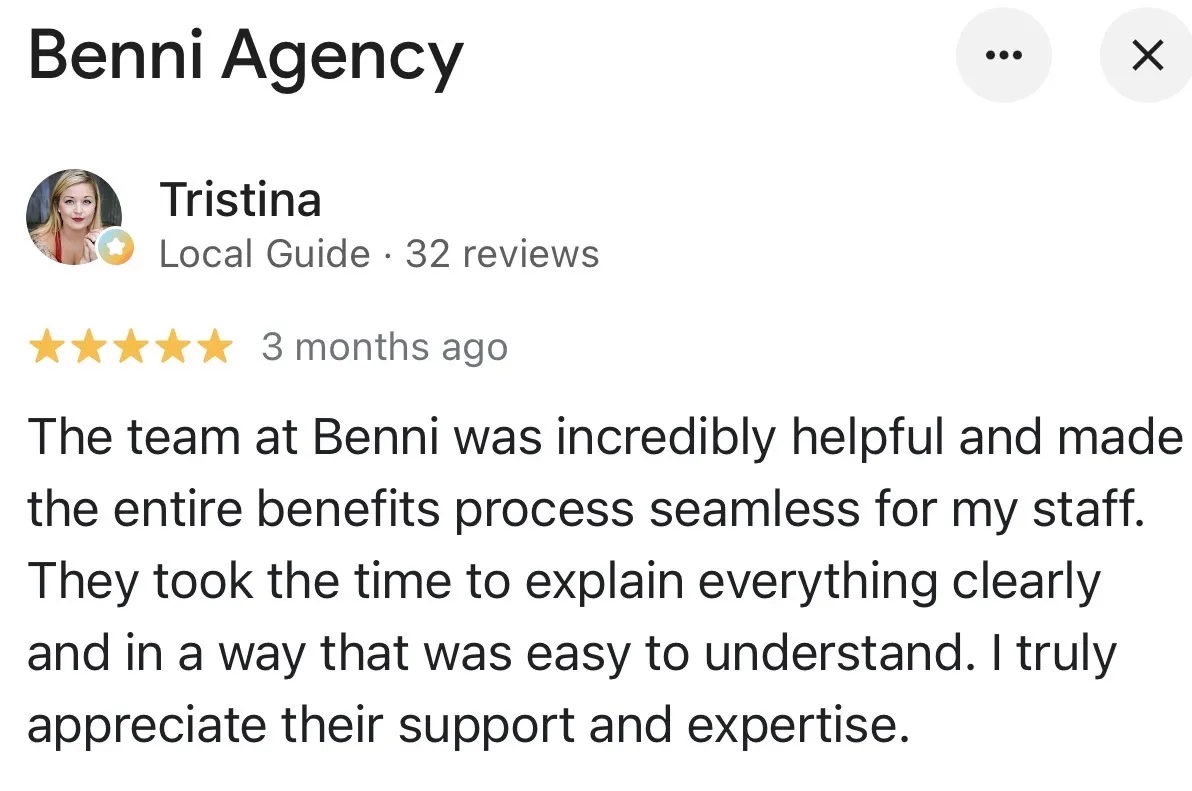
Another employer described the benefits process as smooth and easy for the entire staff. Clear explanations and helpful answers made the available choices easier for employees to understand.
Benni Agency helps employers compare options, explain costs, and build a program that fits the workforce. The focus stays on practical guidance, clear communication, and a smoother enrollment experience for HR teams and employees.
Why Clear Employee Communication Improves Benefit Participation
Employees are more likely to use voluntary benefits when they can quickly see what each option covers, what it costs, and how it may help them. Insurance terms, long plan documents, and unclear examples can lower participation. Clear communication should explain:
- Cost per paycheck
- Covered events
- Main exclusions
- Claims process
- Enrollment deadlines
- Portability rules
Real examples can make coverage easier to compare. A simple case showing how accident insurance may help after a covered injury is often more useful than a long policy summary.
Benni Agency can help employers turn complex benefit details into clear, employee-friendly information, making enrollment easier and helping workers choose coverage with more confidence.
One thought on “What Are Voluntary Benefits? Supplemental Benefits Explained”
Comments are closed.