If you’re comparing benefits brokers in Holly Hill, don’t judge them only by the insurance quotes they bring to the table. Look at how they handle plan strategy, renewals, employee support, technology, costs, and the work your HR team deals with throughout the year.
The right broker should understand what your business needs before recommending coverage. This guide is for Holly Hill employers and HR teams that want a clear way to compare brokers, spot service gaps, and make a better-informed decision before the next renewal.
Key Takeaways
- Compare service, not just quotes. Find out who handles renewals, employee questions, carrier problems, and benefits administration.
- Ask why each recommendation fits your workforce. A broker should explain the reasoning behind plan and funding choices.
- Review the technology before committing. Check how enrollment, payroll, reporting, and employee support will work.
- Understand broker compensation and included services. Know what you’re paying for and what support comes with the relationship.
- Verify experience and South Carolina licensing. Relevant employer experience matters more than choosing a broker based only on location.
Start With What Your Business Needs From a Broker
Before comparing firms, look at what’s causing problems in your current benefits program. Maybe renewals arrive with little explanation. Your HR team may spend too much time correcting enrollment issues. Employees may not understand their benefits or know who to contact when a carrier problem comes up. Write down the problems that actually affect your company. They might include:
- Rising benefit costs
- Too much manual administration
- Employee confusion
- Slow carrier issue resolution
- Poor communication before enrollment
- Limited support outside renewal season
- Benefits employees rarely use
- No clear plan for future benefit costs
This gives you something useful to compare. Instead of asking, “Which broker has the best presentation?” you can ask, “Which broker can solve the problems we’re dealing with?”
What Should a Holly Hill Benefits Broker Actually Handle?
A benefits broker can do much more than request health insurance quotes. Depending on the employer and service arrangement, broker support may include:
- Reviewing current benefits and costs
- Comparing carriers and plan designs
- Discussing different funding approaches
- Preparing for renewals
- Helping with enrollment
- Supporting employee benefits questions
- Handling carrier escalations
- Helping with benefits administration
- Explaining compliance responsibilities
- Reviewing benefits as the company changes
Ask what the broker handles directly and what remains your responsibility. That distinction matters. A business may receive competitive plan options but still leave its HR team responsible for most employee questions, enrollment corrections, and follow-up work.
Compare the Broker’s Plan and Funding Strategy
A broker shouldn’t recommend a plan before understanding your employee population, budget, and administrative capacity.
Can They Explain More Than One Funding Option?
Depending on your situation, the conversation may include fully insured coverage, level-funded plans, an Individual Coverage HRA, or another approach. You don’t need every option presented simply for the sake of choice. You need the broker to explain why an option may or may not fit your company. Ask questions such as:
- What could our costs look like under this approach?
- What risk does the employer take on?
- How much administration is involved?
- How could the option affect employees?
- What happens if our workforce changes?
If the recommendation makes sense only after a long sales explanation, keep asking questions.
Are Benefit Recommendations Based on Employee Needs?
Medical insurance is only one part of an employee benefits package. Dental, vision, life insurance, disability coverage, accident benefits, and other voluntary options can have a place, but adding more products doesn’t automatically create a better package. A broker should look at your workforce and identify real gaps. For example, an employer with a younger workforce may hear different employee concerns than a company with long-tenured employees supporting families. The recommendation should reflect those differences rather than follow the same product list for every company.
Look Closely at the Service Team and Renewal Process
The person leading the sales meeting may not be the person handling your account after you sign. Find out how the service model actually works.
Who Will Manage Your Account?
Ask for the names or roles of the people responsible for:
- Daily benefits questions
- Enrollment problems
- Carrier issues
- Renewal preparation
- Employee communication
- Benefits administration
You should also know what happens when your main contact is unavailable. This is especially useful for smaller HR teams. If an issue affects an employee’s coverage, you need to know who owns the problem and how quickly it can be addressed.
What Happens Before Renewal?
A renewal shouldn’t begin when the carrier’s new rates arrive. Ask when the broker normally starts reviewing:
- Current costs
- Workforce changes
- Plan usage
- Employee concerns
- Alternative options
- Funding choices
- Administrative problems
The exact process will vary by employer, but you should be able to understand what the broker does before renewal and what decisions you’ll need to make.
Check the Technology Before You Commit
Don’t stop at asking whether a broker offers an enrollment platform. Find out how the system will fit into the tools your company already uses. Ask whether the broker’s benefits administration technology can connect enrollment, employee records, reporting, payroll, and the systems your HR team already relies on. Then get specific:
- Who sets up the platform?
- Who maintains employee information?
- Can it connect with your payroll or HR system?
- How are enrollment errors corrected?
- Can employees make permitted changes online?
- Who helps employees when they get stuck?
- Are technology or implementation costs separate?
Technology should reduce unnecessary work. If your HR team still needs to enter the same employee data into several systems, ask why.
Ask How the Broker Is Paid and What Is Included
Employers should understand the financial side of the broker relationship before making a decision. Ask how the broker is compensated and whether there are separate costs for consulting, technology, implementation, administration, or other services. You can also ask for a clear explanation of what is included. For example:
- Is employee support part of the service?
- Is benefits administration included?
- Are there separate platform fees?
- Does implementation cost extra?
- Is year-round consulting included?
- Are certain projects billed separately?
Compensation arrangements can differ, so don’t assume one broker works the same way as another. The goal isn’t to choose the lowest visible cost. It’s to understand what your company receives for the money being paid.
Verify Experience, Licensing, and Local Understanding
Local knowledge can help, but a Holly Hill address shouldn’t be the main reason you choose a broker. Look for experience with employers that have similar workforce sizes, industries, administrative needs, or benefits challenges. There is a real local employment base to understand. The U.S. Bureau of Labor Statistics reported about 1,830 covered establishments and 27,410 covered employees in Orangeburg County in the fourth quarter of 2025, with an average weekly wage of $982.
That doesn’t mean every Holly Hill employer needs the same benefits strategy. It shows exactly why a broker needs to ask about your company rather than make assumptions based on location. You should also verify appropriate South Carolina licensing and ask for relevant references when they would help your evaluation. A broker doesn’t have to sit a few blocks from your office to provide good local service. Responsiveness, relevant experience, licensing, and a clear understanding of your workforce matter more.
Watch for These Broker Red Flags
Not every concern means you should immediately reject a broker, but some signs deserve another question. Be cautious if:
- Most of the conversation is about premiums and carriers
- Recommendations appear before the broker understands your workforce
- Nobody clearly explains who will service the account
- The renewal process sounds vague or last-minute
- Compensation isn’t explained clearly
- Employee support responsibilities are unclear
- The technology creates duplicate HR work
- The broker can’t explain why a funding approach fits
- Relevant references aren’t available
- Licensing information can’t be verified
A good comparison doesn’t require you to find a perfect broker. You’re trying to understand how each firm works when real benefits problems come up.
Use a Simple Checklist Before Choosing a Broker
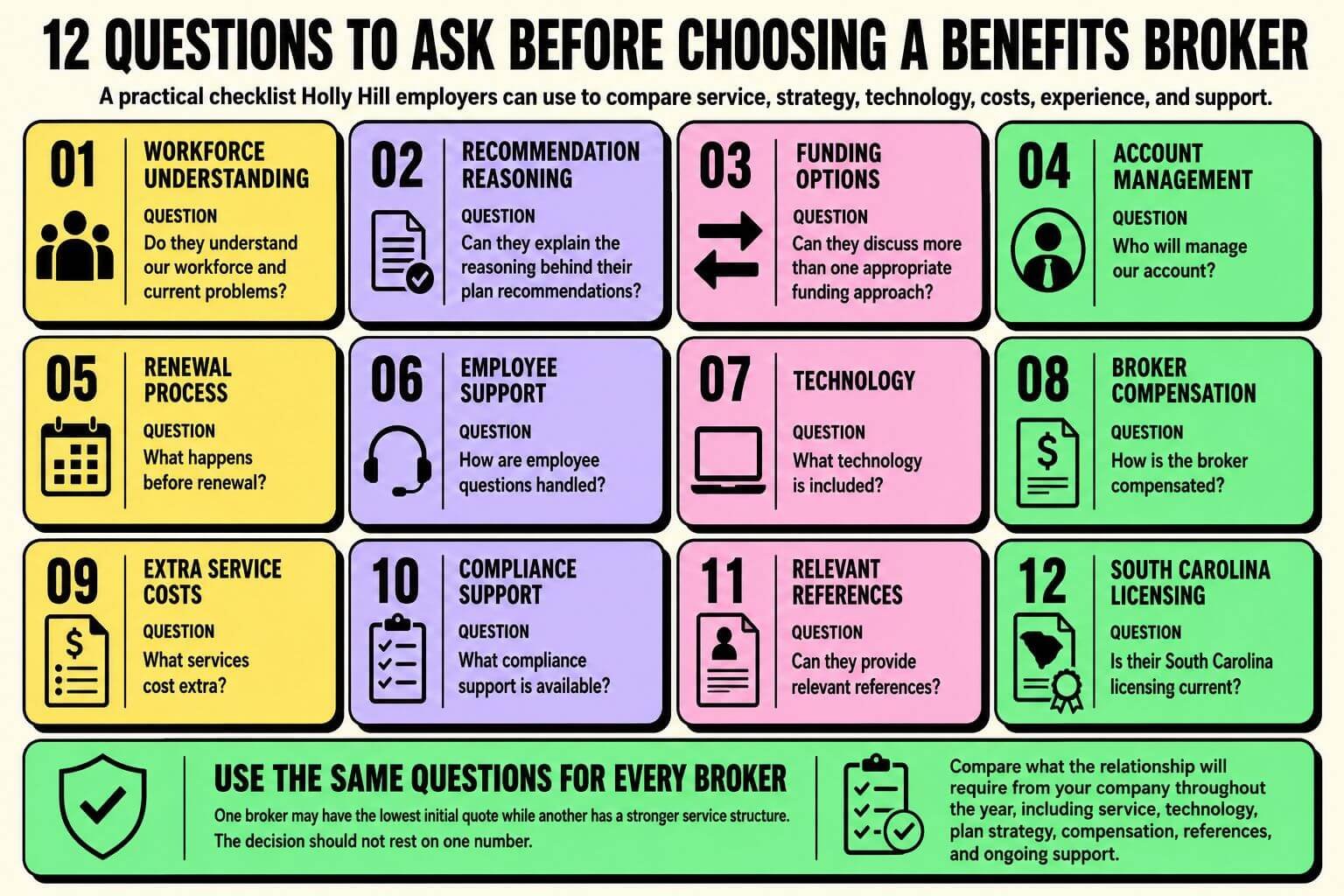
Before making a final decision, compare each broker using the same questions. Ask:
- Do they understand our workforce and current problems?
- Can they explain the reasoning behind their plan recommendations?
- Can they discuss more than one appropriate funding approach?
- Who will manage our account?
- What happens before renewal?
- How are employee questions handled?
- What technology is included?
- How is the broker compensated?
- What services cost extra?
- What compliance support is available?
- Can they provide relevant references?
- Is their South Carolina licensing current?
You may find that one broker has the lowest initial quote while another has a stronger service structure. That’s why the decision shouldn’t rest on one number. Look at what the relationship will require from your company throughout the year.
Not Sure Whether Your Current Broker Is the Right Fit?
A broker change doesn’t need to start with another stack of quotes. Start by looking closely at the relationship you already have. Is your broker reviewing options early enough before renewal? Do employees know where to go when coverage questions come up? Is your HR team handling work that the broker or benefits platform could reasonably support? Can someone clearly explain why your current plan and funding choices still fit the business?
If those questions uncover problems, write them down before talking with another broker. That gives you a fair way to compare service, technology, plan strategy, and ongoing support. Benni Agency offers benefits consulting support for employers who want another perspective on their current setup.