Choosing a group life insurance plan for a small business can feel complicated. Employers need to find the right balance between employee protection, company budget, coverage options, and plan flexibility. The best group life insurance for small business employees is usually the option that fits the company’s workforce and goals, not simply the cheapest plan available.
Many employers start with basic employer-paid coverage and add voluntary options for employees who want more protection. This guide is for business owners and HR teams comparing life insurance benefits and looking for a practical way to choose a plan that works.
Key Takeaways
- The best group life insurance plan depends on your company size, budget, employees, and benefit goals.
- Many small businesses combine employer-paid basic coverage with voluntary supplemental life insurance.
- Employers should compare plan features like eligibility rules, guaranteed issue limits, portability, and administration.
- Coverage can be structured using flat benefit amounts, salary-based formulas, or employee-selected options.
- A well-designed life insurance benefit can help small businesses offer meaningful protection without creating unnecessary complexity.
What Is the Best Group Life Insurance Option for Small Business Employees?
There is no single group life insurance plan that is the best choice for every small business. A company with five employees may have different needs than a company with 100 employees. The right plan depends on factors such as:
- Number of eligible employees.
- Employer budget.
- Desired coverage amount.
- Employee expectations.
- Administrative needs.
- Whether employees should have the option to buy additional coverage.
For many small businesses, a practical approach is: Employer-paid basic group term life insurance + optional supplemental coverage. This structure gives employees a basic level of protection while allowing those who need more coverage to choose additional benefits. Common group life insurance options include:
Coverage Type | How It Works | Best Fit |
Employer-paid basic life | The company provides a set amount of coverage for eligible employees | Businesses wanting a simple core benefit |
Voluntary supplemental life | Employees purchase additional coverage through the workplace | Employers wanting more employee choice |
Spouse and dependent coverage | Employees can add family-related protection | Workforces that value family benefits |
Combined coverage approach | Employer provides basic coverage and employees can add more | Businesses balancing cost and flexibility |
The best plan is the one that matches your employees’ needs while staying realistic for your business budget. Employers comparing different coverage structures can review group life options to better understand how basic, supplemental, and voluntary plans may fit their workforce.
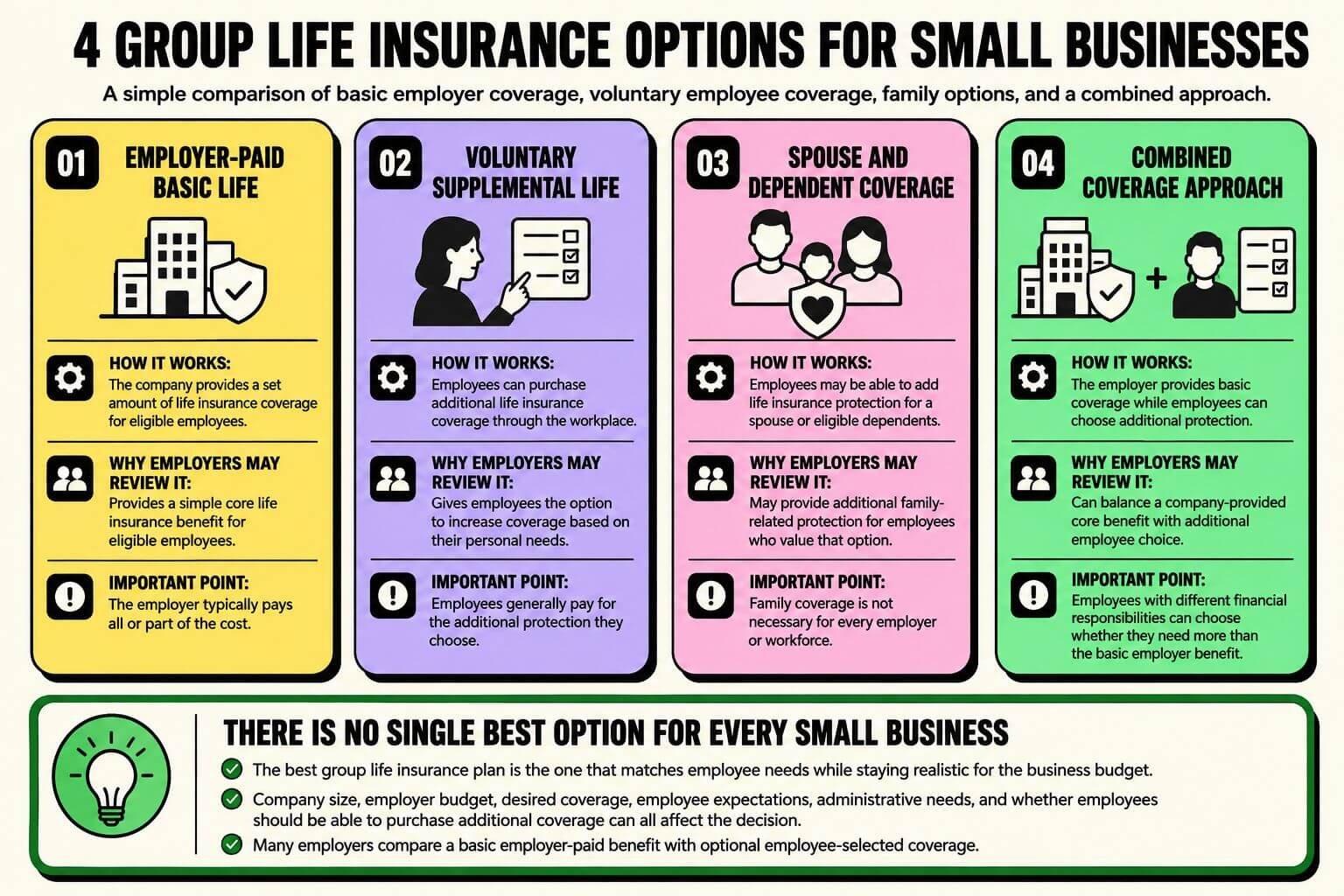
Group Life Insurance Options Employers Should Compare
Employer-Paid Basic Group Term Life
Employer-paid basic life insurance is often the starting point for small business benefits programs. With this option, the employer provides coverage for eligible employees and typically pays all or part of the premium. The coverage amount may be structured in different ways. Common designs include:
- A flat dollar amount for every eligible employee.
- A benefit based on a percentage of salary.
- A benefit based on a multiple of an employee’s earnings.
This type of coverage gives employees access to life insurance without requiring them to shop for an individual policy on their own. For small employers, a basic group life plan can be a straightforward way to provide additional financial protection as part of a broader employee benefits package.
Voluntary Supplemental Life Insurance
Voluntary supplemental life insurance gives employees the option to purchase additional coverage beyond the employer-provided benefit. This can be helpful because employees have different financial responsibilities. Some may only need the basic benefit, while others may want more coverage for a spouse, children, or personal financial obligations. A common setup looks like this:
- The employer provides basic coverage.
- Employees choose additional coverage amounts.
- Employees pay for the added protection through payroll deductions.
This approach gives employees more flexibility without requiring the employer to cover the entire cost of additional benefits.
Spouse and Dependent Life Coverage
Some group life insurance plans allow employees to add coverage for spouses or dependents. Family coverage is not necessary for every employer, but it can be a valuable option for companies with employees who want workplace access to additional protection. The goal is not to add every available benefit. Instead, employers should focus on offering options that make sense for their workforce. A benefits package works best when employees understand what is available and how those options support their personal needs.
What Should Small Businesses Look for in a Group Life Insurance Plan?
Comparing group life insurance plans involves more than looking at the premium. Employers should review how each plan works before making a decision. Important features include:
Eligibility requirements: Understand which employees qualify and whether the plan has minimum participation rules.
Guaranteed issue limits: Some plans allow employees to receive a certain amount of coverage without medical underwriting.
Coverage options: Review whether the plan offers flat benefits, salary-based coverage, or employee-selected amounts.
Portability and conversion: Employees may want options to continue coverage after leaving the company. These features can affect the long-term value of the benefit.
Enrollment support: A simple enrollment process makes it easier for employees to understand their choices and complete elections.
Benefits administration: Small HR teams often manage many responsibilities. Good administration tools can reduce manual work and make ongoing updates easier.
Simple benefits administration can also help employers manage enrollment, employee communication, and ongoing plan tasks more efficiently.
How Coverage Amounts and Costs Are Determined
Group life insurance costs vary based on the plan design and the group being covered. Factors that can affect pricing include:
- Number of employees.
- Employee demographics.
- Coverage amounts selected.
- Industry and workplace risk factors.
- Employer contribution levels.
- Additional plan features.
Employers may choose different ways to structure coverage. For example:
- A company may provide every employee with the same benefit amount.
- A company may base coverage on salary.
- A company may allow employees to select additional coverage levels.
The right structure depends on what the business wants to provide and how easy the benefit will be for employees to understand. A simpler plan may work better for a smaller company, while a larger employer may need more flexibility.
Employer-Paid vs Voluntary Life Insurance: Which Approach Works Better?
Both employer-paid and voluntary life insurance can make sense depending on the company’s goals.
Employer-Paid Coverage
Benefits include:
- Provides a benefit to eligible employees.
- Creates a consistent level of protection.
- Shows a company commitment to employee benefits.
The trade-off is that the employer takes on more of the cost.
Voluntary Coverage
Benefits include:
- Gives employees more choice.
- Allows employees to increase coverage based on personal needs.
- Reduces the employer’s cost for additional benefits.
Many businesses choose a combination of both options. They provide a basic benefit for employees while allowing individuals to purchase more coverage if needed.
Tax Rules and Employee Considerations for Group Life Insurance
Employers should also understand how group-term life insurance can affect employees from a tax perspective. According to IRS rules, the cost of qualifying employer-provided group-term life insurance coverage up to $50,000 is generally excluded from an employee’s taxable income. Coverage above that amount may result in taxable income depending on the plan details. Because tax treatment depends on the specific arrangement, employers should review their plan structure carefully and seek professional tax guidance when needed. Understanding these rules helps employers create benefits that are valuable while avoiding unexpected tax issues.
Why Group Life Insurance Matters for Small Businesses
Small businesses often compete with larger employers that may have more resources for employee benefits. According to the U.S. Bureau of Labor Statistics, access to employer-provided life insurance is lower among smaller establishments compared with larger employers. In March 2025, 39% of workers at establishments with fewer than 50 employees had access to employer life insurance, compared with 87% of workers at establishments with 500 or more employees. For small businesses, offering group life insurance can be a practical way to provide employees with valuable protection while building a stronger benefits package. The key is choosing coverage that employees understand and that the company can maintain over time.
Choosing the Right Group Life Insurance Partner
Selecting a group life insurance plan requires reviewing coverage options, employee needs, and administrative requirements. Before choosing a plan, employers should consider:
- What coverage employees need.
- How much the company can contribute.
- Which optional benefits matter most.
- How enrollment will be managed.
- What support employees will receive.
A benefits partner can help employers compare plan structures and understand the differences between options. The goal is not just finding coverage. It is choosing a plan that fits the company and provides employees with a benefit they can actually use.
Comparing Group Life Insurance Options With Confidence
Choosing a group life insurance plan requires looking at more than coverage amounts and premiums. Small businesses often need to compare employee needs, contribution levels, plan flexibility, and administration requirements. Benni Agency helps employers review these details so they can better understand their available options. Whether a company is considering employer-paid coverage, voluntary benefits, or a combination approach, having a clear comparison process can make the decision easier.