Adding more benefits doesn’t automatically make a benefits package better. The real question is whether employees will understand, value, and actually use the options you offer. Pet insurance can matter to employees facing veterinary costs. Legal plans can help with common personal legal needs. Travel benefits may appeal to employees who travel regularly or internationally. The right choice depends on your workforce, not on which benefit happens to be popular elsewhere. This article is for employers and HR teams comparing these specialty benefits and deciding which choices deserve a place in their benefits package.
Key Takeaways
- No single specialty benefit fits every workforce. Pet, legal, and travel benefits serve different needs and lifestyles.
- Pet insurance is most relevant to pet owners, especially when unexpected veterinary expenses could create financial strain.
- Legal benefits can have broad use, including certain wills, contracts, housing matters, and other covered legal needs.
- Travel coverage needs a clear definition. Trip protection, travel medical, international health, and business travel coverage aren’t always the same.
- Employers should check employee demand first. Cost, provider access, exclusions, enrollment, and likely participation all matter.
Which Pet, Legal, and Travel Benefits Do Employees Value Most?
There isn’t one specialty benefit that every employee will value equally. A pet owner may see pet insurance as highly useful. Someone buying a home or preparing a will may care more about a legal plan. An employee who travels abroad regularly may place more value on travel medical or other travel-related coverage. A simple way to compare the three is to look at the problem each benefit solves:
Benefit | Employees Most Likely to Value It | Main Need | What Employers Should Compare |
Pet insurance | Pet owners | Eligible veterinary expenses | Deductibles, reimbursement, exclusions, waiting periods |
Legal benefits | Employees with personal legal needs | Access to covered legal services | Attorney network, covered matters, exclusions |
Travel benefits | Frequent or international travelers | Medical or trip-related travel risks | Coverage type, geographic limits, exclusions, benefit limits |
The best approach is to match benefits to real employee needs instead of assuming that a longer benefits menu will lead to higher satisfaction.
Pet Insurance: Useful for Employees With Pets
Pet insurance can help employees manage eligible veterinary expenses when a pet becomes sick or injured. Depending on the policy, coverage may include accidents, illnesses, surgery, diagnostic testing, prescriptions, and other eligible treatment. Some plans also offer optional wellness benefits for routine care. Pet insurance can be attractive because veterinary bills can arrive unexpectedly. But employers should avoid presenting every pet plan as identical. Employees may need to understand:
- Deductibles
- Reimbursement percentages
- Annual or lifetime limits
- Waiting periods
- Pre-existing condition rules
- Covered treatments
- Optional preventive care
The biggest question for an employer is simple: How many employees are likely to use it? An employee survey or benefits-interest questionnaire can provide a better answer than assumptions about the workforce. Employers considering broader specialty insurance options should also compare how each benefit fits alongside the coverage they already offer.
Legal Benefits: Practical Help for Everyday Legal Needs
Legal benefits give employees access to certain legal services through a participating plan or attorney network. Coverage varies, but plans may help with matters such as:
- Wills and estate documents
- Certain real estate matters
- Contract reviews
- Consumer disputes
- Family-related legal consultations
- Identity-related legal assistance
This type of benefit isn’t limited to employees dealing with a major legal problem. Someone preparing a will, reviewing a document, buying property, or needing advice about a covered matter may find it useful. Provider access matters just as much as the list of covered services. Before offering a legal plan, employers should look at the size and availability of the attorney network, how employees request help, whether consultations are virtual or in person, and which matters are excluded. Clear communication is also important. Employees are less likely to value a legal benefit if they don’t understand what it covers or when they can use it.
Travel Benefits: Know What Type of Coverage You Are Offering
“Travel insurance” can mean several different things, and employers should know exactly what they’re putting in front of employees. Depending on the arrangement, travel-related benefits may include:
- Trip cancellation or interruption protection
- Travel medical coverage
- Emergency medical evacuation
- Baggage or travel-delay benefits
- International medical coverage
- Business travel protection
These products can serve very different purposes. For example, an employee taking a personal vacation may be interested in trip cancellation coverage. Someone traveling internationally for work may have different medical, evacuation, or business travel needs. That distinction matters because travel insurance and international medical coverage shouldn’t automatically be treated as interchangeable benefits.
Before adding a travel option, employers should ask what kind of travel is common among their employees. Do they travel internationally for work? Are they mainly interested in voluntary coverage for personal trips? Is there already business travel protection elsewhere in the company’s insurance program? Answering those questions first makes it easier to compare the right products.
How Employers Should Compare Specialty Benefits
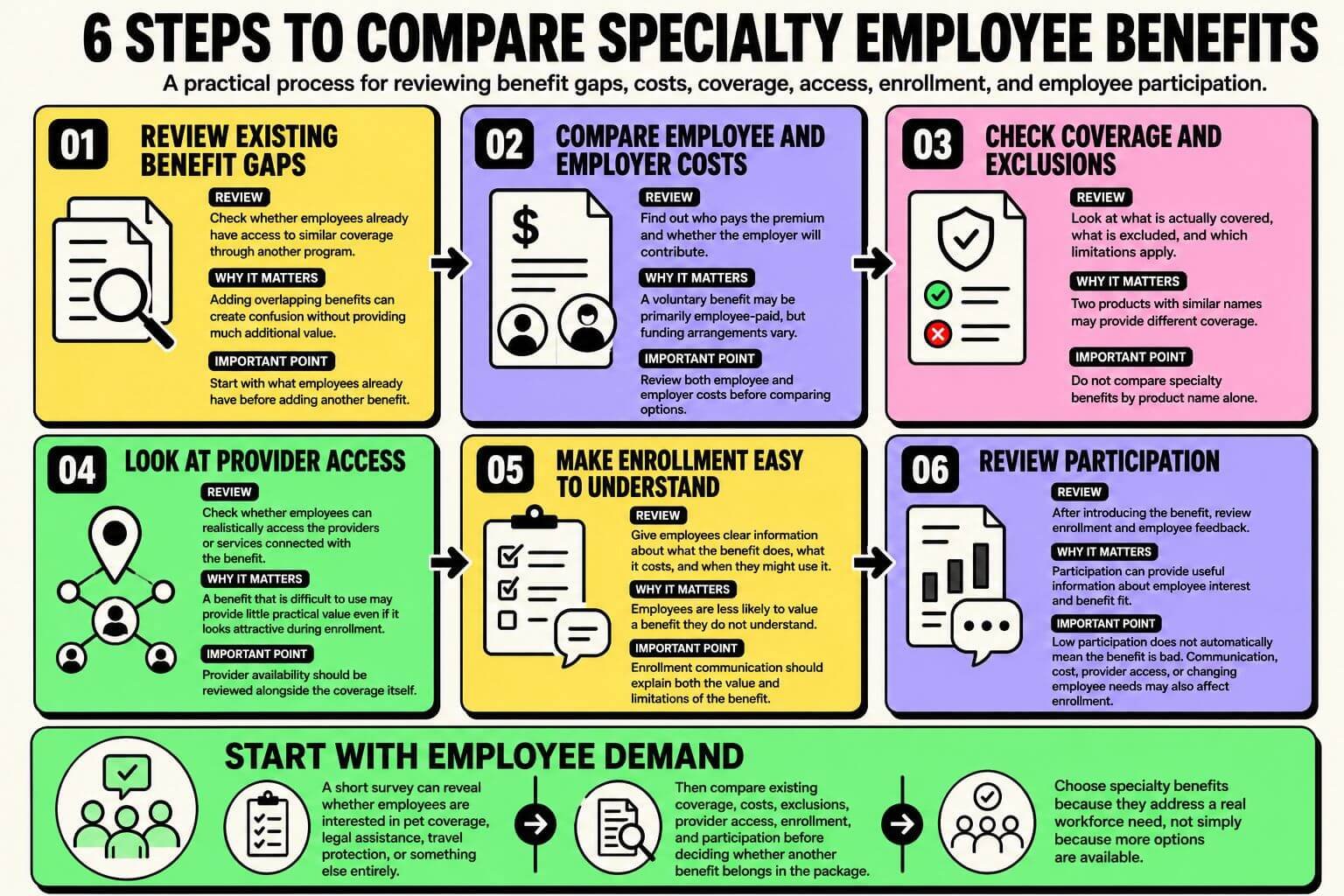
Once you understand the basic differences, the next step is deciding whether any of these benefits belong in your package. Start with employee demand. A short survey can reveal whether employees are interested in pet coverage, legal assistance, travel protection, or something else entirely. You don’t need a complicated study. A few clear questions can show whether there is enough interest to justify comparing plans. Then look at the practical details.
1. Review Existing Benefit Gaps
Check whether employees already have access to similar coverage through another program. Adding overlapping benefits can create confusion without providing much additional value.
2. Compare Employee and Employer Costs
Find out who pays the premium and whether the employer will contribute. A voluntary benefit may be primarily employee-paid, but funding arrangements vary.
3. Check Coverage and Exclusions
Don’t compare products by name alone. Look at what is actually covered, what isn’t, and whether important limitations could surprise employees later.
4. Look at Provider Access
A legal plan with limited attorney availability or another specialty benefit that’s difficult to use may look good during enrollment but provide little practical value.
5. Make Enrollment Easy to Understand
Employees need clear explanations of what a benefit does, what it costs, and when they might use it.
Good benefits administration technology can help organize voluntary enrollment, employee elections, plan information, and benefits communication.
6. Review Participation
After introducing a benefit, look at enrollment and employee feedback. Low participation doesn’t always mean the product is bad. Employees may not understand it, the price may be wrong for the workforce, or another benefit may simply be more useful.
Why Specialty Benefits Can Matter for South Carolina Employers
South Carolina has a large number of small workplaces. According to the South Carolina Department of Employment and Workforce, the state had 194,411 business establishments in the first quarter of 2025, and 69.4% employed fewer than five people. The department’s figures use Bureau of Labor Statistics Quarterly Census of Employment and Wages data. For smaller employers, that makes practical benefits administration especially important. Adding several low-use options can create extra work without providing much employee value. For companies reviewing benefits in Summerville, or elsewhere in South Carolina, the same rule applies: choose specialty benefits because they address a real workforce need, not simply because more options are available.
When It Makes Sense to Review Your Specialty Benefits Mix
Adding another voluntary benefit isn’t always the right move. Sometimes the better decision is to look at what employees already have, what they use, and where real gaps remain. A review may make sense when employees are asking for options that aren’t currently available, participation in existing voluntary benefits is low, business travel has changed, or HR is managing several plans that overlap. It can also be useful after a noticeable change in workforce size or demographics.
The goal shouldn’t be to build the longest possible benefits menu. It should be to offer choices employees can understand and have a realistic reason to use. Benni Agency can help employers compare specialty insurance options, employee costs, plan features, and administration needs before another benefit is added. If you’re unsure which options fit your workforce, a benefits review can help narrow the choices before you make a change.