Offering pre-tax benefits sounds simple until you have to make the plan documents, employee elections, and payroll deductions agree. The right setup starts with eligible benefits, the proper written plan, clear eligibility rules, accurate payroll, and consistent administration. Changing a deduction to “pre-tax” in payroll alone is not enough.
This article is for business owners and HR teams who want to offer pre-tax benefits correctly, understand where different benefits require different treatment, and catch problems before they affect employees.
Key Takeaways
- Start with the right plan structure. Pre-tax deductions may require written documents, eligibility rules, and employee elections.
- Not every benefit gets the same tax treatment. Medical premiums, FSAs, HSAs, disability coverage, and individual health insurance can follow different rules.
- Payroll should match enrollment. Check deduction amounts, tax codes, effective dates, and employee elections.
- Employees need clear explanations. Tell them what is deducted pre-tax, what is after-tax, and when elections can change.
- Review the setup when benefits change. New plans, employee classes, or an ICHRA can change how deductions should be handled.
What Does It Take to Offer Pre-Tax Benefits Correctly?
For many employers, a Section 125 cafeteria plan provides the structure that allows eligible employees to choose certain qualified benefits on a pre-tax basis. The IRS describes a cafeteria plan as a separate written employer plan and says the document must describe the available benefits and establish eligibility and election rules.
The main point for employers is simple: the paperwork and the day-to-day administration need to match. A payroll code cannot replace the plan itself. Employers that need a deeper look at Section 125 requirements can review the separate Benni Agency employer guide without turning this article into a full Section 125 explanation.
Which Benefits Can Be Offered Pre-Tax?
Pre-tax treatment is common across employee benefits, but employers should not assume every deduction works the same way. Before adding a benefit to payroll, check what the benefit is, whether it qualifies for the intended tax treatment, who can participate, and what documentation supports the deduction. The IRS lists several qualified cafeteria-plan benefits, including certain accident and health benefits, dependent care assistance, group-term life insurance, and health savings accounts.
Medical, Dental, and Vision Premiums
Employee contributions toward eligible employer-sponsored medical, dental, and vision coverage are common candidates for pre-tax payroll deductions when the employer has the proper plan structure in place. Employers should still confirm who is eligible, when deductions begin, and whether the amount taken from payroll matches the employee’s actual coverage election.
FSAs, HSAs, and Other Tax-Advantaged Accounts
Employers may also offer tax-advantaged accounts such as health FSAs, dependent care FSAs, or HSA payroll contributions when the applicable rules and employee eligibility requirements are met. These accounts are not interchangeable. Each has its own contribution, eligibility, reimbursement, and administration rules, so payroll should reflect the specific account being offered.
Benefits That May Work Better After Tax
Pre-tax treatment is not automatically the best choice for every insurance benefit. Disability insurance is a good example. How premiums are taxed can affect how disability benefits are taxed later if an employee files a claim. Employers should make that decision intentionally rather than placing every voluntary benefit under the same payroll code.
How to Set Up Pre-Tax Benefits Step by Step
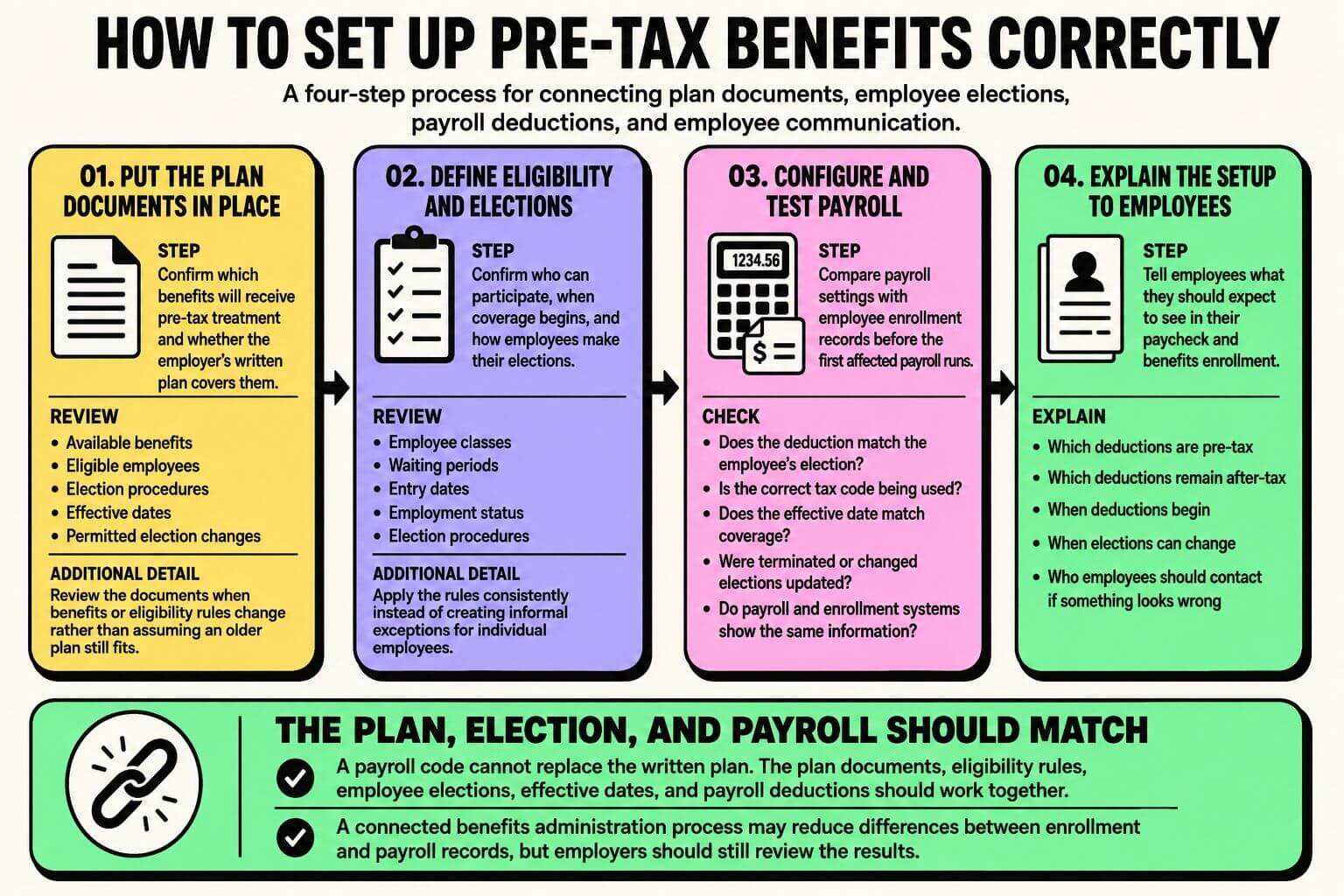
A cleaner process starts before the first deduction reaches payroll. Employers should connect the plan documents, employee eligibility, elections, payroll settings, and employee communication from the start.
1. Put the Required Plan Documents in Place
Confirm which benefits will receive pre-tax treatment and whether the employer’s current written plan covers them. The plan should address items such as:
- Available benefits
- Eligible employees
- Election procedures
- Effective dates
- Permitted election changes
If a company adds a benefit or changes its eligibility rules, the documents should be reviewed rather than assuming an older plan still fits.
2. Define Employee Eligibility and Elections
Next, confirm who can participate and when coverage begins. Review employee classes, waiting periods, entry dates, employment status, and election procedures. Apply those rules consistently rather than creating informal exceptions for individual employees. Ownership also matters. Sole proprietors, partners, and certain S corporation shareholders can face different Section 125 participation rules than common-law employees.
3. Configure and Test Payroll Deductions
Before the first affected payroll runs, compare payroll settings with enrollment records. Check:
- Does the deduction match the employee’s election?
- Is the correct tax code being used?
- Does the effective date match coverage?
- Were terminated or changed elections updated?
- Do payroll and enrollment systems show the same information?
A connected benefits administration process can help reduce differences between elections, effective dates, and payroll records, but employers should still review the results.
4. Explain the Setup to Employees
Employees do not need a long lesson on tax law. They need to understand what happens to their paycheck. Explain:
- Which deductions are pre-tax
- Which deductions remain after-tax
- When deductions begin
- When elections can be changed
- Who employees should ask if something looks wrong
Clear communication also makes payroll errors easier to catch because employees know what they should expect to see.
How ICHRA Changes the Pre-Tax Conversation
An ICHRA needs separate attention because individual health insurance does not always follow the same payroll approach as a traditional group health plan. Properly structured ICHRA reimbursements can generally provide tax advantages, but employers should pay close attention to how an employee’s individual premium is purchased.
Federal guidance does not allow Section 125 salary reduction for individual coverage purchased through a public Exchange. Different treatment may be available for qualifying off-Exchange coverage. Employers considering an individual coverage HRA should review reimbursements, employee classes, premium payments, and enrollment together rather than copying their group-plan payroll process.
Common Pre-Tax Benefits Mistakes Employers Should Avoid
Most problems do not start with a complicated tax question. They start when one part of the benefits process does not match another. Watch for these common issues:
- Treating pre-tax as only a payroll setting
- Using old or incomplete plan documents
- Giving every benefit the same tax treatment
- Letting deductions differ from employee elections
- Making informal eligibility exceptions
- Processing election changes without checking the plan rules
- Failing to review the setup after changing carriers, benefits, or payroll systems
A short review before enrollment or the first payroll can catch many of these problems early.
Why the Setup Matters for South Carolina Employers
Employee health coverage already represents a meaningful expense for businesses and workers in South Carolina. According to the State Health Access Data Assistance Center, 48.6% of South Carolina residents had employer-sponsored coverage in 2024, and the average annual premium for single employer-sponsored coverage was $8,181.
Those figures are not a reason to choose one benefit strategy over another. They do show why employers should pay attention to how contributions and deductions are structured. When benefit costs are already significant, payroll mistakes or unclear tax treatment add problems employers do not need.
When It Makes Sense to Review Your Pre-Tax Setup
You may not need to redesign your benefits package because you spot one problem. Start by checking whether your plan documents, eligibility rules, employee elections, and payroll deductions all agree. A closer review makes sense if deductions do not match enrollment records, your company has added new employee classes, you are introducing an FSA or ICHRA, or no one knows when the Section 125 documents were last reviewed.
The same applies when HR, payroll, carriers, and benefits systems are working from different information. Benni Agency helps employers look at how plan design, administration, and payroll fit together. If you are unsure whether your current setup matches your documents and payroll process, a benefits review can help identify what needs attention.