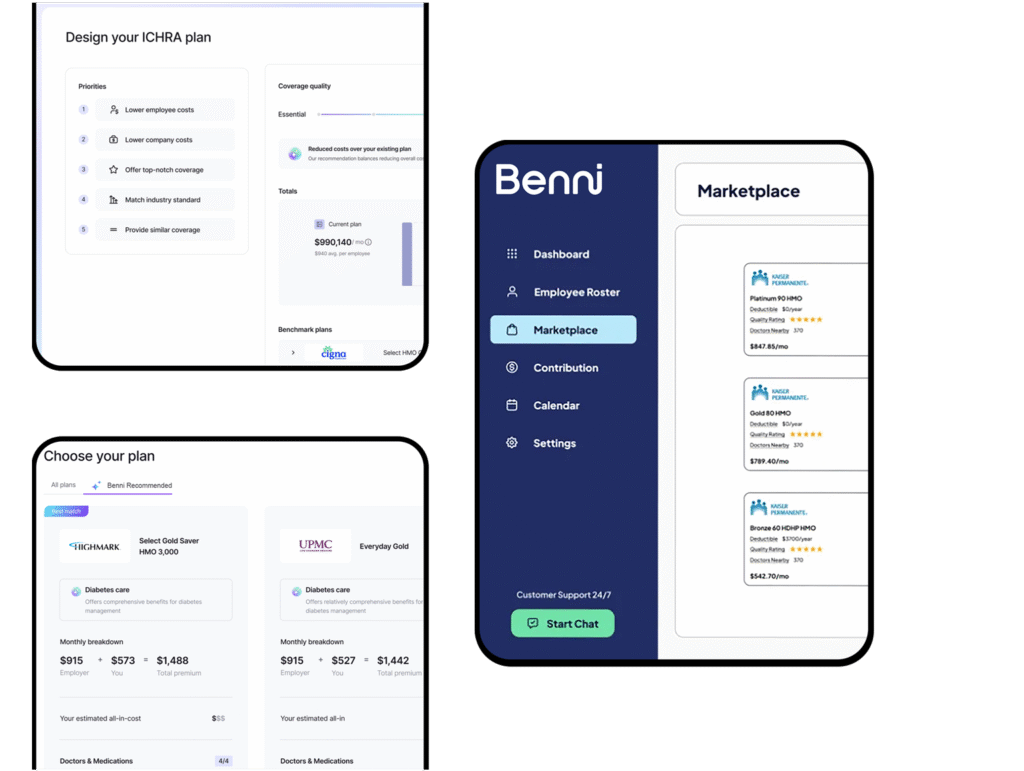
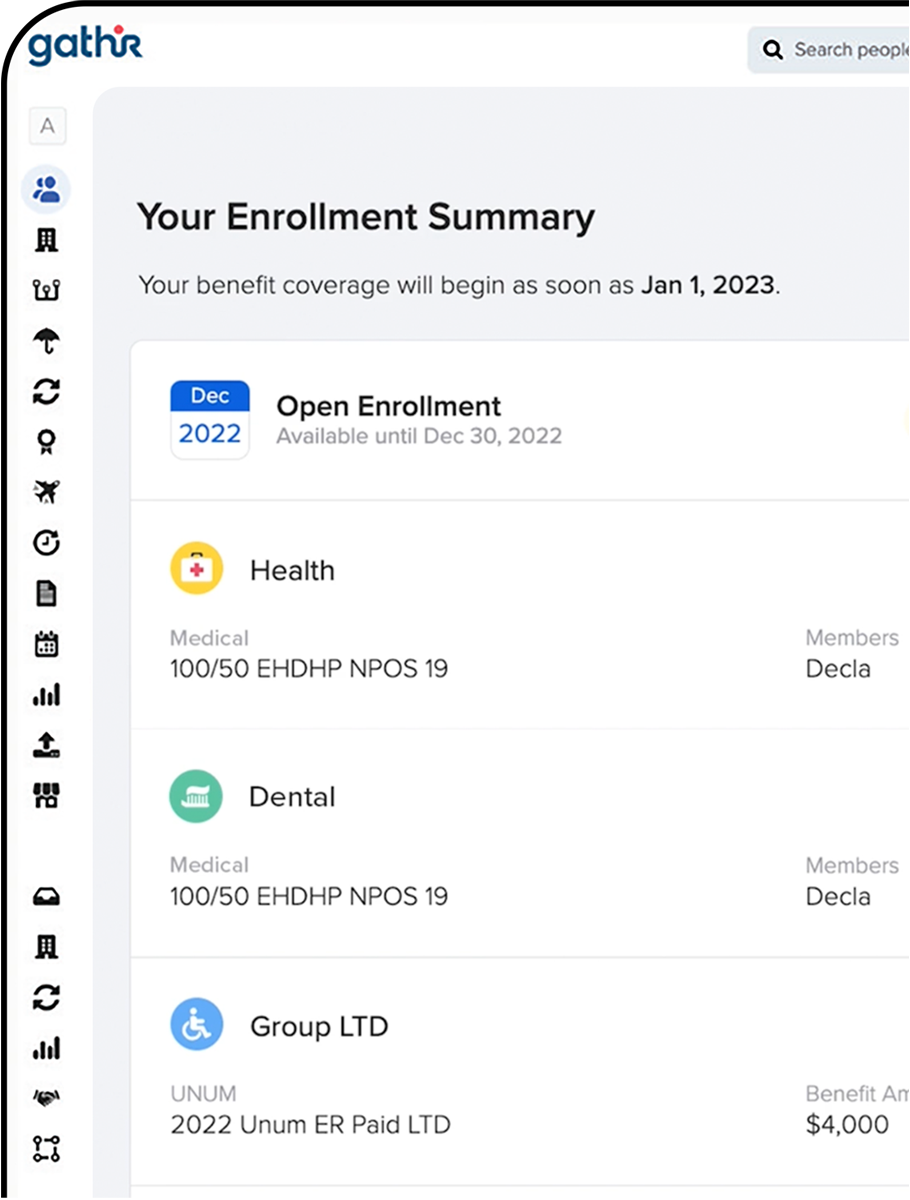
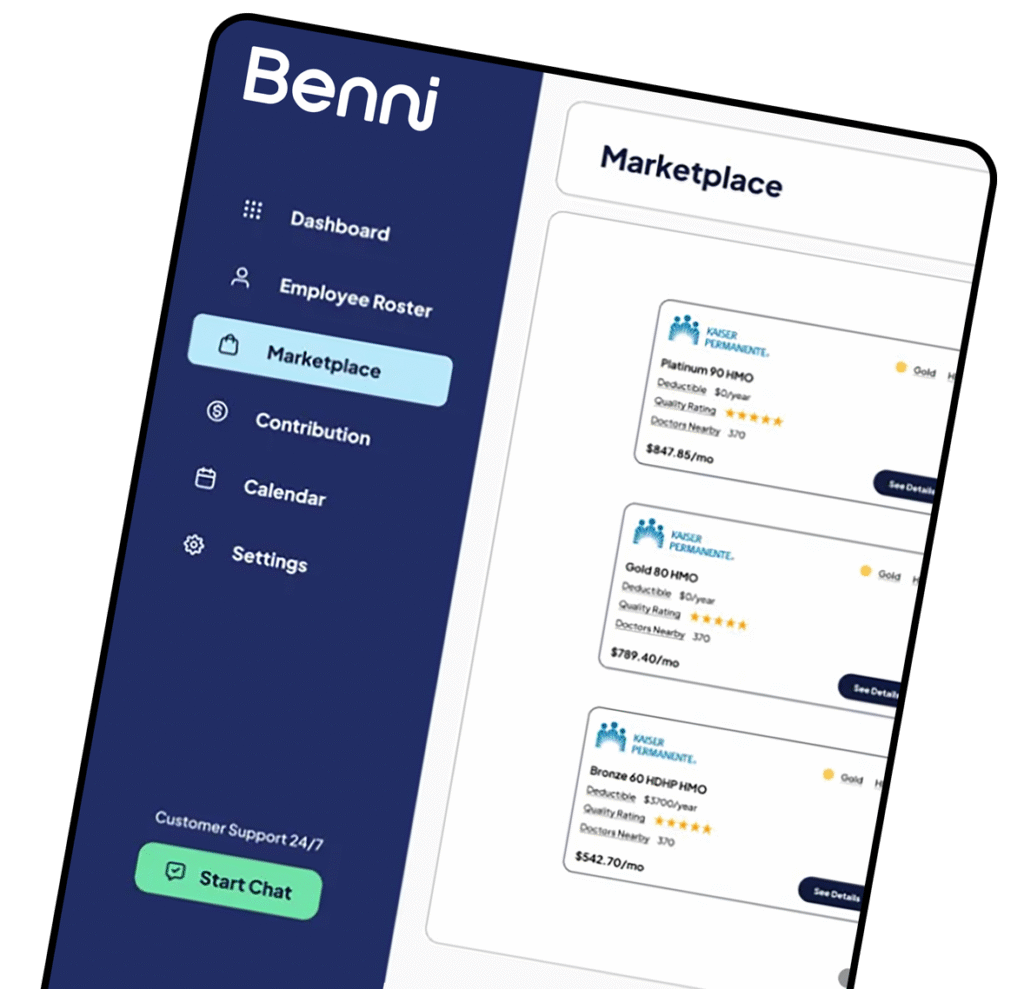
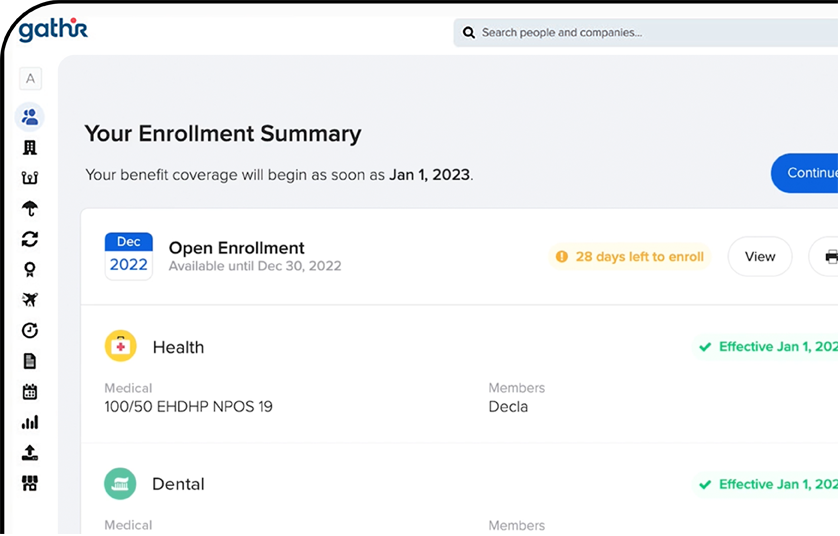
At Benni, group major medical is the foundation of every strong benefits strategy. Rising costs, limited flexibility, and complex plan designs have made it harder for employers to manage coverage and for employees to fully understand it. We simplify the process by combining modern technology with expert consulting to deliver clear, flexible, and cost-effective solutions, supported by our integrated HR administration platform that streamlines onboarding, enrollment, and ongoing benefits management in one centralized system.
We support all major medical plan types including fully insured, self-funded, and level-funded plans, along with PPO, HMO, EPO, and high deductible health plans paired with HSAs. This allows us to tailor the right approach for each employer while improving the overall employee experience. Through our technology-driven approach, employers gain real-time visibility, simplified administration, and better employee engagement, while employees benefit from easier access to their coverage and tools. In many cases, we can also enhance plans with high-demand services like telehealth and prescription support at no cost, helping businesses stay competitive without increasing expenses.
Fully Insured Medical Plan
Fully insured plans are the most traditional and widely used form of group major medical coverage. Employers pay a fixed monthly premium to an insurance carrier, which assumes full responsibility for claims and risk. This structure provides stability and predictability, making it easier for businesses to budget and manage healthcare costs without unexpected financial exposure.
These plans are especially well suited for small to mid-sized employers that value simplicity and streamlined administration. With fully insured plans, employers gain access to established provider networks, standardized plan options, and built-in compliance support. While they offer less flexibility in customization, they remain a dependable foundation for companies looking to provide strong, consistent coverage to their employees.
Preferred Provider Organization (PPO)
PPO plans are known for their flexibility and broad provider access. Employees have the freedom to visit both in-network and out-of-network providers without requiring referrals, making it easier to access specialists and receive care on their own terms. This flexibility often leads to higher employee satisfaction and increased utilization of benefits.
While PPO plans typically come with higher premiums, they offer a strong balance between access and convenience. They are a preferred option for organizations that want to provide employees with choice and autonomy in their healthcare decisions, while still maintaining a structured network for cost management.
High Deductible Health Plans (hdhp) + hsa
High deductible health plans are designed to lower monthly premiums while giving employees more control over how they spend their healthcare dollars. When paired with a health savings account, employees can contribute pre-tax funds to pay for qualified medical expenses, creating both immediate and long-term tax advantages.
This combination is one of the most effective strategies for cost control and financial efficiency. Employers benefit from reduced premium costs, while employees gain a tool to manage and save for healthcare expenses over time. HDHPs with HSAs are especially attractive for organizations focused on consumer-driven healthcare and long-term savings strategies.
Level-Funded Plans
Level-funded plans combine the predictability of fully insured plans with the financial advantages of self-funding. Employers pay a consistent monthly amount that covers estimated claims, administrative costs, and stop-loss protection. At the end of the plan year, if claims are lower than expected, employers may receive a refund.
This structure has become increasingly popular among small to mid-sized businesses looking to control costs without taking on full risk. Level-funded plans provide greater insight into claims data and allow for more strategic decision-making over time. They offer a balanced approach for employers seeking savings, stability, and a more modern benefits structure.
Health Maintenance Organization (HMO)
HMO plans are designed to manage costs through a more structured and coordinated approach to care. Employees are required to select a primary care physician who oversees their healthcare and provides referrals to specialists when needed. This model encourages preventive care and helps reduce unnecessary medical expenses.
Because of their structured nature, HMO plans often offer lower premiums compared to other plan types. They are a strong fit for employers focused on affordability and efficiency, particularly in markets where strong provider networks are available. While they offer less flexibility, they provide a reliable and cost-effective coverage option.

Self-Funded (Self-Insured) Plans
Self-funded plans offer employers the highest level of control over their healthcare strategy. Instead of paying fixed premiums to a carrier, the employer pays for actual claims as they occur. This approach allows businesses to customize plan design, manage costs more directly, and benefit from lower-than-expected claims performance.
To manage risk, most self-funded plans are paired with stop-loss insurance, which protects the employer from large or unexpected claims. This model is ideal for larger or financially stable organizations that want transparency, flexibility, and long-term cost savings. With the right structure in place, self-funding can significantly reduce overall healthcare spend while improving plan efficiency.
Exclusive Provider Organization (EPO)
EPO plans offer a streamlined alternative that balances cost savings with flexibility. Employees are required to use in-network providers for coverage but do not need referrals to see specialists. This creates a simpler experience while still maintaining control over healthcare costs.
These plans are ideal for employers who want to reduce premiums without significantly limiting access to care. EPOs provide a focused network strategy that can deliver strong value when paired with the right provider network. They are an increasingly popular option for companies looking for efficiency without sacrificing usability.
Questions & Answers
Looking for answers? Explore our help section or contact us if you need more support.
What is the difference between fully insured, level-funded, and self-funded plans?
Fully insured plans offer fixed monthly premiums with the insurance carrier taking on all risk. Level-funded plans provide a predictable monthly cost with the potential for refunds if claims are lower than expected. Self-funded plans give employers full control by paying actual claims, often resulting in long-term cost savings when paired with stop-loss protection.
Which type of health plan is best for my business?
The right plan depends on your company’s size, budget, risk tolerance, and employee needs. Fully insured plans are ideal for simplicity and predictability, while level-funded and self-funded options can offer greater cost control. Network types like PPO, HMO, and EPO also impact flexibility and pricing, so choosing the right combination is key.
What is the difference between PPO, HMO, and EPO plans?
PPO plans offer the most flexibility, allowing employees to see providers both in and out of network without referrals. HMO plans require a primary care physician and referrals, helping control costs but limiting flexibility. EPO plans fall in between, offering no referral requirements but requiring employees to stay within the network.
How do high deductible health plans (HDHPs) with HSAs work?
HDHPs have lower monthly premiums and higher deductibles, giving employers immediate cost savings. When paired with a Health Savings Account, employees can contribute pre-tax dollars to cover medical expenses. This creates both short-term savings and long-term financial benefits, making it a popular strategy for cost-conscious employers.